
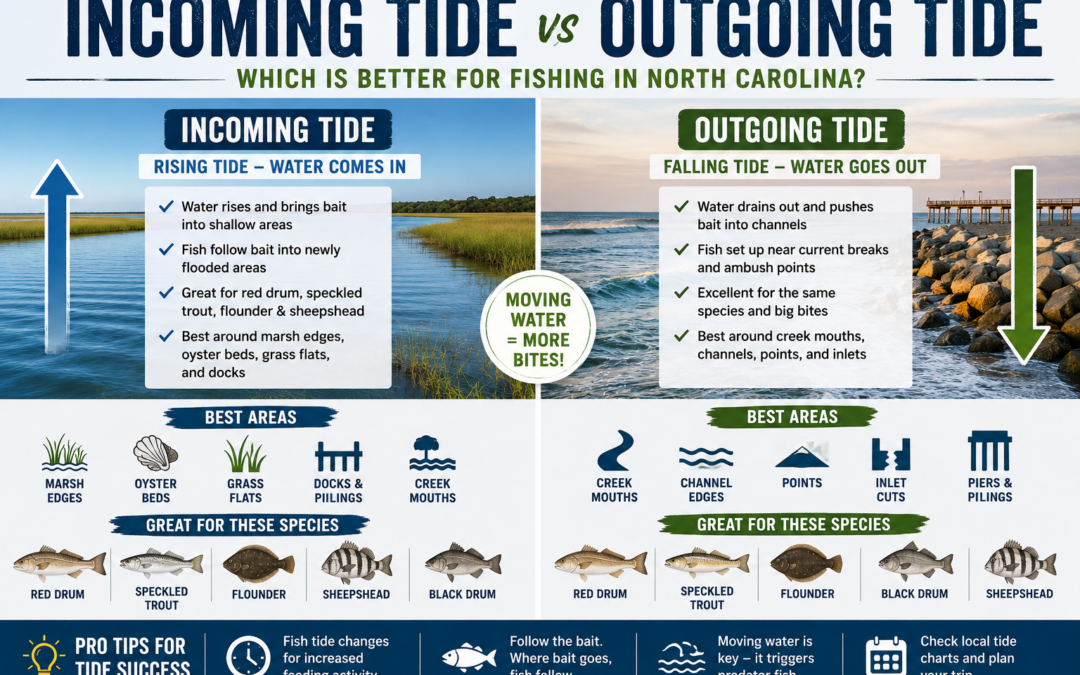
Incoming Tide vs Outgoing Tide: Which Is Better for Fishing in North Carolina?
One of the most common questions asked by saltwater anglers is whether an incoming tide or outgoing tide is better for fishing in North Carolina. The answer depends on several factors, including the species you're targeting, your location, water temperature, bait movement, and current conditions. Understanding how tides influence fish behavior can significantly improve your success whether you're fishing from a pier, kayak, boat, dock, or the surf.
North Carolina's extensive coastline, inlets, marshes, sounds, and estuaries create some of the best tidal fishing opportunities on the East Coast. Learning how fish respond to changing tides can help anglers consistently catch red drum, speckled trout, flounder, sheepshead, black drum, and many other popular coastal species.
What Is an Incoming Tide?
An incoming tide, also known as a rising tide or flood tide, occurs when water moves inland from the ocean toward the shore, marshes, sounds, and estuaries.
As the tide rises:
- Water depth increases
- Baitfish move into shallow areas
- Shrimp and crabs become more active
- Fish gain access to new feeding areas
- Oxygen-rich water enters the system
Many anglers consider incoming tides among the most productive fishing periods because fish often follow bait into newly flooded areas.
Benefits of Fishing an Incoming Tide
An incoming tide can create excellent fishing opportunities because predator fish actively search for food as water levels rise.
Benefits include:
- Increased bait movement
- Cleaner water conditions
- Better access to shallow flats
- More active feeding behavior
- Improved fish mobility
Species commonly caught during incoming tides include:
- Red drum
- Speckled trout
- Flounder
- Sheepshead
- Black drum
Fishing around marsh edges, oyster beds, grass flats, docks, and creek mouths can be particularly productive during a rising tide.
What Is an Outgoing Tide?
An outgoing tide, also called a falling tide or ebb tide, occurs when water drains from marshes, creeks, and estuaries back toward the ocean.
As water falls:
- Baitfish become concentrated
- Shrimp and crabs are flushed from shallow areas
- Current increases around channels
- Fish gather near ambush points
- Feeding opportunities become concentrated
Many experienced anglers actually prefer outgoing tides because fish often become easier to locate.
Benefits of Fishing an Outgoing Tide
Outgoing tides create natural feeding lanes as bait is forced through predictable locations.
Productive areas include:
- Creek mouths
- Channel edges
- Inlet cuts
- Points
- Current seams
- Dock pilings
Red drum, flounder, speckled trout, and black drum often position themselves near current breaks where they can ambush prey with minimal effort.
Which Tide Is Better for Red Drum?
Red drum can be caught during both incoming and outgoing tides.
Many anglers prefer:
Incoming Tide
- Flooded grass edges
- Marsh shorelines
- Oyster beds
Outgoing Tide
- Creek mouths
- Points
- Channels
- Current breaks
Redfish frequently feed aggressively whenever bait is moving.
Which Tide Is Better for Flounder?
Flounder are ambush predators that excel at using current to their advantage.
Many anglers target flounder during:
- Falling tides
- Tide changes
- Areas with current flow
Look for:
- Channel edges
- Inlets
- Docks
- Bridge pilings
- Creek mouths
Outgoing tides often concentrate bait directly in front of waiting flounder.
Best Tide for Surf Fishing in North Carolina
Surf fishing success often depends heavily on tides.
Many surf fishermen prefer:
• Incoming tides
• High tide periods
• Tide changes
As water rises, fish move closer to shore and often enter feeding troughs and cuts along the beach.
Popular surf species include:
• Red drum
• Bluefish
• Pompano
• Black drum
• Spanish mackerel
Which Tide Is Better for Speckled Trout?
Speckled trout often feed heavily during moving water.
Productive times include:
- Last two hours of incoming tide
- First two hours of outgoing tide
Trout commonly gather near:
- Docks
- Grass flats
- Oyster beds
- Creek mouths
Moving water typically produces the best action.
Best Tide for Pier Fishing in North Carolina
For anglers fishing from North Carolina piers, moving water is usually more important than the specific tide direction.
Popular piers include:
- Ocean Isle Beach Pier
- Bogue Inlet Pier
- Oak Island Pier
- Jennette's Pier
- Johnny Mercer's Fishing Pier
Many pier anglers find success during:
- Two hours before high tide
- Two hours after high tide
- Tide changes
- Periods of strong water movement
Understanding Tide Changes
Many experienced North Carolina anglers agree that moving water is often more important than whether the tide is incoming or outgoing.
Fish frequently become most active during:
- Tide transitions
- Strong current periods
- Bait movement
- Changes in water depth
Instead of focusing solely on high tide or low tide, focus on periods when baitfish are actively moving.
Tips for Fishing North Carolina Tides
Check Local Tide Charts
Tides vary throughout the North Carolina coast.
Follow the Bait
Predator fish are rarely far from their food source.
Fish Moving Water
Current often triggers feeding activity.
Focus on Structure
Oyster beds, docks, creek mouths, grass edges, and channels frequently hold fish during both incoming and outgoing tides.
Did You Fish? Incoming Tide vs Outgoing Tide for Fishing in North Carolina
Understanding the difference between an incoming tide and an outgoing tide can dramatically improve your fishing success along the North Carolina coast. While both tidal movements can produce fish, knowing when and where to fish each tide often separates successful anglers from those who struggle to find consistent action. The truth is that there is no single answer to whether an incoming tide or outgoing tide is always better. Instead, the best tide for fishing in North Carolina depends on the species you are targeting, the location you are fishing, and the seasonal conditions.
An incoming tide brings clean, oxygen-rich water into estuaries, marshes, sounds, and inlets. This movement often carries shrimp, baitfish, crabs, and other forage into shallow areas where predators actively feed. Speckled trout, red drum, flounder, and sheepshead frequently become more active during a rising tide, especially around docks, oyster beds, creek mouths, and grass flats. Many anglers consider the hours leading up to high tide some of the most productive fishing opportunities of the day.
An outgoing tide can be equally effective because it concentrates baitfish and forage as water drains from marshes and tidal creeks. Predator fish often position themselves near current breaks, channels, points, and creek mouths where food is funneled directly to them. Red drum, flounder, speckled trout, black drum, and other popular North Carolina saltwater species commonly feed aggressively during a falling tide.
One of the best fishing strategies is to focus on moving water rather than the exact tide stage. Fish are generally more active when water is moving because bait is being transported naturally through the system. Tide changes, especially the hours immediately before and after high tide or low tide, often trigger increased feeding activity.
Whether you are fishing from a pier at Ocean Isle Beach, casting from the surf along the Outer Banks, exploring tidal creeks near Emerald Isle, or targeting inshore species around Wrightsville Beach, understanding how tides influence fish behavior can help you catch more fish. Learning when to fish an incoming tide versus an outgoing tide is one of the most valuable skills a North Carolina angler can develop.
At DidYouFish.com, we help anglers discover North Carolina fishing spots, species guides, fishing tactics, bait recommendations, and local fishing knowledge to help make every trip more successful.
Did you fish today?