Wrightsville Beach Fishing Report: What’s Biting Now
The Wrightsville Beach fishing report is showing a classic summer pattern: good fishing is still possible, but the heat is changing when, where, and how anglers should fish.
With hot afternoons, high sun, warm water, and heavy beach traffic, the best action around Wrightsville Beach is often coming early, late, or around moving tide. Surf and pier anglers should watch for Spanish mackerel, bluefish, sea mullet, pompano, croaker, spot, sharks, red drum, black drum, and flounder depending on season and regulations. Inshore anglers around Banks Channel, Masonboro Inlet, the Intracoastal Waterway, docks, creeks, marsh edges, and oyster structure may find red drum, black drum, speckled trout, flounder, and sheepshead.
The big takeaway right now: do not fish lazy water in the middle of the hottest part of the day and expect much. Look for bait, moving water, shade, cleaner water, deeper edges, and current.
Quick Answer: Wrightsville Beach Fishing Report
Wrightsville Beach is producing summer fishing opportunities for surf, pier, inshore, nearshore, and offshore anglers. Spanish mackerel and bluefish are a strong option along the beach and nearshore when clean water and bait are present. Surf and pier anglers may also find sea mullet, pompano, croaker, spot, sharks, red drum, black drum, and flounder depending on regulations.
Inshore anglers should focus on moving tide around docks, marsh drains, oyster edges, creek mouths, grass lines, and deeper cuts for red drum, black drum, speckled trout, flounder, and sheepshead. During extreme heat, early morning, evening, and shaded moving water are usually better than bright midday conditions.
Current Wrightsville Beach Fishing Conditions
Wrightsville Beach can fish very differently from one hour to the next in the summer. Wind, tide, water clarity, heat, boat traffic, beach crowds, bait movement, and afternoon storms can all change the bite quickly.
Right now, anglers should think in terms of windows. The early morning bite can be the best time to fish the surf, pier, docks, and marsh edges before the sun gets high. Evening can also be productive as the beach cools down and fish move back into feeding areas. During the middle of the day, deeper water, shade, bridge areas, docks, inlet current, and nearshore structure become more important.
If the water is clean and bait is close to the beach, Spanish mackerel and bluefish can be active. If the surf is dirty, rough, or full of grass, bottom fishing with shrimp, Fishbites, sand fleas, squid, or cut bait may be a better choice. Inshore, moving tide is usually more important than the clock.
How the Extreme Heat Affects the Bite
Extreme heat does not shut fishing down completely, but it does change the pattern.
When the sun is high and the water warms up, fish often look for comfort. That can mean deeper water, shade, current, oxygen, or areas where bait is concentrated. Shallow flats, still backwaters, and sunny banks may slow down during the hottest part of the day.
For Wrightsville Beach anglers, that means:
- Fish early or late when possible
- Focus on moving tide
- Look for cleaner water
- Watch for baitfish
- Fish shaded docks and bridge areas
- Try deeper holes and current seams
- Avoid wasting too much time in hot, still water
- Keep bait fresh and presentations natural
- Bring water, sun protection, and watch for storms
The heat can also make fish feed in shorter windows. If you find bait, current, and shade together, stay alert. The bite may turn on fast and then shut down just as quickly.
Wrightsville Beach Pier Fishing
Pier fishing is one of the easiest ways to fish Wrightsville Beach without a boat. Anglers can reach deeper water, moving fish, pilings, current, and bait schools just off the beach.
Depending on the season and conditions, Wrightsville Beach pier anglers may find:
- Spanish mackerel
- Bluefish
- Sea mullet
- Pompano
- Croaker
- Spot
- Red drum
- Black drum
- Sheepshead
- Flounder, depending on season and regulations
- Sharks
- King mackerel when conditions line up
For Spanish mackerel and bluefish, try casting spoons, Gotcha-style plugs, jigs, and other fast-moving lures when clean water and bait are present. For bottom fish, shrimp, Fishbites, sand fleas, bloodworms, squid, or cut bait can all work. Around pilings and structure, sheepshead and black drum may be possible with fiddler crabs, shrimp, or other natural baits.
During hot weather, pier fishing often improves early and late in the day, but moving water can still create short feeding windows even when the sun is high.
Nearshore Fishing Out of Wrightsville Beach
When wind and seas allow, nearshore fishing can be one of the best summer options out of Wrightsville Beach. Spanish mackerel and bluefish are often found around bait schools, beaches, inlets, and nearshore structure. King mackerel, cobia, amberjack, sharks, black sea bass, porgies, and snapper may also be part of the picture depending on depth, structure, and regulations.
Nearshore anglers should look for:
- Bait balls
- Diving birds
- Clean water
- Tide lines
- Temperature changes
- Reefs and wrecks
- Ledges
- Structure
- Slicks
Trolling spoons can be effective for Spanish mackerel and bluefish. Live bait, cigar minnows, spoons, diving plugs, jigs, and bottom rigs can all have a place depending on the target.
Best Baits and Lures Right Now
For surf and pier fishing, good options include:
- Shrimp
- Sand fleas
- Fishbites
- Squid
- Cut mullet
- Finger mullet
- Bloodworms
- Cut bait
- Metal spoons
- Gotcha-style plugs
- Jigs
For inshore fishing, good options include:
- Live shrimp
- Mud minnows
- Finger mullet
- Cut bait
- Soft plastics
- Paddletails
- Jerk shads
- Jigheads
- Popping cork rigs
- Spoons
- Scented artificial baits
For nearshore fishing, good options include:
- Clarkspoons
- Trolled spoons
- Diving plugs
- Live bait
- Cigar minnows
- Jigs
- Cut bait
- Bottom rigs
- Sabiki rigs for bait
Fresh bait matters in hot weather. Bait that sits too long in the sun can get soft, dry, or weak. Keep bait cool and replace it when needed.
Surf Fishing at Wrightsville Beach
Surf fishing at Wrightsville Beach is a good option, especially early in the morning before the beach gets crowded and the sun gets high.
Look for:
- Sloughs
- Sandbar cuts
- Deeper troughs
- Clean water
- Baitfish
- Birds
- Moving tide
- Areas where waves break differently
Common surf targets include sea mullet, pompano, croaker, spot, bluefish, Spanish mackerel, red drum, black drum, sharks, skates, rays, and flounder depending on season and regulations.
For bottom fishing, use shrimp, sand fleas, Fishbites, squid, cut bait, or small pieces of mullet on pompano rigs, bottom rigs, or fish finder rigs. For Spanish mackerel and bluefish, cast metal spoons, Gotcha-style plugs, jigs, or other fast-moving lures when fish are chasing bait close enough to reach.
If the surf is calm and clean, keep a casting rod ready. Spanish mackerel and bluefish may show up quickly, especially when bait is flipping near the beach.
Inshore Fishing Around Wrightsville Beach
Inshore fishing around Wrightsville Beach can be very good during summer, but the tide matters. Banks Channel, Masonboro Inlet, the Intracoastal Waterway, docks, creeks, marsh drains, grass lines, oyster edges, and deeper cuts can all hold fish.
Good inshore targets include:
- Red drum
- Black drum
- Speckled trout
- Flounder
- Sheepshead
- Bluefish
- Ladyfish
- Spanish mackerel near open water and inlets
Red drum often relate to docks, marsh edges, oyster bars, grass lines, and creek mouths. Black drum may hold around docks, pilings, oyster structure, and deeper holes. Speckled trout often prefer moving water, bait, deeper creek bends, grass edges, and lower-light conditions. Flounder may set up near sandy drops, inlet edges, creek mouths, docks, and current seams.
Good inshore choices include live shrimp, mud minnows, finger mullet, cut bait, soft plastics, paddletails, jerk shads, jigheads, popping cork rigs, spoons, and scented baits.
In the heat, do not ignore shade. A dock line with current and shade can be much better than a sunny flat with no bait.
Offshore Fishing from Wrightsville Beach
Offshore fishing from the Wrightsville Beach and Wilmington area depends heavily on weather and sea conditions. When boats can run safely, anglers may target mahi, wahoo, tuna, sailfish, marlin, grouper, snapper, triggerfish, amberjack, tilefish, and other offshore species.
Before heading offshore, check the marine forecast, wind, swell, storms, fuel range, safety gear, water temperature, weed lines, current, and regulations. Summer offshore fishing can be excellent, but afternoon storms and heat can become serious safety concerns.
Best Times to Fish Wrightsville Beach During the Heat
During extreme summer heat, the best fishing times are usually:
- First light through mid-morning
- Evening before dark
- Moving tide
- Cloudy periods
- Light wind with clean water
- After storms when conditions are safe
- Night fishing for some species
- Any time bait is active
For surf fishing, sunrise can be especially good before beach traffic builds. For pier fishing, early and late often produce better action, but fish may still feed when tide and bait line up. For inshore fishing, moving water around structure is usually the most important factor.
Wrightsville Beach Fishing Tips
If you are fishing the surf, move until you find a good-looking stretch of water. A small cut, trough, or patch of bait can matter more than a random cast straight out into flat water.
If you are fishing the pier, watch the water. Clean water, bait schools, birds, and fish breaking the surface are all good signs. Keep one setup ready for bottom fishing and another ready for casting if Spanish mackerel or bluefish appear.
If you are fishing inshore, build your trip around the tide. Fish the places where water moves around structure: docks, marsh drains, oyster edges, creek mouths, grass points, and inlet edges.
If the bite is slow, change something. Move to a new depth, fish a different tide stage, switch bait, downsize tackle, or move from still water to current.
Heat Safety for Anglers
The heat is part of the fishing report right now. Bring more water than you think you need, wear sun protection, and take breaks. A wide-brim hat, sunglasses, sunscreen, lightweight clothing, and a cooler with drinks can make a big difference.
Watch for signs of heat exhaustion, especially if you are fishing from the beach, pier, kayak, or small boat. Afternoon storms can also build quickly in summer, so keep an eye on the sky and the radar.
Check North Carolina Fishing Regulations
Before keeping fish at Wrightsville Beach, check the latest North Carolina fishing regulations. Saltwater rules can change by species, season, size limit, creel limit, area, and gear type.
This is especially important for flounder, red drum, speckled trout, black drum, sheepshead, king mackerel, cobia, black sea bass, snapper, grouper, and offshore species. Anglers should also make sure they have the correct North Carolina coastal recreational fishing license before fishing.
Did You Fish? Wrightsville Beach Fishing Report
Wrightsville Beach is fishing like a true summer beach town right now. There are fish to catch, but the heat, sun, tide, wind, water clarity, bait movement, and boat traffic all matter. Anglers who treat it like spring fishing may struggle. Anglers who adjust to the summer pattern have a much better chance of finding fish.
For surf fishing at Wrightsville Beach, the best approach is to start early, walk the beach, and look for water that gives fish a reason to be there. Sloughs, cuts, troughs, bait schools, clean water, and moving tide are all more important than simply casting from the nearest access. Sea mullet, pompano, croaker, spot, bluefish, Spanish mackerel, red drum, black drum, sharks, and flounder may all be possible depending on the conditions and current North Carolina fishing regulations. For pier fishing, Johnnie Mercers Pier gives anglers a good shot at Spanish mackerel, bluefish, bottom fish, drum, sheepshead, and other species moving along the beach or holding around structure.
Inshore fishing around Wrightsville Beach is all about current and cover. Banks Channel, Masonboro Inlet, the Intracoastal Waterway, docks, marsh drains, oyster edges, grass lines, creek mouths, and deeper holes can all hold fish during the summer. Red drum, black drum, speckled trout, flounder, and sheepshead often feed best when tide, bait, and structure come together. In extreme heat, shaded docks, deeper cuts, and moving water can be much more productive than hot, still, shallow water.
Nearshore and offshore anglers should watch the weather carefully. Spanish mackerel and bluefish can provide fast action close to the beach when clean water and bait are present. King mackerel, cobia, amberjack, black sea bass, porgies, snapper, mahi, wahoo, tuna, and billfish may be options farther out when seas allow. Summer fishing out of Wrightsville Beach can be excellent, but safety matters. Heat, storms, wind, lightning, and rough seas can change a good day quickly.
The best advice is to stay flexible. Fish early or late when possible, focus on moving water, keep bait fresh, watch for baitfish, and do not be afraid to move. Wrightsville Beach offers surf fishing, pier fishing, inshore fishing, nearshore fishing, and offshore fishing all in one area. That variety is what makes it one of the best saltwater fishing destinations in North Carolina, especially for anglers who know how to adjust during the summer heat.
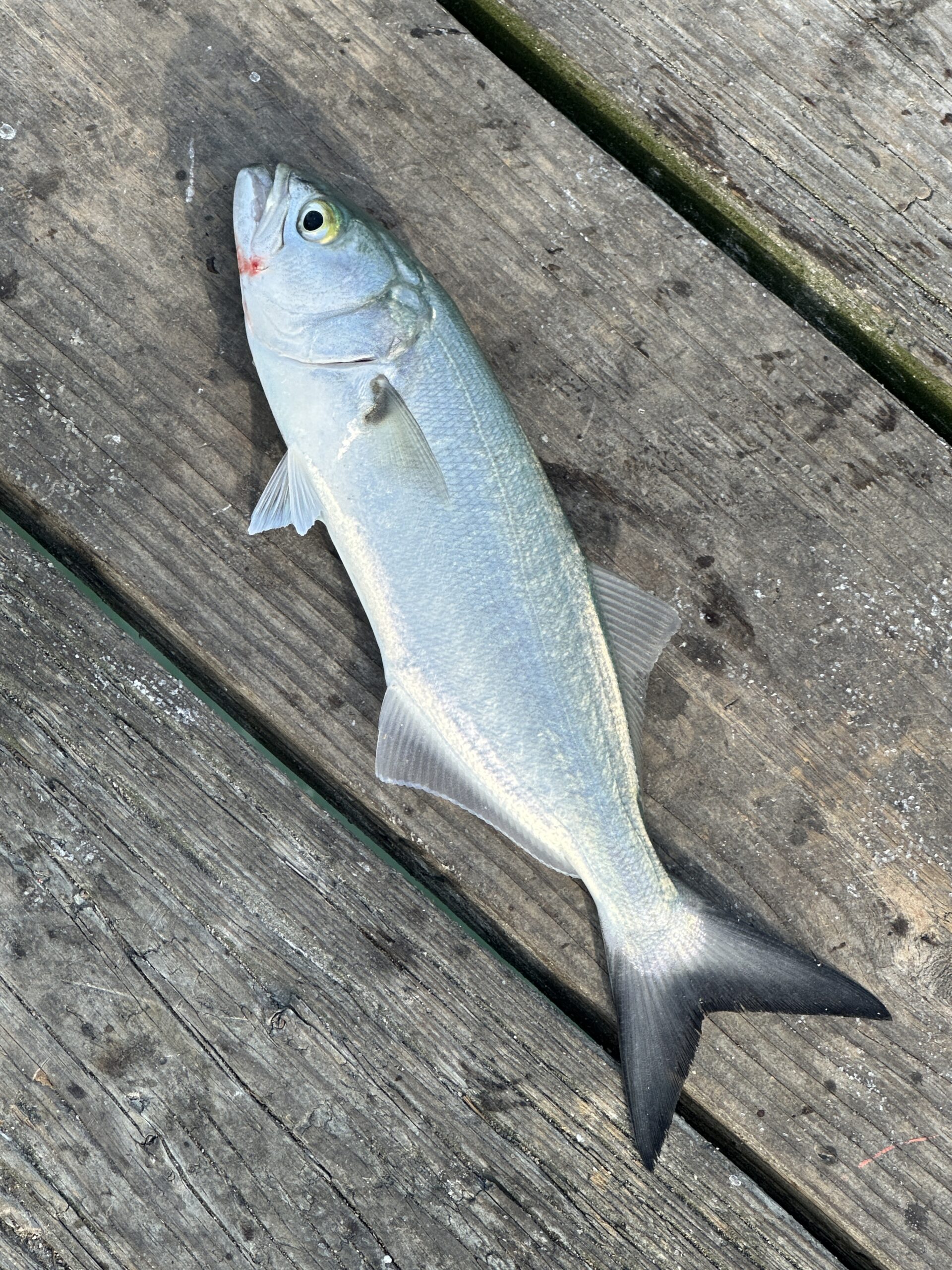
Bluefish caught with a Gotcha Plug