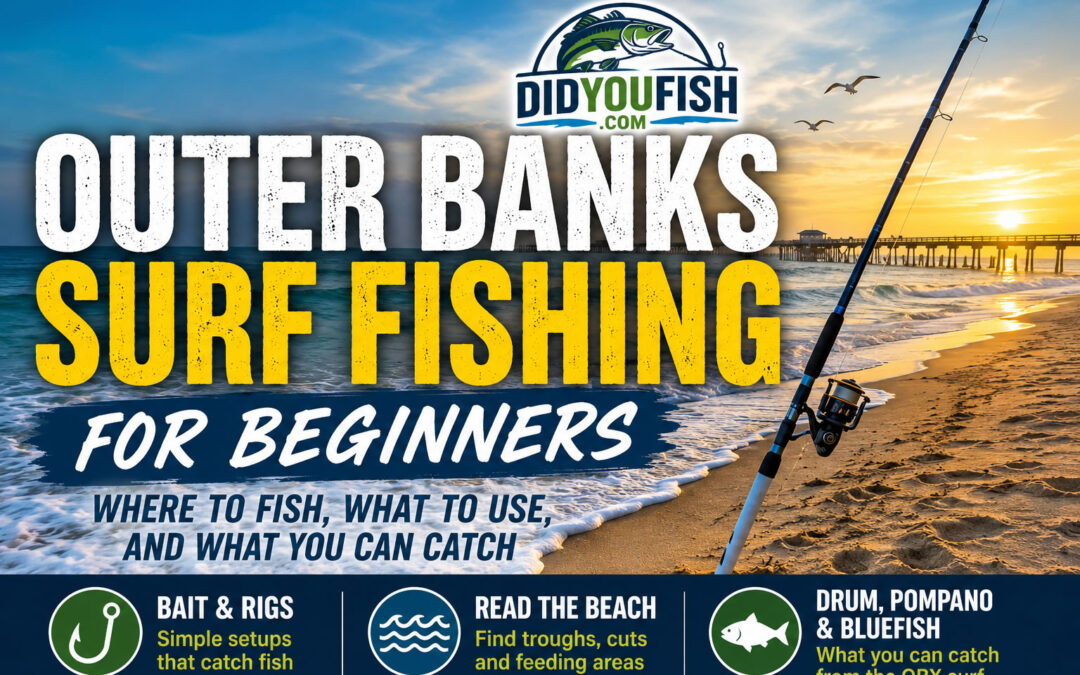
Outer Banks Surf Fishing for Beginners: Where to Fish, What to Use, and What You Can Catch
Outer Banks surf fishing is one of the best ways to experience North Carolina saltwater fishing. You do not need a boat, a charter trip, or expensive gear to catch fish from the beach. With a basic surf rod, simple rig, fresh bait, and a little understanding of the water, beginners can catch fish from the sand all along the Outer Banks.
The Outer Banks gives anglers miles of beach, moving water, sandbars, sloughs, inlets, piers, points, and surf zones where fish feed close enough to reach from shore. Depending on the season and conditions, surf anglers may catch sea mullet, bluefish, pompano, spot, croaker, red drum, black drum, Spanish mackerel, sharks, skates, rays, speckled trout, and flounder depending on current regulations.
The key for beginners is not casting as far as possible. The key is learning where fish travel, what bait they are eating, and how wind, tide, waves, and water clarity affect the bite.
Quick Answer: Outer Banks Surf Fishing for Beginners
For beginner surf fishing on the Outer Banks, start with a 9- to 11-foot surf rod, a spinning reel, 15- to 30-pound line, a simple bottom rig or fish finder rig, and bait such as shrimp, sand fleas, Fishbites, squid, or cut mullet.
Good beginner targets include sea mullet, spot, croaker, pompano, bluefish, small drum, sharks, skates, and rays. Fish early morning, evening, or moving tide when possible. Look for sloughs, cuts in the sandbar, deeper troughs, washouts, points, and areas where baitfish or birds are active.
Why the Outer Banks Is Good for Surf Fishing
The Outer Banks is built for surf fishing. The beaches are long, open, and constantly changing. Wind, tide, waves, storms, and shifting sandbars create new holes, cuts, troughs, and current seams where fish can feed.
Beginners like the Outer Banks because there are many places to fish from shore. You can fish from public beach accesses, near piers, close to inlets, along quiet stretches of sand, or near deeper water depending on where you are staying.
The Outer Banks also has a wide range of fish. Some days may be all about small bottom fish like sea mullet, spot, and croaker. Other days may bring bluefish, Spanish mackerel, puppy drum, black drum, pompano, or sharks close to the beach.
Best Places to Surf Fish on the Outer Banks
You can catch fish from many Outer Banks beaches, but beginners should look for places with visible water movement and structure.
Good areas to try include:
- Beach access areas with deeper troughs
- Cuts in the sandbar
- Sloughs close to shore
- Points and curves in the beach
- Areas near piers
- Inlet areas when conditions are safe
- Beaches with baitfish activity
- Spots where birds are feeding
- Places where waves break differently
- Deeper holes near low tide
You do not need to stand in one place all day. Walk the beach and look for better-looking water. A small change in depth, current, or sandbar shape can make one stretch much better than another.
Best Bait for Outer Banks Surf Fishing
The best bait depends on what you are trying to catch, but beginners can cover a lot with a few simple choices.
Good surf fishing baits include:
- Shrimp
- Sand fleas
- Fishbites
- Squid
- Cut mullet
- Finger mullet
- Bloodworms
- Cut bait
- Menhaden
- Small pieces of fresh baitfish
Shrimp is one of the easiest beginner baits because many fish will eat it. Fishbites are popular because they stay on the hook well and can be used alone or with natural bait. Sand fleas are excellent for pompano, sea mullet, and drum when available. Cut mullet and other cut bait can attract red drum, bluefish, sharks, rays, and larger fish.
Fresh bait usually works better than old bait. Keep bait cool, replace it when it gets washed out, and use pieces that match the size of the fish you are targeting.
What Size Rod and Reel Do You Need?
For most beginner Outer Banks surf fishing, a 9- to 11-foot surf rod is a good choice. A longer rod helps cast over waves and keep line above the surf.
A good beginner setup:
- 9- to 11-foot surf rod
- Medium-heavy power
Spinning reel in the 4000 to 6000 size range - 15- to 30-pound monofilament or braided line
- Pyramid sinkers from 2 to 5 ounces
- Assorted bottom rigs and fish finder rigs
- Pliers, sand spike, bait knife, and measuring tape
If you are mostly catching smaller fish, lighter gear is fine. If you are targeting big drum, sharks, or larger fish, you will need heavier tackle.
Best Time to Surf Fish on the Outer Banks
The best time to surf fish depends on tide, wind, water clarity, season, and bait movement.
Good times include:
- Early morning
- Evening
- Moving tide
- Around high tide or falling tide, depending on beach shape
- Cloudy days
- Light wind
- Clean water
When baitfish are present
Low tide can be useful for scouting because it reveals cuts, troughs, sandbars, and holes. High tide can bring fish closer to shore. Moving water is usually better than still water.
During hot weather, early and late are often better than the middle of the day. During cooler months, midday sun can sometimes help warm shallow water and improve the bite.
Check North Carolina Saltwater Regulations
Before keeping fish from the Outer Banks surf, check current North Carolina saltwater fishing regulations. Rules can change by species, season, size limit, creel limit, and location.
This is especially important for red drum, black drum, speckled trout, flounder, sharks, Spanish mackerel, bluefish, and other regulated species.
Anglers should also make sure they have the correct North Carolina coastal recreational fishing license before fishing from the beach.
What Fish Can You Catch from the Beach?
Outer Banks surf fishing can produce a mix of small, medium, and sometimes large fish.
Common surf catches may include:
- Sea mullet
- Spot
- Croaker
- Pompano
- Bluefish
- Spanish mackerel
- Red drum
- Black drum
- Speckled trout
- Flounder, depending on season and regulations
- Sharks
- Skates
- Rays
For beginners, sea mullet, spot, croaker, pompano, bluefish, skates, and small sharks are often some of the more likely catches. Red drum and black drum are popular targets, especially when bait, tide, and surf conditions line up.
Spanish mackerel and bluefish may show up when clean water and baitfish are close to shore. In those moments, casting metal spoons, Gotcha-style plugs, or small jigs can be better than soaking bait on the bottom.
Best Rigs for Beginner Surf Fishing
You do not need complicated rigs to start surf fishing.
Good beginner rigs include:
- Two-hook bottom rig
- Pompano rig
- Fish finder rig
- Carolina rig
- High-low rig
- Simple cut bait rig
A two-hook bottom rig or pompano rig is a good starting point for sea mullet, spot, croaker, pompano, and small drum. Add a pyramid sinker heavy enough to hold bottom and bait the hooks with shrimp, Fishbites, sand fleas, or squid.
A fish finder rig is a good choice for red drum, black drum, bluefish, sharks, and larger bait. It lets the fish pick up the bait with less resistance.
For casting lures, keep a second rod ready with a metal spoon, Gotcha-style plug, jig, or casting lure. If bluefish or Spanish mackerel start chasing bait, you may only have a short window to cast.
How to Read the Beach
Reading the beach is one of the most important surf fishing skills. Beginners often cast straight out without thinking about where fish are actually feeding.
Look for:
- Darker water that may indicate a deeper trough
- Areas where waves stop breaking
- Cuts where water flows through a sandbar
- Rip currents or moving water
- Points that push into the surf
- Birds diving or hovering
- Baitfish flipping near the surface
- Foam lines and current seams
- Shell beds or changes in bottom texture
Fish often travel through troughs close to shore. Many beginners cast past the fish. Start with one bait close, one bait farther out, and adjust based on bites.
Common Beginner Mistakes
One common mistake is using too much gear. Beginners often bring too many rods, too many rigs, and too many bait choices. Start simple and learn what works.
Another mistake is using bait that is too large for the fish present. If small fish are stealing bait, use smaller hooks and smaller bait pieces.
Many beginners also cast too far. Fish may be feeding in the trough just beyond the wash. Try different distances before assuming the fish are far offshore.
Another mistake is ignoring water conditions. Dirty water, heavy grass, strong side current, rough surf, and heavy wind can make fishing harder. Sometimes the best move is to change location.
Surf Fishing Safety
The Outer Banks surf can be powerful. Beginners should pay attention to waves, current, weather, and beach conditions. Bring:
- Sunscreen
- Water
- Hat and sunglasses
- Pliers
- Fish grips or dehooker
- Measuring tape
- Sand spikes
- First aid kit
- Phone
- Trash bag
Watch for rip currents, sudden drop-offs, lightning, strong wind, sharp shells, hooks in the sand, and vehicles on beaches where driving is allowed. If you catch sharks, rays, or fish with sharp teeth or spines, handle them carefully.
Did You Fish? Outer Banks Surf Fishing Beginners
Outer Banks surf fishing for beginners is about learning the beach, keeping your setup simple, and paying attention to changing conditions. The Outer Banks is one of the best places in North Carolina to learn surf fishing because it offers miles of shoreline, shifting sandbars, sloughs, troughs, inlets, piers, points, and moving water where fish can feed close to the beach. You do not need to be an expert caster or own expensive tackle to catch fish from the surf. A basic surf rod, spinning reel, bottom rig, pyramid sinker, fresh bait, and a little patience can give beginners a real chance at catching sea mullet, spot, croaker, pompano, bluefish, red drum, black drum, sharks, skates, rays, and other saltwater fish.
The most important surf fishing lesson is that fish are not spread evenly along the beach. They use structure just like freshwater fish do. In the surf, that structure may not look like a dock or brush pile. It may be a deeper trough, a cut through the sandbar, a slough, a point, a current seam, a washout, or a place where waves break differently. If you can learn to spot those features, your Outer Banks surf fishing trips will become much more productive. Low tide is a great time to scout because it reveals the shape of the beach. When the tide comes back in, those same cuts and troughs may become feeding lanes for fish.
Beginners should also match bait and hook size to the fish they are most likely to catch. Small pieces of shrimp, sand fleas, Fishbites, squid, and bloodworms can work well for sea mullet, spot, croaker, and pompano. Cut mullet, finger mullet, menhaden, and larger bait may attract red drum, black drum, bluefish, sharks, rays, and bigger fish. If fish are stealing bait without getting hooked, use a smaller hook or smaller bait. If your bait keeps washing away, use a better bait thread, smaller pieces, or bait that stays on the hook longer.
Timing matters, too. Early morning, evening, and moving tide are often better than bright, still, hot midday conditions. Clean water, light wind, baitfish, birds, and steady current can all improve the bite. But surf fishing changes quickly. One day may be full of small bottom fish, and the next may bring bluefish, Spanish mackerel, drum, or sharks close to the beach.
The best advice for beginner Outer Banks surf anglers is to stay flexible. Move if the water looks dead. Change bait if fish are not biting. Try different casting distances. Keep one rod close and one farther out. Watch what other anglers are doing, but also learn to read the beach for yourself. Outer Banks surf fishing rewards observation, patience, and simple adjustments. Once you understand where to fish, what to use, and what you can catch, every walk down the beach becomes a chance to find the next good bite.