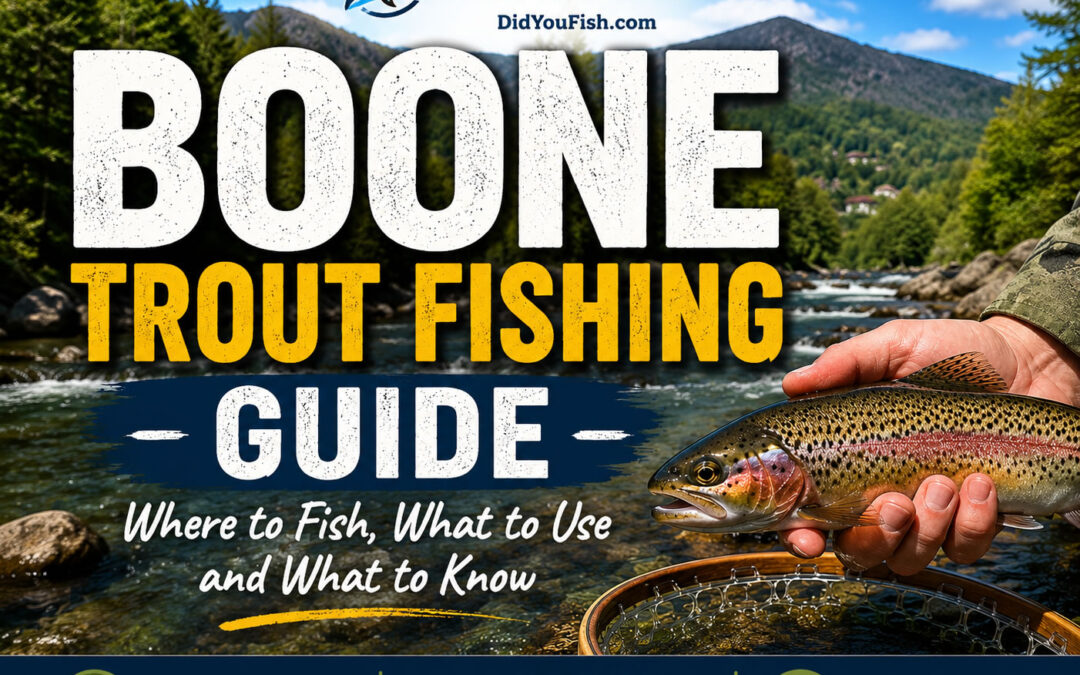
Boone Trout Fishing Guide: Where to Fish, What to Use and What to Know
Boone is one of the best-known mountain towns in North Carolina, and for anglers, it sits in the middle of a strong trout fishing region. The area has cold mountain streams, scenic rivers, Blue Ridge Parkway waters, nearby stocked trout water, wild trout water, delayed harvest sections, and plenty of places where beginners can learn how to fish for trout without needing a boat.
If you are used to pond, lake, or coastal fishing, trout fishing near Boone feels different. The water is colder, clearer, faster, and usually smaller. You are often fishing around rocks, riffles, pools, undercut banks, current seams, and shaded pockets instead of open water. That means presentation matters. Light line, smaller hooks, natural drifts, and quiet movement can make a big difference.
Boone trout fishing can be good for both beginners and experienced anglers, but it helps to understand the types of trout water, the seasonal patterns, and the regulations before you go. The Boone area is known for mountain fishing access, with local tourism describing the region’s rivers and streams as attractive to both experienced and novice anglers looking for trout and other species. The Blue Ridge Parkway area near Boone also has public fishing opportunities, but anglers should check license rules and specific water regulations before fishing.
Quick Answer: Is Trout Fishing Good in Boone?
Yes, trout fishing near Boone can be very good, especially if you are willing to fish the right water for the season and follow current North Carolina trout regulations. Anglers around Boone may find rainbow trout, brown trout, and brook trout in different types of mountain water.
Some trout waters are stocked. Some are wild. Some are delayed harvest. Some may have bait restrictions, lure restrictions, harvest rules, or seasonal regulations. Before fishing, use the North Carolina Wildlife Resources Commission trout waters search and current stocking information so you know exactly what rules apply to the water you plan to fish.
What Kind of Trout Can You Catch Near Boone?
The Boone area gives anglers a chance at the three main trout species associated with North Carolina mountain fishing:
Rainbow trout are commonly stocked and are often a realistic target for beginners. Brown trout can be more cautious, especially in clear water or heavily fished areas. Brook trout are the native trout of the Southern Appalachians and are often associated with colder, cleaner mountain streams.
Not every stream has all three species, and not every section is managed the same way. That is why Boone trout fishing is more about knowing the water than just showing up with bait.
Watauga River Trout Fishing
The Watauga River is one of the best-known trout names associated with the Boone and High Country area. Different sections of the Watauga can fish differently, and access, regulations, water levels, and conditions matter.
Anglers may target trout around riffles, deeper runs, pools, seams, and areas where current brings food to fish. In clear water, trout can be cautious, so lighter line and a natural presentation can help.
Good options may include:
- Small nymphs
- Dry flies during hatches
- Streamers in deeper water
- Small spinners
- Trout worms
- Salmon eggs where bait is legal
- Corn where bait is legal
- Small jigs
- Soft plastics where legal
Always check the specific section you plan to fish. A stretch that allows bait may be managed differently than a delayed harvest or wild trout section.
Hatchery Supported Trout Waters Near Boone
Hatchery supported trout waters are stocked trout waters managed for harvest opportunity. These can be good places for beginners because stocked trout are often more accessible than wild trout in tiny mountain streams.
According to the NC Wildlife trout waters search, hatchery supported trout waters generally have no size limit or bait restriction, and the creel limit is seven trout per day, but anglers should still check the current rules for the specific water before fishing.
For hatchery supported water, beginner-friendly options may include:
- Salmon eggs
- Trout worms
- Corn where legal
- PowerBait-style dough bait where legal
- Small spinners
- Small spoons
- Small jigs
- Worms where legal
These waters can be popular after stocking, so expect company. If one easy access spot is crowded, move around and look for less obvious pools and runs.
Wild Trout Fishing Near Boone
Wild trout fishing is different from stocked trout fishing. Wild trout are born in the stream and usually behave more naturally. They can be smaller, quicker, more cautious, and more sensitive to poor presentation.
For wild trout, use:
- Light line
- Small flies
- Small spinners
- Small soft plastics where legal
- Natural colors
- Quiet movement
- Careful casting
Wild trout streams are not the place for heavy line, oversized bait, or careless wading. These streams are often fragile, and the fish may not tolerate much pressure. Handle trout carefully, wet your hands before touching fish, and release them quickly if you are not keeping them.
Best Time of Day to Trout Fish Near Boone
The best time of day depends on season and water conditions.
Good times include:
- Early morning
- Late afternoon
- Cloudy days
- After light rain when water is not muddy
- During insect activity
- When water is cool and oxygenated
In summer, early morning is usually best. In winter, the middle of the day can be better if the water warms slightly. On cloudy spring or fall days, trout may feed throughout the day.
Best Lures for Boone Trout Fishing
Artificial lures are useful because they cover water and can be used in many places where bait is not allowed, depending on the rules.
Good trout lures include:
- Inline spinners
- Small spoons
- Trout magnets
- Small jigs
- Mini crankbaits
- Soft plastic trout worms
- Small jerkbaits
- Single-hook lures where required
For beginners, a small gold, silver, or natural-colored spinner is one of the easiest trout lures to use. Cast upstream or across current and retrieve just fast enough to keep the blade working.
In clear water, smaller and more natural usually works better.
Simple Beginner Trout Setup
A basic spinning setup for Boone trout fishing might include:
- 5- to 7-foot ultralight or light spinning rod
- 1000 to 2500 size spinning reel
- 4- to 6-pound line
- Small hooks
- Small split shot
- Small floats
- Inline spinners
- Small spoons
- Trout worms
- Salmon eggs where legal
- Hemostats or pliers
- Small landing net
- Polarized sunglasses
For fly fishing, a 3-weight, 4-weight, or 5-weight fly rod can work depending on the stream size and conditions.
Common Mistakes Beginners Make
One common mistake is using line that is too heavy. Clear mountain water makes trout cautious, and heavy line can hurt your chances.
Another mistake is walking right up to the edge of the stream and casting into the closest pool. Trout can feel vibration and see movement. Approach slowly and quietly.
Many beginners also use too much weight. Your bait should drift naturally. If it drags like an anchor, use less weight.
Another mistake is ignoring regulations. Boone-area trout water can change from one section to another. Always check the exact water before you fish.
Where to Fish for Trout Near Boone
There are several general types of trout water anglers may look for near Boone, Watauga County, Blowing Rock, and the surrounding High Country.
Good places to research include:
- Watauga River sections
- Boone Fork area
- Blue Ridge Parkway waters
- Nearby delayed harvest trout waters
- Hatchery supported trout waters
- Wild trout streams
- Public mountain trout waters
- Small creeks and tributaries where fishing is allowed
- Nearby lakes and ponds with trout opportunities
Do not assume every pretty mountain stream is legal to fish or open under the same rules. Some waters are public. Some are private. Some are stocked. Some are wild trout water. Some sections may be delayed harvest. Some may require artificial lures only at certain times.
The safest approach is to choose a stream or section first, then check the official NC trout waters map, stocking information, and regulation category before you fish.
Boone Fork and Blue Ridge Parkway Fishing
The Boone area also gives anglers access to scenic mountain water around the Blue Ridge Parkway. Parkway waters can be beautiful, but anglers should pay close attention to rules. Explore Boone notes that a fishing license is required on Blue Ridge Parkway land for the state you are fishing in, and it lists Parkway fishing hours as one-half hour before sunrise to one-half hour after sunset.
Boone Fork and nearby waters can be attractive for anglers who like smaller stream fishing. This type of water is usually more technical than bait fishing a stocked roadside stream. You may be dealing with clear pools, spooky trout, overhanging trees, rocks, pocket water, and short casts.
For small streams, think simple:
- Light spinning rod or fly rod
- Small lures or flies
- Light line
- Quiet approach
- Short accurate casts
- Natural drift
- Careful wading
Trout in small clear streams can see and feel more than beginners expect. Stay low, avoid stomping on the bank, and fish upstream when possible.
Delayed Harvest Trout Waters Near Boone
Delayed harvest trout waters can offer good trout fishing, but the rules are more specific. NC Wildlife notes that delayed harvest trout waters have lure and harvest regulations that vary during the year, so anglers need to check the current regulation before fishing.
In many delayed harvest situations, anglers should be prepared to fish artificial lures or flies during certain periods and release trout until harvest opens. Do not guess. Check the exact rules for the stream and date.
Good delayed harvest choices may include:
- Fly fishing nymphs
- Dry flies
- Streamers
- Single-hook artificial lures where required
- Small spinners where allowed
- Small jigs where allowed
Delayed harvest fishing can be great for beginners who want to learn trout tactics because fish may be present in good numbers, but the regulations require more attention.
Best Time of Year for Boone Trout Fishing
Trout fishing near Boone can vary by season.
Spring is one of the most popular times because water temperatures are often good, trout may be more active, and stocking can create strong opportunities in hatchery supported and delayed harvest waters.
Summer can still produce trout, especially in colder streams, shaded water, higher elevation areas, and early morning conditions. During hot weather, trout can become stressed, especially in warmer water. Fish early, avoid overplaying fish, and consider leaving trout alone if water temperatures are too warm.
Fall can be excellent. Cooler water, fewer crowds, active fish, and beautiful mountain scenery make fall a strong trout fishing season.
Winter can also produce trout, but the fishing is usually slower. Focus on deeper pools, slower presentations, warmer parts of the day, and smaller baits or flies.
Best Bait for Trout Fishing Near Boone
Bait rules depend on the water classification, so check before using natural bait.
Where bait is legal, common trout baits include:
- Salmon eggs
- Trout worms
- Nightcrawler pieces
- Corn
- Dough bait
- Crickets
- Wax worms
- Small minnows where legal
For beginners fishing hatchery supported waters, salmon eggs, trout worms, and small pieces of worm are simple starting options. Use small hooks and light line. Trout often bite lightly, so do not bury the hook in a giant chunk of bait.
Fly Fishing Near Boone
Boone and the surrounding High Country are popular with fly anglers. You do not have to fly fish to catch trout, but fly fishing can be very effective in mountain streams.
Common fly choices include:
- Nymphs
- Dry flies
- Streamers
- Woolly buggers
- Pheasant tails
- Hare’s ears
- Prince nymphs
- Elk hair caddis
- Adams-style dries
- Midge patterns
Beginners often do best with nymphs because trout feed below the surface much of the time. Dry flies can be great when fish are rising, while streamers can work well in deeper pools or slightly stained water.
How to Read Trout Water
Trout like places where they can hold in current without wasting energy while food drifts by.
Look for:
- Pools
- Riffles
- Runs
- Eddies
- Current seams
- Undercut banks
- Rocks
- Logs
- Shade
- Foam lines
- Deeper pockets
- Tailouts
A good trout spot often has current, cover, depth, and food. Cast above the fish and let the bait, lure, or fly move naturally into the feeding lane.
Do not only fish the obvious big pool. The head of the pool, edges of current, and small pockets behind rocks can hold trout too.
Check Regulations Before Fishing
North Carolina trout regulations can vary by water, season, bait type, lure type, hook type, size limit, and harvest limit. Before fishing near Boone, check the current NC Wildlife trout waters search, stocking information, license requirements, and the specific classification of the stream or section you plan to fish. NC Wildlife also notes that the Bobby N. Setzer State Fish Hatchery is scheduled for renovation beginning in 2026, with expected reductions in trout stockings during 2026, 2027, and potentially 2028, so anglers should pay close attention to current stocking updates.
Did You Fish? Boone Trout Fishing
Boone trout fishing is a great way to experience the North Carolina mountains. It is scenic, challenging, peaceful, and accessible to beginners who are willing to learn the basics. Unlike fishing a pond or casting from a beach, mountain trout fishing rewards patience and observation. You are not just throwing bait into the water. You are watching current, reading pools, looking for seams, adjusting weight, choosing smaller hooks, and trying to make your bait, lure, or fly look natural.
For beginners, the best way to start is to keep things simple. Pick one legal public trout water, check the rules, bring a light spinning rod, small hooks, a few split shot, and a handful of proven trout baits or lures. If bait is allowed, salmon eggs, trout worms, small pieces of nightcrawler, or other simple trout baits can work well. If artificial lures are required or preferred, small spinners, spoons, jigs, and trout-style soft plastics are good choices. Fly anglers can start with basic nymphs, dry flies, and small streamers.
The Boone area gives anglers a variety of trout fishing options, from stocked waters where beginners have a better chance of catching fish to smaller wild trout streams where stealth and presentation matter more. Hatchery supported waters can be a good place to learn. Delayed harvest waters can be excellent, but they require anglers to pay closer attention to seasonal rules. Wild trout streams can be beautiful and rewarding, but they should be treated with extra care.
The biggest key is matching your approach to the water. In clear, low water, go lighter and smaller. After rain, look for water that has a little color but is not blown out. In summer, fish early and focus on cold, shaded water. In winter, slow down and fish deeper pools. In spring and fall, cover water and watch for active fish.
Whether you are fishing near Boone, Blowing Rock, Watauga County, the Blue Ridge Parkway, or another High Country stream, trout fishing is about more than catching fish. It is about learning how mountain water works. Once you start seeing where trout hold and how they feed, the whole stream begins to make more sense.