Best Trout Baits for North Carolina Mountain Streams: Beginner Guide
Boone is one of the best-known Trout fishing in North Carolina mountain streams can be simple, but choosing the right bait makes a big difference. The water is often cold, clear, shallow, and moving, which means trout usually have time to inspect what drifts past them. Some days they will hit almost anything. Other days they ignore bait that looks too large, too bright, too heavy, or too unnatural.
The best trout bait depends on where you are fishing, what type of trout water you are on, the season, water clarity, current, and whether bait is even allowed. In North Carolina, trout regulations can change by stream section. Some waters allow natural bait. Some are artificial-lure-only during certain times. Some are delayed harvest. Some are wild trout waters. Before using bait, always check the current NC trout regulations for the exact stream or section you plan to fish.
For beginners, the best trout baits are usually small, simple, and easy to fish. Worms, salmon eggs, corn where legal, trout dough bait, small live bait where legal, spinners, jigs, and flies can all catch trout in North Carolina mountain streams.
Quick Answer: What Is the Best Trout Bait?
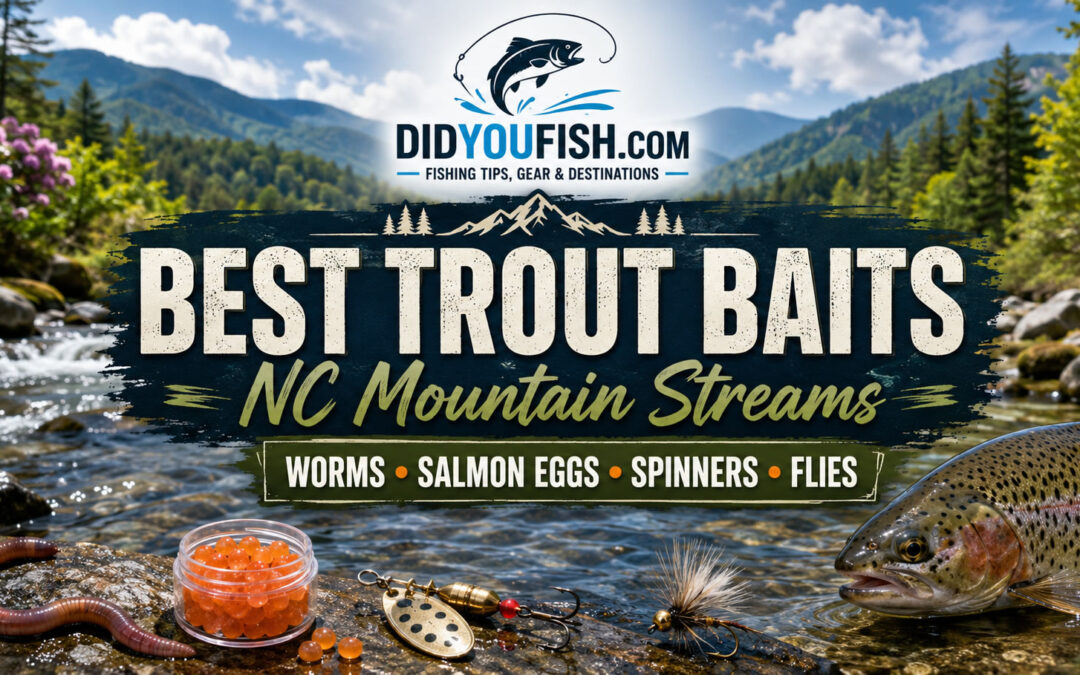
For stocked trout in North Carolina mountain streams, some of the best beginner baits include salmon eggs, small pieces of nightcrawler, trout worms, corn where legal, and trout dough bait where legal. For wild trout or clear mountain streams, smaller and more natural presentations usually work better. Small worms, tiny jigs, nymphs, dry flies, and small spinners can be good choices. For delayed harvest or artificial-lure-only water, use legal artificial lures or flies such as spinners, spoons, jigs, nymphs, streamers, or trout magnets.
The safest answer is this: Use the smallest bait that looks natural, drifts well, and is legal for the water you are fishing.
Check the Rules Before Using Bait
This is the most important part of trout fishing in North Carolina.
Do not assume every mountain stream allows the same bait. One section may allow worms and salmon eggs, while another section nearby may require artificial lures only. Delayed harvest trout waters often have special seasonal rules. Wild trout waters may have different restrictions. Hatchery supported waters are often more beginner-friendly, but you still need to confirm the current rules before fishing.
Before you go, check:
- Whether the stream is public or private
- Whether it is hatchery supported, delayed harvest, wild trout, or another classification
- Whether natural bait is allowed
- Whether artificial lures are required
- Whether single hooks are required
- Size limits
- Creel limits
- Seasonal closures or harvest rules
If you are not sure, look up the stream before you fish. It is better to check first than to find out later that the bait you were using was not allowed.
Salmon Eggs
Salmon eggs are a classic stocked trout bait. They are small, bright, easy to use, and popular with beginner anglers. They can be especially effective in hatchery supported water or places where trout have recently been stocked.
Best for:
- Stocked rainbow trout
- Hatchery supported streams
- Beginners
- Small hooks
- Clear to slightly stained water
Salmon eggs are usually fished on a small hook with light line and a small split shot. You do not need a giant clump. One or two eggs can be enough.
Beginner tip:
If trout are biting but not getting hooked, downsize your hook or use less bait. Trout often pick at bait lightly, especially in clear water.
Corn
Corn is a common trout bait in some stocked trout areas, but it is not legal everywhere. Check the rules before using it.
Corn can work because it is small, bright, easy to see, and similar in size to salmon eggs or feed pellets. Stocked trout may pick it up quickly in the right water.
Best for:
- Stocked trout where legal
- Hatchery supported water where legal
- Beginners
- Slow pools
- Easy access areas
Beginner tip:
Use one or two kernels on a small hook. Too much corn can look unnatural and make it harder to hook fish.
Small Spinners
Spinners are one of the easiest trout lures for beginners. They flash, vibrate, and cover water quickly. Small inline spinners can catch rainbow trout, brown trout, and brook trout when used correctly.
Best for:
- Trout streams
- Rivers
- Runs
- Pools
- Active fish
- Covering water
- Artificial-lure areas where legal
Good colors include silver, gold, black, brown, olive, and natural baitfish colors. Bright colors may help in stained water.
Beginner tip:
Cast upstream or across current and retrieve just fast enough to keep the blade spinning. If you reel too fast, the lure may ride too high. If you reel too slow, it may snag.
Trout Jigs
Small jigs are very useful for trout. They can imitate insects, minnows, larvae, worms, and other food depending on the color and style.
Best for:
- Stocked trout
- Clear streams
- Deeper pools
- Slow drifts
- Artificial-lure areas where legal
- Winter trout fishing
Common jig sizes include 1/64, 1/32, and 1/16 ounce. Lighter jigs drift more naturally. Heavier jigs sink faster and help in deeper or faster water.
Beginner tip:
Let the jig drift naturally with small twitches. Many bites feel like a light tap or sudden stop.
Live Minnows and Other Natural Bait
Small live bait may work for trout in some waters, but legality depends on the stream and regulations. Always check before using minnows or other live bait.
Best for:
- Larger trout where legal
- Deeper pools
- Bigger streams
- Brown trout
- Stocked trout in some areas
Beginner tip:
Use live bait only where it is clearly allowed. Many trout waters have rules designed to protect wild trout populations and stream ecosystems.
Best Bait for Wild Trout
Wild trout are usually more cautious than stocked trout. They live in the stream year-round and feed on natural food.
Good wild trout options include:
- Small nymphs
- Dry flies
- Tiny streamers
- Small spinners
- Small natural-colored jigs
- Small worm pieces where legal
For wild trout, presentation matters more than bait size. Stay low, move quietly, use light line, and avoid casting a shadow over the water.
Best Bait for Brown Trout
Brown trout can be more cautious, especially in clear water or heavily fished streams.
Good brown trout options include:
- Small minnows where legal
- Streamers
- Worms where legal
- Natural-colored spinners
- Small spoons
- Nymphs
- Crayfish-style patterns
Jigs
Brown trout often like cover, undercut banks, deeper pools, shade, and structure.
Best Bait for Brook Trout
Brook trout are the native trout of the Southern Appalachians and are often found in colder, cleaner mountain streams.
Good brook trout options include:
- Small dry flies
- Tiny nymphs
- Small spinners
- Small natural baits where legal
- Small jigs
- Tiny streamers
Brook trout streams can be fragile. Handle fish carefully, keep them wet, and release them quickly if you are not harvesting legally.
Beginner Trout Bait Setup
A simple beginner setup for mountain trout fishing:
- Light or ultralight spinning rod
- 4- to 6-pound line
- Size 8 to 14 hooks
- Small split shot
- Small float
- Salmon eggs
- Trout worms
- Small spinners
- Small jigs
- Needle-nose pliers or hemostats
- Small landing net
- Polarized sunglasses
For bait fishing, start with a small hook, one small split shot, and a small piece of bait. Cast slightly upstream and let it drift naturally through the pool or run.
Nightcrawlers and Small Worms
Worms are one of the oldest and most reliable trout baits. Trout eat aquatic insects, larvae, worms, and other small natural foods that get washed into the stream, so a properly presented worm can look like an easy meal.
The key is not to use too much worm.
A full nightcrawler is often too large for clear mountain trout water. Instead, use a small piece of worm on a small hook. Let it drift naturally through pools, riffles, runs, and current seams.
Best for:
- Stocked trout
- Hatchery supported waters
- Beginner trout fishing
- Slightly stained water
- Pools and runs
- Early season fishing
Beginner tip:
Use light line, a small hook, and just enough split shot to get the worm near the bottom. If the bait is dragging too heavily, remove weight. If it is floating too high, add a tiny split shot.
Trout Worms
Soft plastic trout worms can work well in mountain streams, especially when natural bait is not allowed but artificial lures are legal. They imitate small worms, larvae, and drifting food.
Best for:
- Stocked trout
- Artificial lure situations where legal
- Clear water
- Small stream fishing
- Drift presentations
Trout worms can be fished on a tiny jighead, small hook, or under a float. Natural colors often work well in clear water. Brighter colors can help in stained water or stocked trout areas.
Beginner tip:
Do not overwork the bait. In moving water, a natural drift often works better than constant jerking or reeling.
Trout Dough Bait
Trout dough bait can be effective for stocked trout, especially in slower pools, deeper holes, and areas where trout are holding near the bottom. It is more common in stocked lakes, ponds, and hatchery supported areas than in small wild trout streams.
Best for:
- Stocked trout
- Hatchery supported waters where legal
- Slower pools
- Beginner bank fishing
- Easy access trout spots
Dough bait is usually molded around a small hook. Some types float, which can help keep bait just off the bottom.
Beginner tip:
Use just enough bait to cover the hook. If the bait ball is too large, trout may nibble without getting hooked.
Small Spoons
Small spoons can be good trout lures in deeper pools, runs, and slightly larger streams. They wobble and flash like a small injured baitfish.
Best for:
- Deeper pools
- Larger streams
- Active trout
- Brown trout
- Stocked trout
- Clear or slightly stained water
Spoons can be cast upstream, across current, or into deeper water and worked back slowly.
Beginner tip:
Use small spoons for mountain trout. Oversized spoons may work for bigger fish, but small trout in clear streams often prefer a smaller presentation.
Flies and Nymphs
Fly fishing is popular in North Carolina mountain streams, and nymphs are often one of the most consistent ways to catch trout. Trout feed underwater much of the time, so nymphs can be effective even when fish are not rising.
Good beginner fly options include:
- Pheasant tail nymphs
- Hare’s ear nymphs
- Prince nymphs
- Stonefly nymphs
- Midge patterns
- Woolly buggers
- Elk hair caddis
- Adams-style dry flies
Best for:
- Wild trout streams
- Delayed harvest water
- Clear mountain streams
- Fly fishing
- Natural presentations
Beginner tip:
If you do not see trout rising, start below the surface with a nymph or small streamer.
Best Bait for Stocked Trout
Stocked trout often respond well to simple baits, especially shortly after stocking.
Good stocked trout baits include:
- Salmon eggs
- Small worms
- Trout dough bait
- Corn where legal
- Trout worms
- Small spinners
- Small jigs
- Small spoons
Stocked trout are often easier for beginners because they may be found near access points, bridges, pools, and areas where fish have recently been stocked. That does not mean they are always easy, but they usually give beginners a better chance than tiny wild trout streams.
Best Bait for Rainbow Trout
Rainbow trout often respond well to:
- Salmon eggs
- Worms
- Trout dough bait
- Corn where legal
- Small spinners
- Small jigs
- Nymphs
- Dry flies
Stocked rainbow trout are often the most beginner-friendly trout in North Carolina mountain streams.
Best Trout Bait by Water Condition
Clear water:
- Small nymphs
- Natural-colored spinners
- Tiny jigs
- Small worm pieces
- Light line
Stained water:
- Brighter salmon eggs
- Worms
- Brighter spinners
- Spoons
- Trout dough bait where legal
Fast current:
- Heavier split shot
- Small jigs
- Spinners
- Nymph rigs
- Bait drifted near bottom
Slow pools:
- Salmon eggs
- Trout dough bait
- Worm pieces
- Small jigs
- Nymphs
Cold water:
- Small jigs
- Nymphs
- Slow-drifted bait
- Worms
- Smaller presentations
Common Trout Bait Mistakes
The biggest mistake is using bait that is too large. Trout have small mouths and often feed on small insects, larvae, eggs, worms, and minnows. Smaller bait often looks more natural.
Another mistake is using too much weight. If the bait drags along the bottom like an anchor, it may not look natural. Use only enough split shot to get the bait down.
Another mistake is standing too close to the water. Trout can see movement and feel vibration. Approach quietly and fish the close water before stepping into the stream.
Many beginners also forget to check regulations. This matters a lot in North Carolina trout fishing. The best trout bait is useless if it is not legal on that section of water.
Did You Fish? Best Trout Baits for North Carolina Mountain Streams
The best trout bait for North Carolina mountain streams depends on the water you are fishing. For stocked trout, simple baits like salmon eggs, small worms, trout dough bait, corn where legal, trout worms, small spinners, and small jigs can all work. For wild trout, smaller and more natural options usually work better, including tiny nymphs, dry flies, small spinners, small jigs, and carefully drifted natural bait where legal. For delayed harvest trout water, artificial lures and flies are often the better starting point because of seasonal restrictions.
If you are a beginner, do not overcomplicate it. Start with light line, small hooks, small bait, and a natural drift. Trout in mountain streams usually do not need a giant bait or heavy tackle. A small piece of worm, one or two salmon eggs, a tiny jig, or a small spinner can catch fish when presented correctly. The goal is to make the bait move like something trout already expect to eat.
Pay close attention to the water. In clear water, use lighter line and smaller bait. In stained water, a little color can help. In fast current, use enough weight to get down but not so much that the bait drags unnaturally. In slow pools, let the bait settle and watch for subtle bites. In cold water, slow down. In warmer weather, fish early and focus on cold, shaded areas.
North Carolina mountain trout fishing is not just about having the “best” bait. It is about using the right bait in the right place, at the right depth, with the right presentation. Whether you are fishing near Boone, Blowing Rock, Asheville, Cherokee, Watauga County, the Blue Ridge Parkway, or another High Country trout stream, a small, natural-looking bait will usually give you the best chance.
Always check current NC trout regulations before fishing, especially if you plan to use worms, corn, salmon eggs, dough bait, or live bait. Once you know the rules, keep your setup simple, watch the current, and adjust until your bait drifts naturally. That is often what separates a quiet day from a good trout fishing trip.