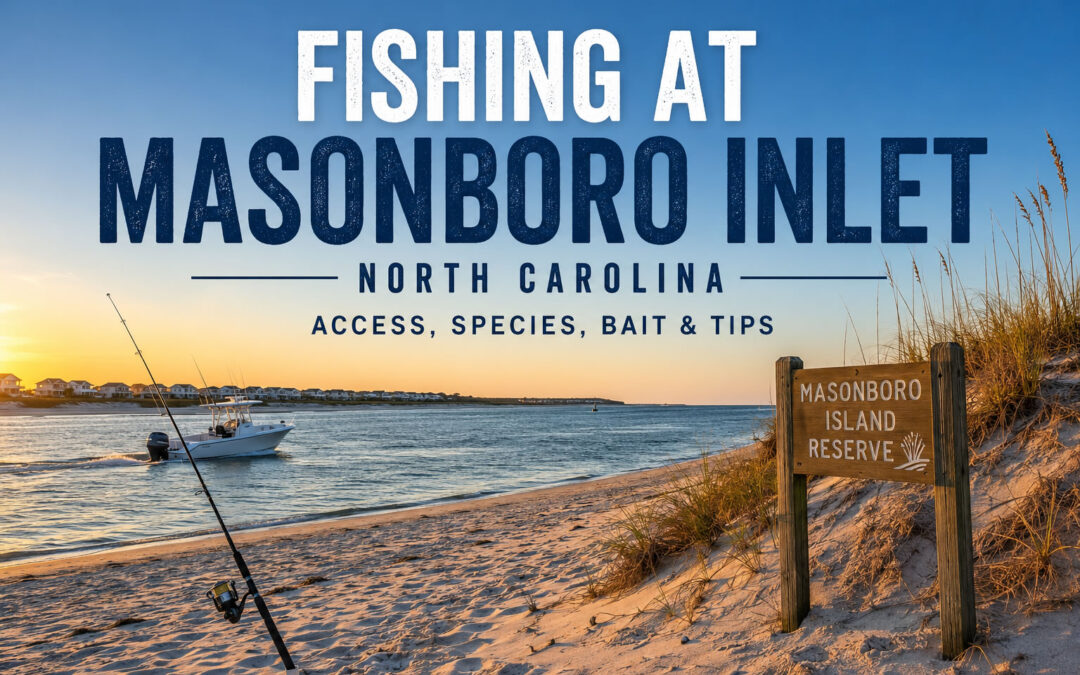
Fishing at Masonboro Inlet, North Carolina: Access, Species, Bait and Safety Guide
Masonboro Inlet is one of the most interesting saltwater fishing areas near Wilmington and Wrightsville Beach, North Carolina. The inlet connects the Atlantic Ocean with Masonboro Sound and the Intracoastal Waterway, creating moving water, changing depths and a variety of coastal habitats that can attract fish throughout the year.
Anglers may fish the area from boats and kayaks or travel by water to Masonboro Island, where fishing opportunities include the ocean beach, inlet shoreline, sound-side areas and nearby tidal creeks. Depending on the season and conditions, fishermen may encounter red drum, bluefish, Spanish mackerel, flounder, sea mullet, pompano, sheepshead, speckled trout and other coastal species.
Masonboro Inlet is not a roadside fishing destination. Masonboro Island Reserve can only be reached by water, and visitors must arrive by boat, kayak, canoe or private ferry service. Access, tides, currents, weather and safe transportation should all be considered before planning a trip.
This guide covers what anglers should know about fishing at Masonboro Inlet, including access, fish species, productive areas, bait and tackle, tides, regulations and coastal safety.
Quick Answer: Fishing at Masonboro Inlet
Masonboro Inlet is a productive coastal fishing area located between Wrightsville Beach and Masonboro Island in New Hanover County, North Carolina. Anglers may target red drum, flounder, bluefish, Spanish mackerel, sea mullet, pompano, sheepshead and other seasonal fish from boats, kayaks and the beaches of Masonboro Island.
Masonboro Island is accessible only by water, so visitors must plan transportation before traveling. Strong inlet currents, shifting shoals, boat traffic and changing weather can make the area challenging. Check the tides, marine forecast and current North Carolina fishing regulations before leaving, and avoid fishing or landing in areas where conditions exceed your experience.
Where Is Masonboro Inlet?
Masonboro Inlet is located south of Wrightsville Beach and north of Masonboro Island along the southeastern North Carolina coast. It connects the Atlantic Ocean to Masonboro Sound and the surrounding network of tidal creeks, marshes and channels.
The inlet sits near several well-known coastal destinations:
- Wrightsville Beach
- Masonboro Island Reserve
- Masonboro Sound
- The Intracoastal Waterway
- Carolina Beach
- Wilmington
- New Hanover County
The location gives anglers access to several different fishing environments within a relatively small area. Ocean-facing beaches, inlet currents, sandbars, deeper channels, marsh edges and sound-side water can all hold fish under the right conditions.
However, the inlet’s appearance and depth can change. Sand shifts, channels move and shoals develop over time. Anglers and boaters should not rely entirely on old maps, old fishing reports or memories from a previous trip.
Why Fish Masonboro Inlet?
The biggest attraction of Masonboro Inlet is the variety of water available to fish.
Ocean water moving through the inlet meets warmer, shallower water from Masonboro Sound and nearby marshes. Tidal movement can carry shrimp, mullet, menhaden, crabs and other forage through channels and along current edges. Predatory fish may gather near those feeding areas when conditions are favorable.
Anglers can choose among several types of fishing:
- Casting from the ocean beach
- Fishing near the inlet shoreline
- Drifting or anchoring from a boat
- Working marsh edges from a kayak
- Casting around docks, pilings and other legal structure
- Fishing tidal creeks and deeper sound-side channels
- Following schools of baitfish in open water
The variety makes Masonboro Inlet appealing to anglers who want more than a traditional beach or pier-fishing trip. It can produce action for beginners under calm conditions, but much of the area is better suited to anglers who understand tides, current and coastal navigation.
Public Access and Respecting the Reserve
Masonboro Island is part of the North Carolina Coastal Reserve system. Visitors should use legal access areas, protect dunes and vegetation, and avoid disturbing research equipment, nesting wildlife or sensitive habitat.
Land on durable sand where possible and avoid pulling boats across marsh vegetation. Do not walk through posted or protected nesting areas. Take fishing line, bait containers, food packaging and all other trash with you when leaving.
There are no ordinary visitor services throughout most of the reserve. Anglers should plan to be self-sufficient and should not expect drinking water, shaded shelters, tackle shops or dependable cell service.
Fishing is allowed when conducted according to current license requirements and fishing regulations. NCDEQ notes that visitors must have the appropriate licenses and permits before fishing within Coastal Reserve sites.
What Fish Can You Catch at Masonboro Inlet?
The species present can change with water temperature, salinity, tides, weather and seasonal migrations. No fish is guaranteed, but several popular coastal species may be encountered.
Red Drum
Red drum are one of the most popular targets around southeastern North Carolina inlets.
Smaller red drum may feed along marsh edges, creek mouths, oyster areas and shallow sound-side flats. Larger fish may travel through deeper water, inlet channels and ocean-side areas.
Useful offerings include:
- Live or cut mullet
- Fresh shrimp
- Menhaden
- Soft-plastic paddletails
- Shrimp imitations
- Spoons
- Topwater lures during suitable conditions
Look for moving water, baitfish, current seams and changes in bottom structure. Any red drum that is kept must meet current North Carolina regulations, and retained red drum must be reported under the state’s mandatory harvest-reporting requirements.
Flounder
Flounder may be found near sandy drop-offs, creek mouths, channel edges, docks, pilings and areas where moving water carries bait past the bottom.
Common choices include:
- Live mud minnows
- Finger mullet
- Soft-plastic jigs
- Bucktail jigs
- Shrimp imitations
- Slowly worked scented baits
Flounder regulations are highly seasonal and have changed frequently. For 2026, North Carolina announced a September 1–14 recreational season in Coastal and Joint Fishing Waters, with specific size and creel requirements. Anglers should verify the current proclamation before keeping any flounder because possession may be unlawful outside an open season.
Bluefish
Bluefish may move through the inlet while chasing mullet, menhaden and other baitfish. Feeding schools can appear quickly and may move just as fast.
Productive lures may include:
- Metal casting spoons
- Gotcha-style plugs
- Jigs
- Topwater plugs
- Cut bait
Bluefish have sharp teeth, so use pliers and handle them carefully. Regulations can change between seasons, and North Carolina increased its recreational bluefish bag limit beginning in 2026. Verify the current limit before keeping fish.
Spanish Mackerel
Spanish mackerel are most commonly associated with warmer months and the presence of small baitfish in clearer coastal water.
Anglers may cast or troll:
- Small metal spoons
- Gotcha plugs
- Clarkspoons
- Glass-minnow imitations
- Fast-moving jigs
Spanish mackerel often respond to speed. When casting, retrieve the lure quickly while keeping it below the surface. Watch for diving birds, baitfish scattering or fish breaking the surface.
Sea Mullet
Sea mullet, also called kingfish or whiting, can be caught from sandy beach areas and along the bottom near the inlet.
Common baits include:
- Fresh shrimp
- Sand fleas
- Bloodworms
- Small pieces of cut bait
- Scented artificial bait
A two-hook bottom rig with appropriately sized hooks and enough weight to hold the bottom is a common setup.
Pompano
Pompano may move along ocean beaches and through coastal areas during warmer periods. They often feed around sandbars, troughs and places where waves uncover small crabs and other food.
Useful baits include:
- Sand fleas
- Fresh shrimp
- Clams
- Fishbites or similar scented bait
Pompano have relatively small mouths, so smaller hooks are usually more suitable than large surf-fishing hooks.
Sheepshead
Sheepshead may gather around pilings, docks, rocks and other hard structure where they feed on barnacles, crabs and shellfish.
Popular baits include:
- Fiddler crabs
- Small mud crabs
- Shrimp
- Barnacle-based presentations where legal
Their bite can be subtle, and they are known for stealing bait. Keep the line controlled and be prepared to set the hook when the weight changes.
As of March 1, 2026, North Carolina’s recreational sheepshead regulations specify a 14-inch minimum total length and a five-fish daily bag limit. Regulations may change, so confirm them before fishing.
Speckled Trout
Speckled trout may be found in the sound, tidal creeks and current areas near deeper water, particularly when temperatures are favorable.
Common lures include:
- Soft-plastic paddletails
- Shrimp imitations
- Suspending plugs
- Topwater lures
- Live shrimp
North Carolina’s speckled-trout harvest rules can change in response to weather and fishery conditions. During 2026, a temporary harvest closure applied in certain inland and joint waters from April 6 through June 30. Always check the current rules for the precise water being fished.
Best Bait and Lures for Masonboro Inlet
A practical selection includes:
- Natural Baits
- Fresh shrimp
- Live or cut mullet
- Mud minnows
- Menhaden
- Sand fleas
- Fiddler crabs
- Small pieces of cut fish
Artificial Lures
- Soft-plastic paddletails
- Shrimp imitations
- Bucktail jigs
- Metal casting spoons
- Gotcha-style plugs
- Suspending twitchbaits
- Topwater plugs
- Scented soft plastics
Match the lure size to the baitfish present. Smaller lures may outperform large offerings when fish are feeding on glass minnows or other tiny forage.
What to Bring Fishing at Masonboro Inlet
Because Masonboro Island has few visitor services, bring everything needed for the trip and return with everything you carried in.
Consider packing:
- Valid fishing license
- Rods, reels and tackle
- Bait in a secure container
- Pliers and line cutters
- Measuring device
- Fish-identification and regulation information
- Personal flotation devices
- Drinking water
- Food
- Sunscreen
- Hat and polarized sunglasses
- Insect repellent
- First-aid kit
- Waterproof phone case
- Offline map or navigation device
- Marine radio or another communication method
- Rain protection
- Trash bags
- Extra clothing
- Anchor appropriate for the vessel
- Emergency signaling equipment
A waterproof container for keys, licenses and electronics is especially useful.
Is Masonboro Inlet Good for Beginners?
Masonboro Inlet can provide excellent fishing, but it is not the easiest destination for a first coastal fishing trip.
Beginners may be more comfortable:
- Traveling with an experienced boater
- Using a licensed ferry service
- Fishing the ocean beach under calm conditions
- Staying away from the strongest inlet current
- Choosing protected sound-side water
- Joining an experienced local fishing guide
- Visiting during daylight with a favorable forecast
A beginner should not attempt an exposed kayak crossing, navigate the inlet in an unfamiliar boat or wade near deep moving water without appropriate experience.
The goal is not simply to reach a productive fishing spot. It is to return safely when tides, wind and boat traffic may have changed.
How to Access Masonboro Inlet
Masonboro Island Reserve is accessible only by water. There is no road, bridge or public parking lot on the island itself.
Visitors may reach the reserve by:
- Private boat
- Kayak
- Canoe
- Paddleboard under appropriate conditions
- Private fee-based ferry service
NCDEQ identifies public and private boat ramps in and around Wrightsville Beach, Carolina Beach and the Trails End Park area as possible departure points. Boats commonly land near the northern or southern ends of Masonboro Island during different tidal stages. Reaching some middle portions of the island can be limited by water depth and tide.
Boat Access
A boat provides the greatest flexibility for fishing Masonboro Inlet, but the inlet requires caution. Fast-moving water, shifting shoals, waves, wakes and heavy boat traffic can create difficult conditions.
Operators should use current navigation information and avoid assuming that a channel follows the same path it did during a previous visit. Smaller vessels should be particularly cautious when wind opposes the tide, which can make inlet waves steeper and more closely spaced.
Kayak and Paddle Access
Kayaks can provide access to marsh edges, protected creeks and shallow areas that larger boats cannot reach. They also expose paddlers more directly to wind, tide and boat wakes.
A calm sound-side launch does not guarantee a calm return. Paddlers should understand how the tide will affect both legs of the trip and should avoid crossing exposed inlet water unless their experience and equipment are appropriate for the conditions.
Wear a properly fitted personal flotation device and carry a whistle or other signaling device. Bright clothing, a visible flag and navigation lights when required can make a small craft easier for boaters to see.
Ferry Access
Private ferry services may transport visitors to Masonboro Island. Services, destinations, schedules and allowed equipment can vary, so anglers should confirm whether fishing rods, coolers and other gear are permitted before making a reservation.
A ferry trip does not eliminate the need to check the weather and tide. Visitors must still plan for limited facilities and understand when and where they will be picked up.
Fishing the Ocean Side of Masonboro Island
The Atlantic side of Masonboro Island offers traditional surf-fishing opportunities. Anglers can look for troughs, sloughs, points, cuts in sandbars and areas where waves break differently from the surrounding water.
Fish may move close to shore, especially during low-light periods or when bait is present. Casting farther is not always better. The first trough beyond the beach can hold fish within a relatively short cast.
Possible ocean-side targets include:
- Sea mullet
- Pompano
- Bluefish
- Spanish mackerel
- Red drum
- Flounder
- Sharks and rays
Use enough sinker weight to keep the bait from rolling uncontrollably, but avoid using more weight than necessary. Pyramid sinkers are commonly used on sandy beaches, while heavier or specialized sinkers may be needed when current is strong.
Fishing Near the Inlet
Inlet fishing can be productive because current concentrates bait, but it can also be hazardous.
Potential feeding areas include:
- Current seams
- Eddies
- Channel edges
- Drop-offs
- Sandbar points
- Areas where clear and discolored water meet
- Places where baitfish collect away from the strongest current
Do not wade into strong inlet flow. Water can deepen abruptly, and a person can lose footing quickly on shifting sand. Fish from stable ground and remain well back from steep or eroding edges.
Boat anglers should avoid anchoring where they obstruct navigation. A boat positioned broadside to strong current can become unstable, particularly if the anchor catches and waves begin striking from the side.
Fishing the Sound Side and Tidal Creeks
The protected side of Masonboro Island includes marshes, channels, creek mouths and shallow flats. These environments may hold juvenile baitfish, shrimp, crabs and feeding gamefish.
Red drum, speckled trout, flounder and black drum may use these areas depending on the season.
Try fishing:
- Creek mouths during moving water
- Marsh points
- Oyster edges where access is legal and safe
- Drop-offs next to shallow flats
- Docks and pilings where fishing access is permitted
- Deeper holes during low water
Kayaks can be effective in these areas because they allow quiet approaches and access to shallow water. However, mud, oysters and fast-draining creeks can leave paddlers stranded during a falling tide.
Best Tide for Fishing Masonboro Inlet
There is no single tide that is always best. The most productive stage depends on the target species, fishing location and strength of the current.
Incoming Tide
An incoming tide brings ocean water toward the inlet, sound and tidal creeks. It may improve water clarity and carry bait toward shallow feeding areas.
An incoming tide can be productive around:
- Creek mouths
- Marsh points
- Flooding flats
- Channel edges
- Ocean-side troughs
Outgoing Tide
An outgoing tide drains water from marshes and creeks toward the inlet. Shrimp, mullet and other forage may be swept into deeper channels, where predators can wait along current breaks.
Productive areas may include:
- Creek drains
- Deeper channel edges
- Points beside moving water
- Eddies
- Current seams
- Slack Tide
Current slows around high and low tide. Slack water may make it easier to hold bottom or position a kayak, but feeding activity can sometimes decline when water stops moving.
The inlet can experience strong current during the middle of a tide cycle. Anglers should balance fishing opportunity with safety rather than choosing the strongest possible flow.
NOAA provides tide predictions for nearby Wrightsville Beach, while NOAA buoy station 41110 provides offshore wave and water information for the Masonboro Inlet area.
Best Time of Year to Fish Masonboro Inlet
Spring
Spring brings warming water and increasing fish activity. Sea mullet, bluefish, red drum and other coastal species may become more active as bait returns to the area.
Weather can change quickly, and cold fronts may temporarily lower water temperatures or create difficult boating conditions.
Summer
Summer provides opportunities for Spanish mackerel, bluefish, flounder, red drum, sheepshead and other warm-water species.
Early morning often offers cooler temperatures, lighter winds and less boat traffic. Afternoon thunderstorms are common along the North Carolina coast, so monitor the forecast and leave exposed areas before storms arrive.
Fall
Fall can be one of the most productive seasons around Masonboro Inlet. Mullet and other baitfish may move along the coast, attracting red drum, bluefish, Spanish mackerel and additional predators.
Temperatures are often more comfortable, although tropical weather and strong cold fronts remain possible.
Winter
Winter fishing is slower but can still produce red drum, black drum and speckled trout in suitable conditions. Protected sound-side water may be more manageable than the open inlet during cold or windy weather.
Shorter daylight and colder water increase the consequences of an accident. Dress for the water temperature, not only the air temperature.
Recommended Tackle
Surf and Beach Fishing
A medium or medium-heavy surf rod between approximately 9 and 11 feet can handle many beach-fishing situations. Pair it with a spinning reel, suitable line and a shock leader when casting heavier sinkers.
Inshore Boat Fishing
A 7-foot medium spinning rod with braided line and a fluorocarbon leader is a versatile setup for red drum, trout, flounder and bluefish.
Kayak Fishing
Use gear that can be secured to the kayak. Rod leashes, waterproof storage and corrosion-resistant pliers are useful. Keep the deck organized so loose line and equipment do not create entanglement hazards.
Leader Material
Fluorocarbon or monofilament leaders work for many species. A short section of heavier leader or bite-resistant material may be helpful around bluefish, Spanish mackerel, pilings and abrasive structure.
Fishing License and Regulations
Most anglers age 16 or older need a North Carolina Coastal Recreational Fishing License to fish recreationally in coastal and joint waters. The CRFL is available as a 10-day, annual, lifetime or combined license, depending on the angler’s needs.
Species regulations may include:
- Open and closed seasons
- Minimum and maximum sizes
- Daily bag limits
- Gear restrictions
- Possession restrictions
- Mandatory harvest reporting
Beginning December 1, 2025, recreational anglers must report any red drum, flounder, spotted seatrout, striped bass or weakfish they catch and keep.
Check the current North Carolina Division of Marine Fisheries recreational size and bag limits immediately before fishing. Proclamations can change regulations during the year, so an older article or printed chart may no longer be accurate.
Camping on Masonboro Island
Primitive camping is allowed on Masonboro Island Reserve under specific Coastal Reserve rules. Current rules allow camping on the uplands for no more than two consecutive nights. Fires are permitted only on sand and must remain at least 15 feet from vegetation.
Campers should confirm the latest rules before traveling and should practice low-impact camping. Avoid dunes and vegetation, pack out all trash and do not leave fishing line, bait or food scraps behind.
Weather, tides and transportation should be planned more carefully for an overnight trip than for a day visit. A rising wind or approaching storm can make the return crossing difficult.
Masonboro Inlet Fishing Safety
Masonboro Inlet deserves respect. Productive fishing water can also be dangerous water.
Strong Current
Do not underestimate tidal current, particularly near the inlet throat and channel edges. Avoid wading into moving inlet water, even when the surface appears manageable.
Shifting Shoals
Sandbars and channels can move. Use current navigation resources and proceed cautiously rather than relying only on an old track or map.
Weather
Check the National Weather Service marine forecast before departure. Thunderstorms can produce lightning, strong wind, steep waves and sudden reductions in visibility. NOAA’s Wilmington marine forecast pages provide current coastal forecasts and warnings.
Boat Traffic
Stay visible and avoid anchoring or drifting in navigational routes. Kayakers should assume that boat operators may not see them.
Heat and Sun
Summer heat can become serious on an exposed beach or small boat. Bring more drinking water than expected, use sun protection and recognize the early signs of heat illness.
Cold Water
During cooler months, falling into the water can quickly become dangerous even when the air feels mild. Wear clothing and flotation appropriate for the water temperature.
Frequently Asked Questions
Can you drive to Masonboro Island?
No. Masonboro Island Reserve has no road or bridge access and can only be reached by water. Visitors arrive by boat, kayak, canoe or private ferry service.
Can you fish from Masonboro Island?
Yes. Anglers may fish from legal areas of the island while following Coastal Reserve rules, license requirements and current North Carolina fishing regulations.
Do you need a fishing license?
Most anglers age 16 or older need a Coastal Recreational Fishing License when fishing coastal or joint waters in North Carolina. Certain exemptions may apply.
Can you camp on Masonboro Island?
Primitive camping is permitted under current reserve rules for no more than two consecutive nights. Visitors should confirm current restrictions before traveling.
What fish are found around Masonboro Inlet?
Depending on the season, anglers may encounter red drum, flounder, bluefish, Spanish mackerel, sea mullet, pompano, sheepshead, speckled trout, black drum, sharks and rays.
Is Masonboro Inlet safe for kayaking?
Conditions vary. Protected sound-side areas can be manageable for experienced paddlers, while the inlet itself may have strong current, waves and heavy boat traffic. Check the tide and marine forecast, wear a personal flotation device and stay within your abilities.
Can you keep flounder caught at Masonboro Inlet?
Only during an open recreational season and when the fish meets current size, bag and reporting requirements. For 2026, North Carolina announced a September 1–14 season in Coastal and Joint Fishing Waters. Verify current rules before keeping a fish.
Did You Fish? Fishing at Masonboro Inlet
Fishing at Masonboro Inlet offers a coastal experience that is very different from casting from a public pier or parking beside a beach access. The inlet sits where the Atlantic Ocean meets Masonboro Sound, creating a changing environment of tidal current, channels, sandbars, marsh edges and open-ocean water. That variety can provide opportunities to target red drum, flounder, bluefish, Spanish mackerel, sea mullet, pompano, sheepshead, speckled trout and other seasonal North Carolina saltwater species.
The same conditions that can make Masonboro Inlet fishing productive also make careful planning essential. Masonboro Island cannot be reached by car, and there is no bridge connecting it to Wrightsville Beach or Wilmington. Every fishing trip requires water transportation, whether visitors arrive by private boat, kayak, canoe or ferry service. Anglers should decide where they plan to land, how the tide may affect access and whether the weather will allow a safe return.
The ocean side of Masonboro Island offers surf-fishing opportunities around troughs, sandbars and areas where waves reveal changes in depth. On the sound side, tidal creeks, marsh points, channel edges and deeper holes can hold fish when shrimp and baitfish move with the current. Boat anglers can cover more water, while kayakers may reach shallow areas that larger vessels cannot safely enter.
No single spot, tide or lure will always produce fish. Success often depends on reading the water and adapting to what is happening that day. Watch for baitfish, feeding birds, current seams, color changes and water moving around points or channel edges. Match your tackle to the target species and use enough weight to maintain control without making the rig unnecessarily heavy.
Before fishing Masonboro Inlet, check the current tide predictions, National Weather Service marine forecast and North Carolina recreational fishing regulations. Confirm that your Coastal Recreational Fishing License is valid, review current size and bag limits and remember that retained red drum, flounder, speckled trout, striped bass and weakfish are subject to mandatory harvest reporting.
Safety should remain more important than reaching a particular fishing location. Strong current, shifting shoals, boat traffic, thunderstorms and changing wind can turn a routine trip into a difficult return. Avoid wading in inlet current, wear a personal flotation device while boating or paddling and carry enough water, sun protection and emergency equipment for the entire trip.
Anglers should also help protect Masonboro Island Reserve. Use responsible landing areas, stay away from sensitive dunes and vegetation, respect wildlife closures and remove every piece of fishing line and trash. This undeveloped barrier island remains special because visitors share responsibility for caring for it.
For anglers who prepare carefully, fishing at Masonboro Inlet can be one of the most memorable saltwater fishing experiences near Wilmington and Wrightsville Beach. The combination of ocean surf, inlet water, marsh habitat and sound-side fishing creates opportunities for many styles of angling while providing a beautiful view of the southeastern North Carolina coast.