Wilson Creek Fishing Guide: Where to Fish, What to Use and What to Know
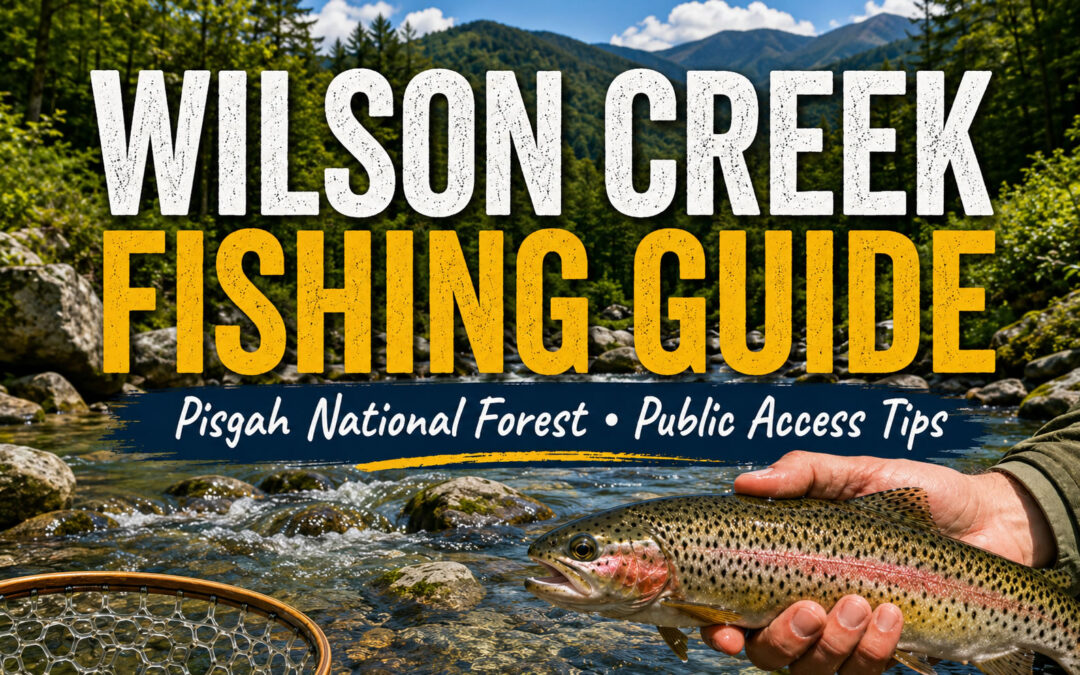
Wilson Creek is one of the most scenic and well-known trout fishing destinations in western North Carolina. Flowing through Caldwell County and the Pisgah National Forest, the creek offers cold mountain water, large boulders, deep pools, fast runs, pocket water and beautiful forest scenery.
Anglers visit Wilson Creek to fish for rainbow trout, brown trout and brook trout. Depending on the exact section, you may find stocked trout, seasonal Delayed Harvest regulations, Hatchery Supported water and stretches surrounded by public forest or game lands.
However, anglers should not assume that every part of Wilson Creek has the same fishing rules or the same public access. Regulations change by section, and portions of the creek may border or pass through private property.
Fish only from clearly established public access areas. Never cross private property, use a private driveway, park on private land or walk across a posted property to reach the creek without the landowner’s permission.
Always check current North Carolina Wildlife Resources Commission regulations, posted signs and public-land maps before fishing.
Quick Answer: Is Wilson Creek Good for Trout Fishing?
Yes. Wilson Creek is one of North Carolina’s better-known mountain trout streams and can provide good fishing for rainbow trout, brown trout and brook trout.
Its appeal comes from a combination of scenic mountain water, stocked trout, a popular Delayed Harvest section and access to sections located on public land. Wilson Creek contains pools, riffles, runs, current seams and rocky pocket water that can be fished with either fly-fishing or light spinning equipment.
The Delayed Harvest portion of Wilson Creek is the game-land section below Lost Cove Creek to Phillips Branch. Another portion, from Phillips Branch to Brown Mountain Beach Dam, is classified as Hatchery Supported Trout Water, except where land is posted against trespassing.
Because the classifications and regulations differ, anglers must identify the exact section they plan to fish before choosing bait, tackle or deciding whether trout may be kept.
Where Is Wilson Creek?
Wilson Creek is located in Caldwell County in western North Carolina. Its headwaters begin below Grandfather Mountain, and the creek flows through largely forested mountain terrain before eventually joining the Johns River.
Much of the area is associated with the Wilson Creek Wild and Scenic River corridor and the Grandfather Ranger District of the Pisgah National Forest. The U.S. Forest Service identifies fishing, hiking, camping, mountain biking, horseback riding, swimming and paddling among the recreational activities available in the area.
The lower river corridor is commonly reached from Brown Mountain Beach Road. This road follows portions of the creek and provides access to several recreation areas, but anglers must use caution when parking. Road shoulders can be narrow, traffic may be difficult to see around curves and not every pull-off is an official parking area.
Park only where parking is clearly permitted. Do not block gates, driveways, roads, emergency access points or access used by local residents.
Wilson Creek Hatchery Supported Trout Water
The Hatchery Supported portion of Wilson Creek extends from Phillips Branch to Brown Mountain Beach Dam, except where posted against trespassing.
That final part is extremely important.
A state trout-water classification does not automatically give anglers permission to enter private property. Even when trout have been stocked, access may be restricted where the shoreline, road, parking area or surrounding property is privately owned.
Under general Hatchery Supported Trout Waters regulations, there is no minimum trout size, no general bait restriction and the daily creel limit is seven trout. Hatchery Supported waters also have an annual closed period, so anglers must check current season dates before fishing.
Look for green-and-white Hatchery Supported Trout Water signs, but do not treat those signs as permission to cross posted land.
Best Time of Year to Fish Wilson Creek
Wilson Creek can provide trout fishing opportunities throughout much of the year, but conditions and regulations change with the seasons.
Spring
Spring is one of the most popular times to fish Wilson Creek. Water temperatures are often favorable, trout can be active and stocked sections may provide good opportunities.
Nymphs, small streamers, spinners and spoons can all be effective. Spring rain can improve fishing by adding color and flow, but heavy rainfall can make Wilson Creek high, fast and dangerous.
Summer
Summer fishing is usually best early in the morning, especially during hot weather. Focus on cooler, shaded water, deeper pools and areas with strong current and oxygen.
Wilson Creek is also popular with swimmers, paddlers and other recreational visitors during summer. Fishing early can help you avoid some of the crowds.
When water becomes unusually warm, trout can become stressed. Land fish quickly, keep them in the water when possible and consider ending your trip if conditions are too warm for responsible catch-and-release fishing.
Fall
Fall can be an excellent time to fish Wilson Creek as water temperatures cool and trout become more active. The surrounding forest also makes the Wilson Creek area especially scenic during the fall color season.
Remember that Delayed Harvest rules begin October 1. Once those regulations take effect, trout in the designated Delayed Harvest section must be released, natural bait may not be possessed and only qualifying artificial lures with a single hook may be used.
Winter
Winter fishing can be slower, but Wilson Creek may still produce trout. Fish often hold in deeper pools, slower runs and areas where they can conserve energy.
The warmest part of the afternoon may be more productive than early morning. Smaller nymphs, slowly worked streamers and subtle presentations are often better than fast retrieves.
What Fish Are in Wilson Creek?
Wilson Creek is primarily known as a trout fishing destination.
Anglers may encounter:
Rainbow trout
Brown trout
Brook trout
Rainbow trout are frequently associated with stocked mountain trout waters and may be found in pools, runs and current seams.
Brown trout can be more cautious and may hold near undercut banks, deeper water, rocks, logs and shaded areas.
Brook trout are North Carolina’s only native trout species. They are more commonly associated with cold, clean headwater habitat, although stocked brook trout may also be present in managed waters.
The species and number of trout present can vary by section, season, stocking activity, stream conditions and fishing pressure.
Spin Fishing Wilson Creek
You do not have to fly fish to catch trout in Wilson Creek. Light spinning equipment can work well, especially for beginners.
A practical setup may include:
- A 5- to 7-foot ultralight or light spinning rod
- A 1000- to 2500-size spinning reel
- 4- to 6-pound fishing line
- Small inline spinners
- Small spoons
- Trout jigs
- Small hooks
- Split shot
- Small floats
- Legal bait where permitted
Cast small spinners upstream or across the current and retrieve them just fast enough to keep the blade turning. In clear water, small natural-looking patterns are often more effective than oversized, brightly colored lures.
Spoons can be useful in deeper pools and faster runs. Trout jigs can be drifted beneath a small float or worked close to the bottom.
During Delayed Harvest catch-and-release season, make sure any artificial lure has only one single hook. A lure that comes from the package with a treble hook may need to be changed before it is legal.
Fly Fishing Wilson Creek
Wilson Creek is popular with fly anglers because it contains a variety of trout habitat, including pocket water, riffles, runs, plunge pools and deeper holding areas.
Useful fly patterns may include:
- Pheasant tail nymphs
- Hare’s ear nymphs
- Prince nymphs
- Stonefly nymphs
- Midge patterns
- Caddis larvae
- Woolly buggers
- Small streamers
- Elk hair caddis
- Parachute Adams
- Small terrestrial patterns during warmer months
If trout are not feeding at the surface, begin with nymphs. Concentrate on current seams, the heads of pools, slower water behind rocks and transitions between fast and slow current.
Dry flies may work when trout are visibly rising. Streamers can be effective in deeper pools, higher flows or slightly stained water.
A drag-free presentation is often more important than matching an exact fly pattern. Trout in clear, pressured water may reject a fly that moves unnaturally.
Wilson Creek Fishing Safety
Wilson Creek is beautiful, but it should not be underestimated.
Potential hazards include:
- Slippery rocks
- Strong current
- Deep holes
- Sudden drop-offs
- Steep banks
- Flash flooding
- Falling trees or branches
- Narrow roads
- Limited cellular service
- Summer recreation traffic
- Cold water
- Remote sections
Wear footwear with good traction. A wading staff can help you test depth and maintain balance. A properly fitted personal flotation device is worth considering around deep or fast water.
Never enter the creek when it is high, muddy or rising. Heavy rain upstream can cause conditions to change even when it is not raining at your location.
Tell someone where you are going and when you expect to return. Keep valuables out of sight, carry water and bring basic emergency supplies.
What to Bring Trout Fishing at Wilson Creek
A basic Wilson Creek trout fishing kit may include:
- Valid North Carolina fishing license and trout privilege, when required
- Current fishing-regulation information
- Public-land or game-land map
- Ultralight spinning rod or fly rod
- Legal bait, lures or flies
- Spare single hooks
- Light fishing line or leader
- Small landing net
- Forceps or hemostats
- Line clippers
- Waders or wet-wading footwear
- Wading staff
- Polarized sunglasses
- Rain jacket
- Drinking water
- First-aid kit
- Fully charged phone
- Offline map
- Trash bag
- Personal flotation device where appropriate
Barbless hooks are not always required, but they can make releasing trout faster and reduce handling time.
Wilson Creek Delayed Harvest Trout Water
The Delayed Harvest section of Wilson Creek is the game-land portion below Lost Cove Creek to Phillips Branch.
Delayed Harvest Trout Waters are managed under special seasonal regulations. During the catch-and-release portion of the season, trout may not be harvested or possessed, natural bait may not be used or possessed and anglers must use artificial lures with one single hook.
For the 2026 season, Delayed Harvest regulations apply from October 1 through June 5. On June 6, fishing is restricted to youth under age 16 from 6 a.m. until noon. At noon, the water opens to all anglers under Hatchery Supported regulations through September 30.
From June 6 through September 30, anglers may keep up to seven trout per day, with no minimum size limit and no general bait restriction under the statewide Delayed Harvest opening rules.
These dates and requirements can change. Always check current regulations before your trip rather than relying only on a previously published fishing guide.
Delayed Harvest Trout Waters are generally marked with black-and-white signs. Pay attention to signs along the creek because they help identify the regulated section and remind anglers of seasonal restrictions.
Public Access and Private Property at Wilson Creek
Public access is one of the most important things to research before fishing Wilson Creek.
Large portions of the Wilson Creek corridor are surrounded by public forest or game lands, but private property can still occur along roads, near homes, beside bridges and around sections of the creek. The Hatchery Supported listing specifically excludes areas posted against trespassing.
Only fish from locations you have confirmed are open to the public.
Do not:
- Cross a fence to reach the creek
- Walk through a yard or residential property
- Use a private driveway as a parking area
- Park in front of a gate
- Ignore posted no-trespassing signs
- Assume a roadside path is public
- Enter land simply because you can see the creek from the road
- Follow another angler onto property without confirming access
- Move around a sign, chain, barrier or gate
- Leave the public corridor to reach another pool
Before fishing, confirm:
- That parking is legal
- That the access point is on public land
- That the streambank is publicly accessible
- That the path to the water is public
- Whether the water is Delayed Harvest or Hatchery Supported
- Whether special seasonal regulations are in effect
- Whether fishing is temporarily restricted or closed
- Whether posted property begins nearby
When in doubt, stay within clearly marked Forest Service, game-land, county or other established public-access areas. A promising pool is never worth trespassing or creating conflict with a property owner.
Best Time of Day for Wilson Creek Trout
The best time of day depends on the season, water temperature, stream flow and insect activity.
Productive periods may include:
- Early morning during warm weather
- Late afternoon and evening
- Cloudy or lightly overcast days
- After light rain when the creek is not dangerously high
- Periods of active insect hatches
- Times when water temperatures are cool and stable
- Quieter periods before recreation traffic increases
During summer, early morning is normally the best starting point. During winter, trout may become more active after the sun has warmed the water slightly.
Avoid wading during high water. Wilson Creek contains strong current, slippery rocks, deep pools and sudden drop-offs.
Best Bait and Lures for Wilson Creek
The best bait or lure depends on the exact section and the regulations in effect on the date you fish.
Where natural bait is legal, common trout options include:
- Small worms
- Salmon eggs
- Trout dough bait
- Corn where legal
- Small live bait where legal
Artificial lure options include:
- Small inline spinners
- Small spoons
- Trout jigs
- Unscented artificial trout worms
- Small crankbaits
- Nymphs
- Streamers
- Dry flies
- Woolly buggers
During the catch-and-release Delayed Harvest season, natural bait may not be possessed. Use only legal artificial lures with one single hook.
Be careful with scented or flavored soft-plastic lures. A product sold as an artificial lure may still be prohibited if it contains or has been treated with a substance intended to attract fish through taste or smell.
Always confirm that your lure, hook and bait comply with the rules for the section you are fishing.
How to Read Wilson Creek
Wilson Creek contains many types of trout-holding water.
Look for:
- Riffles
- Runs
- Plunge pools
- Current seams
- Eddies
- Foam lines
- Undercut banks
- Large boulders
- Logs and woody cover
- Shaded banks
- Tailouts
- Deep pockets
- Slow water beside fast current
- Areas below small drops
- Channels between rocks
Trout typically seek places where they can remain protected from the strongest current while food is carried toward them.
Fish the head of a pool before moving to its center. Cast beside boulders, along current seams and into pockets behind rocks. Do not ignore shallow riffles, especially when water temperatures are cool and trout are actively feeding.
Approach carefully. Wilson Creek can be clear, and trout may detect movement from the bank. Wear subdued clothing, avoid standing directly over the water and begin casting before wading into a promising pool.
Common Wilson Creek Fishing Mistakes
One of the biggest mistakes is assuming all of Wilson Creek follows the same regulations. The Delayed Harvest and Hatchery Supported sections have different seasonal rules.
Another mistake is assuming that a trout-water designation guarantees public access. It does not. Portions of the Hatchery Supported section are specifically excluded where posted against trespassing.
Other common mistakes include:
- Parking in an unsafe or prohibited location
- Using natural bait in Delayed
- Harvest water during catch-and-release season
- Fishing a multi-hook or treble-hook lure where one single hook is required
- Using line that is too heavy
- Wading into a pool before fishing it
- Ignoring water temperature during summer
- Entering the creek during dangerous flows
- Leaving trash, fishing line or bait containers behind
- Crowding another angler
- Handling catch-and-release trout too long
- Walking onto private property to reach better-looking water
Research the exact section before leaving home and verify the rules again when you arrive.
Check Current NC Trout Regulations
Before fishing Wilson Creek, check the current North Carolina Wildlife Resources Commission trout regulations, Public Mountain Trout Waters search and stocking information for the exact section you plan to fish.
This is especially important because Wilson Creek includes more than one trout-water classification. The game-land section below Lost Cove Creek to Phillips Branch is managed as Delayed Harvest Trout Water, while the section from Phillips Branch to Brown Mountain Beach Dam is classified as Hatchery Supported Trout Water, except where posted against trespassing. Different seasonal bait, hook, harvest and creel-limit rules may apply to each section.
During the Delayed Harvest catch-and-release season, natural bait may not be possessed, trout must be released and anglers must use qualifying artificial lures with one single hook. The annual youth-only opening period and the date when harvest regulations begin can also change, so confirm the current rules before every trip.
Anglers should also review the current Delayed Harvest stocking schedule, Hatchery Supported stocking information and daily trout stocking updates. North Carolina’s trout-stocking schedules may be adjusted because of weather, stream conditions, hatchery operations or other circumstances.
A trout-water designation does not guarantee that every streambank, parking area or path is open to the public. Fish only from confirmed public-access areas, obey posted signs and never cross private property without the landowner’s permission.
Did You Fish? Wilson Creek Fishing Guide: Plan a Legal, Safe and Productive Trip
Wilson Creek fishing combines beautiful scenery, productive trout habitat and several different types of mountain water. Anglers can fish rocky pocket water, deep pools, fast runs, riffles, current seams and quieter edges where trout wait for food. Rainbow trout, brown trout and brook trout may be present depending on the section, season and stocking activity.
The key to planning a successful Wilson Creek trout fishing trip is identifying exactly where you will fish. The game-land portion below Lost Cove Creek to Phillips Branch is designated as Delayed Harvest Trout Water. From October 1 through the beginning of June, this section is generally managed for catch-and-release fishing with artificial lures using one single hook. Natural bait may not be possessed during that period. Seasonal harvest rules begin in June, but anglers should verify the current year’s opening date, youth-only period, creel limit and tackle rules before fishing.
The section from Phillips Branch to Brown Mountain Beach Dam is classified as Hatchery Supported Trout Water, except where posted against trespassing. This exception must be taken seriously. A stream can be publicly regulated as trout water while still passing beside or through private property. Anglers should never assume that a roadside pull-off, path, lawn, driveway or streambank is open to the public.
Fish only in clearly established public areas. Use official Forest Service access, game-land access, county-managed locations or another access point that you have confirmed is public. Respect fences, gates, homes and posted signs. Never cross private land to reach Wilson Creek without direct permission from the landowner. Staying on public property protects anglers, residents and the future of fishing access.
Once you have confirmed legal access, focus on the water directly in front of you. Trout frequently hold beside boulders, at the head of a pool, along foam lines, beneath shaded banks and in the slower water beside a fast current. Begin fishing before entering the creek. Use light line, small presentations and a careful approach.
Conditions can change quickly in the Wilson Creek gorge and surrounding mountain terrain. Avoid fishing during dangerously high water, monitor the weather and remember that heavy rain upstream can raise the creek. Rocks are slippery, currents can be powerful and some pools are deeper than they appear.
Wilson Creek can be an excellent destination for both beginning and experienced trout anglers. The best trips are built around three priorities: follow the regulations for the exact section, use only confirmed public access and leave the creek cleaner than you found it. With proper planning and respect for private property, anglers can enjoy one of western North Carolina’s most scenic trout fishing areas without creating access problems for others.