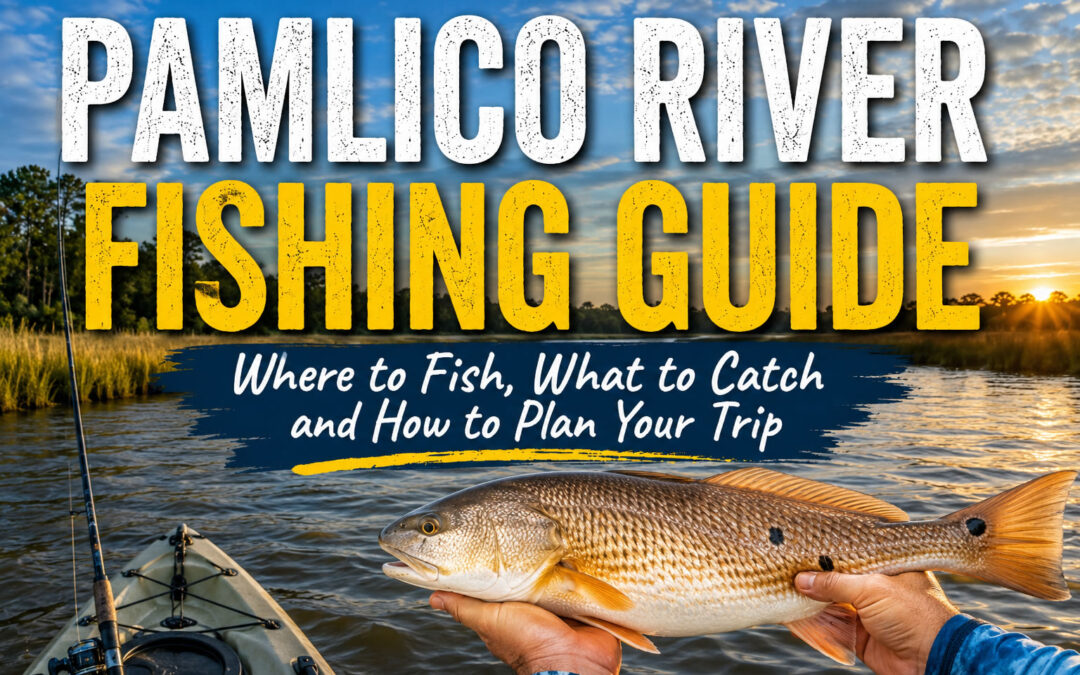
Pamlico River Fishing Guide: Where to Fish, What to Catch and How to Plan Your Trip
The Pamlico River is one of eastern North Carolina’s most diverse fishing destinations. Beginning near Washington, North Carolina, and widening as it flows east toward Pamlico Sound, the river transitions from fresher upper reaches into a broad brackish estuary.
That changing salinity allows anglers to encounter freshwater, estuarine and coastal species within the same river system. Depending on the season, location and recent rainfall, anglers may target red drum, spotted seatrout, striped bass, flounder, largemouth bass, white perch, catfish, Atlantic croaker and spot.
The Pamlico River can be fished from boats, kayaks, public waterfront areas and designated fishing access sites. However, much of the shoreline is privately owned.
Fish only from confirmed public-access areas. Never enter private yards, use private docks, cross waterfront property or park on private land without the landowner’s permission.
Because seasons, size limits, possession limits and closures can change, anglers should check current North Carolina regulations before every trip.
Quick Answer: Is the Pamlico River Good for Fishing?
Yes. The Pamlico River can provide productive fishing for both freshwater and saltwater-oriented anglers.
The upper river around Washington and its tributary creeks may hold largemouth bass, catfish, white perch and seasonal striped bass. Farther east, increasing salinity creates opportunities for red drum, spotted seatrout, flounder, croaker, spot and other estuarine species.
Fishing conditions can change considerably across the river. Wind, tides, rainfall, water temperature and salinity can all influence where fish are found.
Anglers can fish:
- Public waterfront areas
- Designated fishing piers
- Public boat ramps
- Tributary creeks
- Marsh edges
- Docks where fishing is legally permitted
- Oyster structure
- Creek mouths
- Channel edges
- Shallow flats
- Deeper holes
The Pamlico is a large, open river in many areas. Smaller boats and kayaks should be used cautiously because wind can create rough water quickly.
Where Is the Pamlico River?
The Pamlico River is located in the Coastal Plain of eastern North Carolina. The river begins around Washington, where the Tar River system transitions into the tidal Pamlico River, and it flows east toward Pamlico Sound.
Washington serves as one of the most recognizable access points on the upper Pamlico River. Downstream communities and fishing areas include Bath, Blounts Creek, Goose Creek and numerous smaller tributaries and shoreline creeks.
Goose Creek State Park sits along the Pamlico River southeast of Washington. The park includes estuarine habitat, fishing opportunities, paddling access and a boat ramp.
Because the river covers a large area, anglers should decide whether they want to fish:
- The Washington waterfront and upper river
- Tributary creeks near Washington
- The Bath Creek area
- Blounts Creek
- Goose Creek
- Main-river points and shorelines
- Lower-river brackish water toward Pamlico Sound
Each area can have different depths, salinity, structure and target species.
Red Drum Fishing in the Pamlico River
Red drum, often called redfish or puppy drum, are among the most popular fish targeted in the Pamlico River system.
Look for red drum around:
- Marsh edges
- Creek mouths
- Shallow flats
- Oyster structure
- Grass lines
- Points
- Shoreline drops
- Docks and pilings
- Baitfish schools
Smaller red drum may travel in groups, while larger fish are sometimes encountered individually or in smaller schools.
Effective natural baits can include:
Shrimp
Cut mullet
Menhaden
Mud minnows
Other legal local baitfish
Popular artificial lures include:
Paddle-tail soft plastics
Shrimp imitations
Gold or silver spoons
Topwater plugs
Suspending twitchbaits
Popping cork rigs
Jigheads with scented or unscented soft plastics
Red drum regulations can change, so confirm the current size slot and possession limit before keeping a fish.
Striped Bass Fishing in the Pamlico River
Public access is one of the most important parts of Watauga River fishing. Some areas are clearly public or associated with parks, roads, bridges, or managed access points. Other stretches may run through private land.
Do not cross private property unless you have permission. In mountain trout country, it is common for streams to pass through a mix of public and private areas.
Before fishing, confirm:
- Where you can legally park
- Whether the access point is public
- Whether the riverbank is private
- Whether wading is allowed
- Whether the section has special trout regulations
- Whether the water is delayed harvest, hatchery supported, wild trout, or another classification
When in doubt, use official public access information, posted signage, and the NC trout waters search.
Striped Bass Fishing in the Pamlico River
Striped bass may be present seasonally in the upper Pamlico and Tar-Pamlico system.
Anglers may find them near:
- Bridges
- Channel edges
- Creek mouths
- Current seams
- Deeper holes
- Areas with concentrated bait
- The upper river near Washington
- Tributary junctions
Popular techniques include trolling, casting swimbaits, jigging and fishing natural bait where legal.
Striped bass in the Tar-Pamlico system are managed under special rules. Seasons and harvest opportunities can be changed by proclamation, and harvest may be closed even when fish are present.
Do not rely on an old fishing report or a previous year’s regulations. Check current North Carolina Division of Marine Fisheries information before keeping any striped bass. The state’s management strategy specifically addresses stocked striped bass in the Tar-Pamlico and Neuse systems.
Largemouth Bass Fishing
The fresher upper Pamlico River and tributary creeks can offer largemouth bass fishing.
Look for bass near:
- Fallen trees
- Cypress knees
- Shoreline vegetation
- Creek channels
- Docks
- Stumps
- Backwater pockets
- Current breaks
- Drainage ditches
- Shaded banks
Useful bass lures include:
- Spinnerbaits
- Chatterbaits
- Texas-rigged worms
- Creature baits
- Crankbaits
- Jigs
- Topwater frogs
- Buzzbaits
- Soft-plastic stick worms
Dark or stained water is common in some tributaries. Lures that create vibration, contrast or water displacement may help fish locate the presentation.
Best Places to Fish the Pamlico River
The best location depends on whether you are fishing from shore, launching a boat or using a kayak.
Washington Waterfront
Washington’s downtown waterfront offers one of the most convenient public shoreline options.
The city permits fishing along the promenade, but anglers may not fish from docks where boats are berthed. Fishing is also prohibited from the wooden boardwalk, which is designated as a wildlife-refuge area.
Respect all posted rules and avoid casting near pedestrians, moored boats or marina operations.
Havens Gardens Boat Launch
The Havens Gardens launch is located on Runyon Creek on the east side of Washington.
The site includes two N.C. Wildlife boat ramps, docks and parking for vehicles and trailers. Access to the Pamlico River passes beneath a bridge with approximately 14 feet of vertical clearance.
Boaters with towers, tall center consoles or raised equipment should evaluate clearance carefully.
Mason’s Landing
Mason’s Landing provides access to Tranters Creek west of Washington.
The facility includes two ramps, docks and vehicle-and-trailer parking. Access toward the Pamlico River passes beneath the U.S. 17 bridge, which the city reports has approximately 18 feet of vertical clearance.
Goose Creek State Park
Goose Creek State Park provides access to the Pamlico River and Goose Creek.
The park includes fishing, paddling opportunities, river access and a boat ramp. Because operating hours, closures and facility conditions may change, check current park information before traveling.
Tributary Creeks
Tributaries can be especially productive because they provide:
Protection from wind
Concentrated bait
Shoreline cover
Current at creek mouths
Deeper bends
Changing salinity
Seasonal refuge for fish
Potential areas include Runyon Creek, Tranters Creek, Bath Creek, Blounts Creek and Goose Creek.
Access is not automatically public. Launch or fish only from official public facilities or locations where you have direct permission.
Kayak Fishing the Pamlico River
Kayaks can reach shallow creeks, marsh edges and water inaccessible to larger boats.
Productive kayak areas may include:
- Protected tributary creeks
- Shoreline points
- Marsh drains
- Shallow flats
- Cypress-lined creeks
- Dock edges
- Small coves
The Pamlico River itself can become rough. Wind over the broad river creates waves that may overwhelm inexperienced paddlers.
Kayak anglers should:
- Wear a properly fitted life jacket
- Check wind forecasts
- Avoid busy channels
- Carry a whistle
- Use a visible flag or light
- Tell someone where they are going
- Carry a waterproof phone or radio
- Secure rods and equipment
- Avoid crossing wide open water in poor conditions
- Return before storms arrive
Launch only from established public sites or locations where you have permission.
Best Time of Year to Fish the Pamlico River
Spring
Spring can be productive as water temperatures rise and baitfish become more active.
Anglers may target:
- Striped bass where seasons permit
- Largemouth bass
- Catfish
- Red drum
- Spotted seatrout
- White perch
Fish creek mouths, shallow shorelines, warming flats and areas with moving water.
Summer
Summer provides opportunities for red drum, croaker, spot, catfish, largemouth bass and other warm-water species.
Fish early in the morning or later in the evening to avoid heat and boat traffic.
During the day, look for:
- Deeper channels
- Shaded docks
- Creek mouths
- Oxygenated current
- Windblown shorelines
- Areas holding bait
Thunderstorms can develop quickly. Leave open water before severe weather arrives.
Fall
Fall is one of the most popular fishing periods on the Pamlico River.
Cooling water may improve activity for:
- Spotted seatrout
- Red drum
- Striped bass
- Largemouth bass
- White perch
- Croaker
- Spot
Look for baitfish around points, creek mouths, docks and current seams.
Winter
Winter fishing can still be productive, especially in deeper or protected creeks.
Spotted seatrout may gather in deeper creek bends when conditions are suitable. Largemouth bass and catfish may also remain available in the upper river.
Fish slowly and concentrate on stable water temperatures.
How to Read the Pamlico River
The river may appear broad and featureless, but fish frequently relate to small changes in structure and current.
Look for:
- Creek mouths
- Points
- Docks
- Pilings
- Oyster edges
- Drop-offs
- Channel bends
- Marsh drains
- Current seams
- Windblown shorelines
- Baitfish schools
- Bird activity
- Water-color changes
- Submerged grass
- Cypress trees
- Fallen timber
- Depth transitions
A difference of only one or two feet can be important.
Use polarized sunglasses and sonar when available. Watch for nervous bait, surface activity and diving birds.
Common Pamlico River Fishing Mistakes
Common mistakes include:
- Fishing private property without permission
- Launching from an unverified shoreline
- Using the wrong fishing license
- Keeping fish during a closed season
- Failing to check proclamation changes
- Fishing too far upriver or downriver for the target species
- Ignoring salinity changes
- Overlooking tributary creeks
- Running across open water in strong wind
- Fishing without a life jacket
- Blocking ramps or marina docks
- Leaving fishing line and bait containers behind
- Keeping an incorrectly identified fish
- Failing to measure regulated species
- Assuming every public dock allows fishing
The Pamlico River rewards anglers who plan around habitat, salinity, weather and current regulations.
What to Bring Fishing on the Pamlico River
A practical fishing kit may include:
- Valid North Carolina fishing license
- Current regulation information
- Rods appropriate for the target species
- Spare line and leader
- Jigheads
- Soft plastics
- Bottom rigs
- Circle hooks
- Legal natural bait
- Pliers
- Hook remover
- Fish ruler
- Landing net
- Polarized sunglasses
- Sunscreen
- Insect repellent
- Drinking water
- Rain jacket
- First-aid kit
- Life jacket
- Waterproof phone case
- Navigation equipment
- Cooler with ice
- Trash bag
Kayak and boat anglers should also carry emergency signaling equipment and required boating-safety gear.
What Kind of Water Is the Pamlico River?
The Pamlico River is a tidal estuary rather than a typical fast-flowing inland river.
Its water ranges from relatively fresh in the upper river to increasingly brackish downstream. Salinity can move up or down the river depending on:
- Recent rainfall
- Drought conditions
- Wind direction
- Tidal movement
- River discharge
- Storms
- Time of year
Heavy rainfall generally pushes fresher water farther downstream. Extended dry weather may allow saltier water to move farther upriver.
This changing salinity is one reason the Pamlico River supports such a wide variety of fish. It also means that a productive location can change from one trip to the next.
What Fish Are in the Pamlico River?
The species present depend heavily on where you fish, the season and the water’s salinity.
Common targets may include:
- Red drum
- Spotted seatrout
- Striped bass
- Flounder
- Largemouth bass
- White perch
- Catfish
- Atlantic croaker
- Spot
- Bluefish
- Black drum
- Southern kingfish
- Gar
- Bowfin
North Carolina recreational fishing reports specifically identify the upper creeks of the Pamlico River as potential spotted seatrout water.
Not every species will be equally available throughout the entire river. Red drum and spotted seatrout are more closely associated with brackish creeks, marsh edges and lower-river habitat. Largemouth bass and some catfish are more likely in fresher upper sections and tributaries.
Spotted Seatrout Fishing
Spotted seatrout, also called speckled trout or specks, can be found in the Pamlico River and its creeks, particularly when water temperature and salinity are favorable.
Good places to look include:
- Creek mouths
- Deeper creek bends
- Points with moving water
- Shoreline drop-offs
- Submerged grass
- Oyster edges
- Docks
- Areas where baitfish are concentrated
- Protected creeks during colder weather
Useful lures include:
- Soft-plastic paddletails
- Shrimp imitations
- Suspending hard baits
- MirrOlure-style plugs
- Small topwater lures
- Jigs
- Popping corks
During colder periods, trout may gather in deeper, protected creeks. Fish slowly and avoid running directly through a productive area.
North Carolina has adopted specific recreational management measures for spotted seatrout, and anglers should verify the current slot limit, bag limit and any seasonal changes before fishing.
Flounder Fishing
Flounder may be encountered along the Pamlico River, especially in brackish sections with suitable bottom structure.
Look for flounder around:
- Creek mouths
- Sandy or muddy drop-offs
- Docks
- Pilings
- Oyster edges
- Channel margins
- Drains entering the river
- Current breaks
Effective presentations include:
- Mud minnows
- Finger mullet
- Live shrimp
- Soft-plastic minnows
- Bucktail jigs
- Jigheads tipped with bait
Work the lure or bait close to the bottom and move slowly enough to remain in the strike zone.
North Carolina’s recreational flounder season may be short, changed annually or closed. Never assume flounder may be kept simply because one is caught. Check the current season, size limit and possession rules before fishing.
White Perch, Croaker and Spot
White perch, Atlantic croaker and spot can provide good opportunities for families and anglers who prefer simple bottom-fishing techniques.
These fish may be caught using:
Small pieces of shrimp
Bloodworms
Fishbites-style bait
Small strips of cut bait
Small minnows
Worms where appropriate
A basic bottom rig with a small hook and enough weight to hold near the bottom can be effective.
Spot are commonly associated with shallow sandy or muddy estuarine areas during warmer months.
Croaker and spot can be especially useful targets when larger gamefish are not cooperating.
Catfish Fishing in the Upper Pamlico
Catfish are another option in the upper river and fresher tributaries.
Potential holding areas include:
- Deep bends
- Channel edges
- Bridge structure
- Creek junctions
- Holes near current
- Areas downstream from points
- Submerged timber
Common catfish baits include:
- Cut shad
- Cut mullet
- Shrimp
- Nightcrawlers
- Chicken liver
- Commercial catfish bait
- Other legal cut bait
Use enough weight to keep the bait near the bottom. Circle hooks can make releasing fish easier and may improve corner-of-the-mouth hookups.
Public Access and Private Property
Much of the Pamlico River shoreline is privately owned.
A navigable river does not give anglers permission to walk across private land, stand on a private dock or use someone’s driveway to reach the water.
Fish only from confirmed public-access areas.
Do not:
- Fish from a private dock without permission
- Walk through waterfront yards
- Cross fences or gates
- Use a residential driveway for parking
- Tie a boat to a private pier
- Enter posted marinas
- Assume an undeveloped shoreline is public
- Launch a kayak from private property
- Block boat ramps or emergency access
- Fish from docks occupied by moored boats
- Ignore city, park or marina restrictions
North Carolina maintains a searchable map of publicly accessible fishing areas, including piers, boat ramps, canoe launches and some bank-fishing locations.
The N.C. Wildlife Resources Commission also maintains approximately 250 free Boating Access Areas across the state. Use its official locator to verify facilities and review any caution notices before launching.
Bank Fishing the Pamlico River
Bank fishing is possible, but public shoreline access is more limited than boat access.
The Washington promenade is one established option, subject to city rules. Other public parks or fishing piers may offer access, but anglers should verify whether fishing is currently permitted.
A useful bank-fishing setup may include:
- A 7- to 8-foot medium spinning rod
- 10- to 20-pound line
- Fluorocarbon leader
- Bottom rigs
- Popping corks
- Jigheads
- Shrimp
- Cut bait
- Soft-plastic paddletails
- Landing net
- Pliers
- Fish-measuring device
Cast toward drop-offs, dock edges where permitted, creek mouths and areas with visible current.
Avoid leaving hooks, fishing line or bait containers along public waterfronts.
Boat Fishing the Pamlico River
A boat provides the greatest access to the river, but the Pamlico demands careful planning.
The river can be:
- Wide
- Windy
- Shallow near shore
- Rough during changing weather
- Difficult to navigate at night
- Busy near ramps and waterfront areas
Study navigation charts and use updated electronics. Watch for shoals, submerged objects, channel markers, docks and commercial traffic.
Smaller boats should remain close to protected shorelines when wind is forecast to increase.
North Carolina requires children younger than 13 to wear an appropriate life jacket while a recreational vessel is underway.
Everyone on the boat should wear a life jacket when conditions are rough.
Best Time of Day to Fish
Productive times often include:
- Early morning
- Late afternoon
- Moving water around tidal changes
- Overcast days
- Periods before strong wind develops
- Times when baitfish are active
Cooler portions of summer days
Tidal movement can matter more than the exact clock time in brackish portions of the river.
A falling tide may pull bait from marshes and creeks. A rising tide may allow fish to move onto shallow shoreline habitat.
Do not assume one tide direction is always best. Keep notes on the location, water clarity, salinity, wind and tide during successful trips.
Best Baits and Lures
Natural Baits
Depending on the target species and current regulations, useful baits may include:
- Live shrimp
- Fresh dead shrimp
- Cut mullet
- Menhaden
- Mud minnows
- Finger mullet
- Bloodworms
- Nightcrawlers
- Cut shad
- Small legal baitfish
- Artificial Lures
Popular artificial options include:
- Paddle-tail swimbaits
- Shrimp imitations
- Bucktail jigs
- Suspending twitchbaits
- Topwater plugs
- Spinnerbaits
- Spoons
- Crankbaits
- Soft-plastic worms
- Popping cork rigs
- Blade baits
- Jigging spoons
Match lure size to the available bait. Smaller presentations often work better when fish are feeding on small shrimp or juvenile baitfish.
Pamlico River Fishing Safety
The Pamlico River can change rapidly.
Potential hazards include:
- Strong wind
- Rough open water
- Thunderstorms
- Lightning
- Extreme summer heat
- Cold winter water
- Boat traffic
- Shallow shoals
- Submerged timber
- Low visibility
- Fog
- Limited access to shelter
- Long distances between ramps
Before leaving:
- Check marine and local weather forecasts
- Review wind speed and direction
File a float plan - Carry life jackets
- Charge phones and radios
- Bring navigation lights
- Carry drinking water
- Inspect fuel and batteries
- Know the location of public ramps
- Avoid exceeding your boat’s limits
Do not rely only on a phone for navigation. Cellular coverage and battery life can fail.
Fishing Licenses for the Pamlico River
The Pamlico River includes coastal and joint waters, so anglers must carry a license valid for the water being fished.
North Carolina requires a Coastal Recreational Fishing License for most anglers age 16 or older who recreationally take finfish in Coastal Fishing Waters. In Joint Waters, either a qualifying coastal license or an appropriate inland fishing license may be accepted, depending on the license type.
Because water classifications can change within a river system, confirm the exact location and license requirement before fishing.
A unified inland/coastal license may be useful for anglers who regularly move between freshwater, joint and coastal waters.
Check Current North Carolina Fishing Regulations
Before fishing the Pamlico River, review current information from the North Carolina Division of Marine Fisheries and the N.C. Wildlife Resources Commission.
This is especially important because several popular Pamlico River species are subject to regulations that may change by season or proclamation.
Check current rules for:
- Red drum
- Spotted seatrout
- Striped bass
- Flounder
- Black drum
- Bluefish
- Croaker
- Spot
- Largemouth bass
- Catfish
- White perch
Do not rely on an old social media post, archived regulation booklet or previous fishing trip.
North Carolina publishes current recreational size and bag limits along with fisheries proclamations and closures.
Measure fish carefully and identify the species before placing it in a cooler. When uncertain, release the fish.
Did You Fish? Pamlico River Fishing Guide: Plan a Safe, Legal and Productive Trip