Carolina Beach Fishing Report: What’s Biting Now
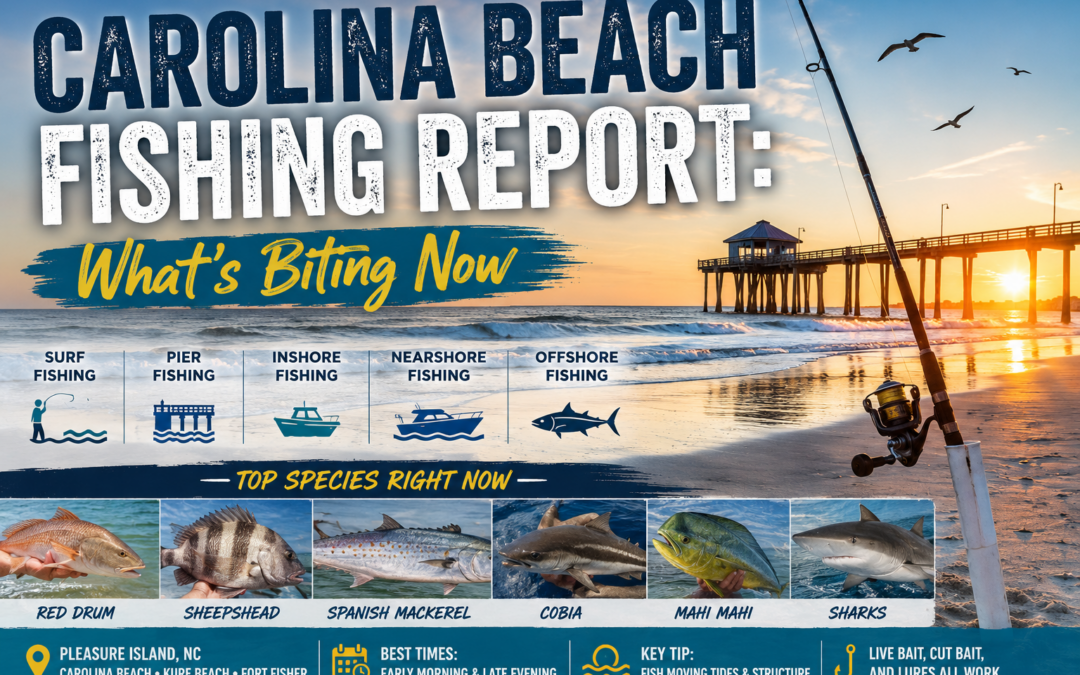
The Carolina Beach fishing report is showing a strong early summer mix for anglers fishing the surf, piers, inshore waters, nearshore areas, and offshore grounds around Pleasure Island, Carolina Beach, Kure Beach, Fort Fisher, Snow’s Cut, the Cape Fear River, and the ICW.
This report is based on recent public fishing reports, local seasonal patterns, and what anglers are seeing around the Carolina Beach area. Conditions can change quickly, but the current pattern points to red drum, black drum, sheepshead, bluefish, Spanish mackerel, sharks, sea mullet, croaker, flounder, cobia, king mackerel, amberjack, black sea bass, mahi, wahoo, blackfin tuna, and other species depending on where you fish.
Carolina Beach is one of the better fishing areas on the North Carolina coast because anglers have so many options close together. You can fish the surf, walk a pier, target inshore docks and marsh edges, fish Snow’s Cut, work the Cape Fear River, run nearshore for Spanish mackerel and sharks, or head offshore when the weather allows.
Quick Answer: Carolina Beach Fishing Report
The current Carolina Beach fishing report points to good early summer fishing for red drum, sheepshead, black drum, bluefish, Spanish mackerel, sea mullet, croaker, sharks, cobia, king mackerel, amberjack, mahi, wahoo, blackfin tuna, and bottom fish. Inshore anglers should focus on docks, hard structure, the ICW, Snow’s Cut, and Cape Fear River shoreline. Surf and pier anglers should watch for sea mullet, bluefish, Spanish mackerel, croaker, sharks, and drum. Nearshore and offshore anglers may find Spanish mackerel, cobia, sharks, amberjack, king mackerel, mahi, wahoo, tuna, grouper, snapper, and other bottom fish when conditions allow.
Current Carolina Beach Fishing Report
Recent Carolina Beach-area reports show a typical early summer pattern: inshore fishing is producing red drum around structure, sheepshead are starting to show around hard structure, black drum are mixed around deeper structure, and surf and nearshore anglers have chances at Spanish mackerel, bluefish, sharks, sea mullet, and other summer species.
The most consistent inshore action appears to be around docks, ICW edges, Cape Fear River shoreline, deeper structure, and areas with bait movement. Red drum are one of the main targets right now, especially around docks, shoreline structure, and places where current moves bait through the area.
Sheepshead are also worth watching. Early-season sheepshead may be smaller at first, but they are starting to stage around hard structure. Bridges, pilings, docks, rocks, and deeper structure can all be good places to look.
Black drum may be found around some of the same deeper hard structure that holds sheepshead. Fresh shrimp, crab pieces, and other natural baits can be good options.
Surf Fishing at Carolina Beach
Surf fishing at Carolina Beach can produce a mixed bag during early summer. Anglers fishing from the beach may find sea mullet, croaker, spot, bluefish, pompano, red drum, black drum, flounder, and small sharks depending on tide, bait, water clarity, and time of day.
For surf fishing, start by reading the water. Look for troughs, sloughs, sandbar cuts, washouts, rip currents, foam lines, baitfish, and birds. Fish often feed where food is being moved by current.
Good surf baits include:
- Shrimp
- Fishbites
- Sand fleas
- Squid
- Cut mullet
- Menhaden
- Clam strips
- Crab pieces
- Bloodworms or artificial bloodworm-style baits
For smaller bottom fish like sea mullet, croaker, spot, and pompano, use smaller hooks and smaller pieces of bait. For red drum, black drum, bluefish, and sharks, use larger bait such as cut mullet, shrimp, crab, or menhaden.
If Spanish mackerel or bluefish are feeding close to the beach, keep a spoon, metal jig, or Gotcha-style plug ready. Fast retrieves can make a difference when fish are chasing bait near the surface.
Offshore Fishing Around Carolina Beach
Offshore fishing from Carolina Beach can be excellent when the weather cooperates. Recent public reports and charter updates point to action for wahoo, blackfin tuna, mahi, king mackerel, amberjack, grouper, snapper, grunts, and other bottom fish depending on how far boats run.
Offshore trolling may produce wahoo, blackfin tuna, mahi, and king mackerel. Bottom fishing can produce grouper, snapper, amberjack, black sea bass, vermilion snapper, grunts, and other reef and ledge species.
Offshore fishing is highly dependent on weather, sea conditions, current, water temperature, and how far the boat can safely run. For most visiting anglers, booking a local charter is the easiest way to fish offshore from Carolina Beach.
Best Baits and Lures Right Now
For surf fishing, bring shrimp, Fishbites, sand fleas, squid, cut mullet, menhaden, crab, and clam strips. Use smaller hooks for sea mullet, croaker, spot, and pompano. Use larger cut bait for red drum, bluefish, sharks, and bigger fish.
For pier fishing, bring both bait and lures. Bottom rigs with shrimp, squid, Fishbites, and cut bait can catch mixed bottom fish. Gotcha-style plugs, spoons, and jigs are better when bluefish and Spanish mackerel are moving.
For inshore fishing, bring live or cut menhaden, live shrimp, soft plastics, paddle tails, shrimp imitations, gold spoons, Carolina rigs, and jig heads. Red drum, black drum, sheepshead, and flounder all require slightly different tactics, so having several options helps.
For nearshore fishing, bring Clarkspoons, planers, metal jigs, bucktails, live bait, cut bait, and heavier spinning or trolling gear.
Best Time to Fish Carolina Beach
The best time to fish Carolina Beach is usually early morning, late afternoon, evening, and during a moving tide. First light can be good for Spanish mackerel, bluefish, and surf fish. Evening can be productive for drum, sharks, and bottom fish.
Incoming tide can bring bait closer to the beach and improve surf fishing. Outgoing tide can create current around inlets, channels, docks, and river shoreline. Inshore anglers should pay close attention to moving water around docks, marsh edges, creek mouths, Snow’s Cut, and Cape Fear River structure.
For nearshore and offshore fishing, weather and sea conditions are just as important as tide. Calm seas, clean water, bait, birds, and good water temperature breaks can all improve the bite.
Pier Fishing Around Carolina Beach and Kure Beach
Pier fishing around Carolina Beach and nearby Kure Beach can be a good option for anglers who want deeper water without a boat. Depending on conditions, pier anglers may catch bluefish, Spanish mackerel, sea mullet, croaker, spot, pompano, black drum, red drum, flounder, sharks, and other species.
When bluefish and Spanish mackerel are moving, casting lures can be the best approach. Gotcha-style plugs, casting spoons, and metal jigs can all work when fish are feeding on bait.
When the lure bite slows down, switch to bottom fishing. Shrimp, squid, Fishbites, sand fleas, and cut bait can produce sea mullet, croaker, spot, pompano, drum, pinfish, and sharks.
Pier fishing can change quickly. Watch what other anglers are catching. If people are casting plugs and hooking up, the fish may be feeding higher in the water. If most of the action is on the bottom, bait rigs may be the better choice.
Inshore Fishing Around Carolina Beach
Inshore fishing around Carolina Beach includes the ICW, Snow’s Cut, the Cape Fear River, docks, marsh edges, creek mouths, hard structure, shoreline points, and deeper holes.
Red drum are one of the top inshore targets right now. Cut or live menhaden can be a strong bait choice around docks, ICW structure, and Cape Fear River shoreline. Soft plastics, gold spoons, shrimp imitations, paddle tails, live shrimp, cut bait, and finger mullet can also work depending on conditions.
For sheepshead, focus on hard structure. Pilings, docks, bridges, rocks, and other vertical structure are good places to try. Fiddler crabs, sand fleas, shrimp, and crab pieces are common sheepshead baits.
For black drum, fish shrimp, crab, or other natural bait around deeper structure, docks, and areas with current. Black drum often feed near the bottom, so a simple bottom rig or Carolina-style rig can work.
For flounder, focus on current edges, creek mouths, docks, drop-offs, and sandy areas near structure. Check the latest North Carolina regulations before keeping flounder because seasons and rules can change.
Nearshore Fishing Report
Nearshore fishing out of Carolina Beach can be productive when wind and sea conditions allow. Spanish mackerel and bluefish are common early summer targets along the beachfront and nearshore waters. Trolling spoons, casting metal jigs, and watching for birds and bait can help anglers locate fish.
Cobia and sharks may also be around nearshore structure, bait schools, and areas with moving water. Some charter reports have shown cobia and shark action in the broader Carolina Beach area, along with Spanish mackerel during shorter family-style trips.
Nearshore wrecks and reefs can also hold amberjack, black sea bass, flounder, gray trout, and other structure-related species depending on depth, water clarity, and season.
Good nearshore options include:
- Spanish mackerel trolling
- Casting jigs to surface-feeding fish
- Shark fishing
- Cobia fishing
- Nearshore wreck fishing
- Bottom fishing over structure
- King mackerel fishing when conditions line up
Check North Carolina Fishing Regulations
Before keeping fish, check the latest North Carolina recreational fishing regulations. Rules can change by species, season, size, possession limit, and location.
This is especially important for red drum, flounder, black drum, sheepshead, Spanish mackerel, bluefish, cobia, king mackerel, sharks, black sea bass, grouper, snapper, mahi, wahoo, and tuna.
Anglers should also make sure they have the correct North Carolina fishing license for where and how they are fishing.
Did You Fish? Carolina Beach Fishing Report: Final Tips for a Better Trip
A good Carolina Beach fishing trip starts with being honest about the conditions. The Carolina Beach area gives anglers many options, but the best choice depends on the tide, wind, water clarity, bait movement, season, and how much time you have. Surf fishing, pier fishing, inshore fishing, nearshore fishing, and offshore fishing can all be productive, but they do not all fish the same way on the same day. That is why Carolina Beach is such a good North Carolina fishing destination: if one pattern is slow, another option may still be worth trying.
For surf anglers, start simple. Walk the beach and look for signs of life before setting up. Look for sandbar cuts, troughs, current seams, baitfish, birds, foam lines, and places where waves break differently. Do not assume the longest cast is always the best cast. Sea mullet, croaker, pompano, black drum, puppy drum, and other fish may feed in the first trough close to shore. Shrimp, Fishbites, sand fleas, squid, and small pieces of bait are good choices for smaller bottom fish. Cut mullet, menhaden, crab, or larger shrimp can be better for red drum, bluefish, sharks, and larger fish.
For pier anglers, bring both bottom rigs and casting lures. Carolina Beach and nearby Kure Beach waters can change quickly when Spanish mackerel or bluefish move through. If fish are feeding near the surface, cast spoons, Gotcha-style plugs, or metal jigs and retrieve quickly. If the surface bite is quiet, switch to shrimp, squid, Fishbites, sand fleas, or cut bait on bottom rigs. Pier fishing is one of the best ways to learn because you can watch what other anglers are doing and adjust in real time.
For inshore anglers, structure matters. Recent Carolina Beach-area reports point to red drum around docks, the ICW, and Cape Fear River shoreline, with sheepshead and black drum relating to hard structure. That means anglers should focus on pilings, docks, rocks, deeper structure, current edges, and places where bait is moving. Live or cut menhaden, shrimp, crab pieces, soft plastics, paddle tails, and Carolina rigs can all have a place depending on the target species.
For nearshore and offshore anglers, pay attention to weather first. Spanish mackerel, bluefish, sharks, cobia, king mackerel, amberjack, black sea bass, grouper, snapper, mahi, wahoo, and blackfin tuna are all possible around the broader Carolina Beach fishery, but boat trips depend on safe conditions. When the wind lays down and water cleans up, nearshore trolling, wreck fishing, and offshore bottom fishing can become strong options.
Overall, this Carolina Beach fishing report points to a classic early summer pattern with plenty of variety. The key is to match your plan to the water in front of you. Fish early or late when possible, follow moving water, bring more than one bait option, and be ready to switch from bottom fishing to casting lures if bait starts moving. At Did You Fish, we recommend using this report as a starting point, then checking current local conditions, pier updates, weather, tides, and North Carolina fishing regulations before heading out. Carolina Beach rewards flexible anglers, and the best trip may come from adjusting as the bite changes.