Fishing in Hot Weather: Best Times, Baits, and Fish to Target in North Carolina
Fishing in hot weather can be challenging, but it does not mean the bite is over. Across North Carolina, summer heat can change where fish hold, when they feed, and what anglers need to do to catch them.
When temperatures climb, many fish avoid the hottest, brightest, shallowest water during the middle of the day. Bass, crappie, catfish, bluegill, white perch, red drum, speckled trout, flounder, and other freshwater and saltwater species may still feed, but the best action often comes during cooler windows, moving water, low light, shade, or deeper structure.
The key is simple: fish smarter, not longer.
Quick Answer: Can You Catch Fish in Hot Weather?
Yes, you can catch fish in hot weather. The best times are usually early morning, evening, nighttime, cloudy periods, and times when wind, current, tide, or shade help cool the water or move bait.
In freshwater, fish often move toward deeper water, shaded banks, bridges, docks, grass edges, creek channels, and oxygen-rich areas. In saltwater, anglers should pay attention to tides, moving water, inlets, surf troughs, piers, marsh edges, and bait activity.
Best Time to Fish During Hot Weather
The best time to fish in hot weather is usually early morning or late evening. These windows offer lower light, cooler water near the surface, and more active baitfish.
Good hot-weather fishing windows include:
- Sunrise to mid-morning
- Late evening before dark
- Night fishing for catfish and some saltwater species
- Cloudy days
- Windy banks with baitfish
- Moving tide in coastal areas
- After summer storms, when conditions are safe
The middle of the day can still produce fish, but anglers often need to fish deeper, slower, or closer to shade and structure.
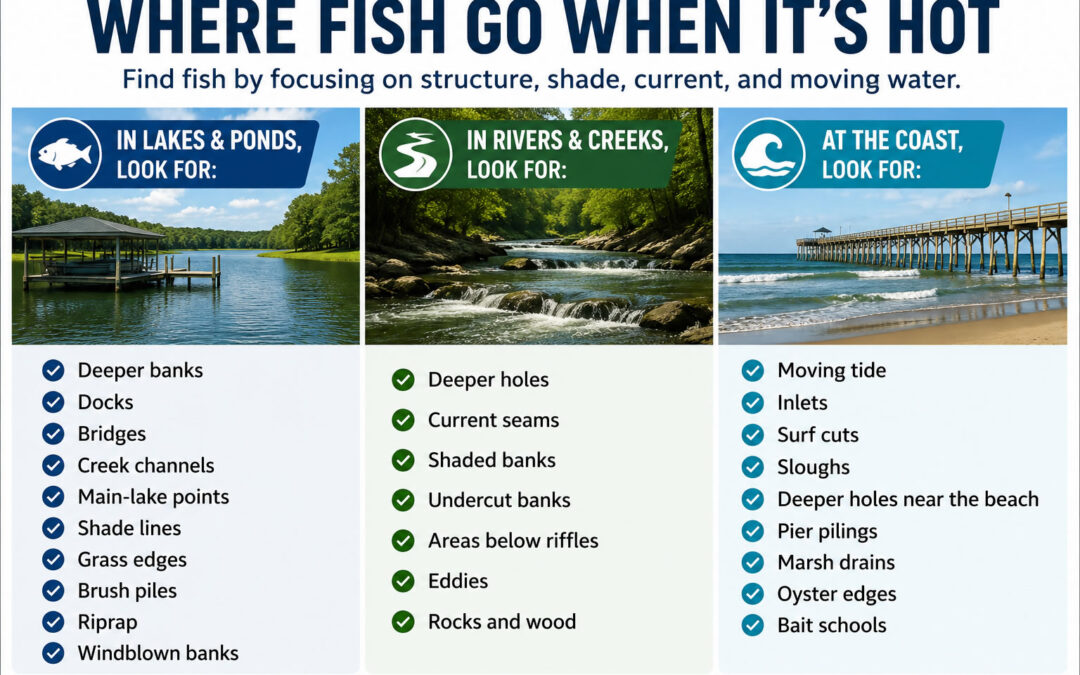
Where Fish Go When It Gets Hot
Hot weather changes fish behavior. Shallow water warms quickly, especially in ponds, coves, flats, and areas with little shade. When the water gets too hot, fish may move to places that offer comfort, oxygen, or easy meals.
In lakes and ponds, look for:
- Deeper banks
- Docks
- Bridges
- Creek channels
- Main-lake points
- Shade lines
- Grass edges
- Brush piles
- Riprap
- Windblown banks
In rivers and creeks, look for:
- Deeper holes
- Current seams
- Shaded banks
- Undercut banks
- Areas below riffles
- Eddies
- Rocks and wood
At the coast, look for:
- Moving tide
- Inlets
- Surf cuts
- Sloughs
- Deeper holes near the beach
- Pier pilings
- Marsh drains
- Oyster edges
- Bait schools
Bank Fishing in Hot Weather
Bank fishing can still be productive during summer, but anglers need to choose the right spots. Long shallow banks may look easy to fish, but they can get too warm during the day.
Better bank fishing areas include:
- Bridges
- Public fishing piers
- Shaded banks
- Docks
- Riprap
- Creek mouths
- Deeper water close to shore
- Windblown banks
- Spillways and moving water where legal and safe
For bank anglers, early morning and evening are usually better than midday. Bring water, sun protection, and a landing net.
Hot Weather Fishing Safety
Summer fishing in North Carolina can get dangerously hot. Do not ignore heat, humidity, sun exposure, and storms.
Bring:
- Plenty of water
- Sunscreen
- Hat and sunglasses
- Lightweight clothing
- Bug spray
- Snacks
- Phone or emergency contact
- Rain gear if storms are possible
If you are fishing from a boat, watch for afternoon thunderstorms, wind shifts, and lightning. If you are bank fishing, be careful around muddy banks, slippery rocks, snakes, insects, and soft shoreline.
Best Fish to Target in Hot Weather
Some species handle hot weather better than others. Picking the right target can make a big difference.
Catfish
Catfish are one of the best hot-weather targets in North Carolina. They feed well in warm water, especially early, late, and at night. Look for channel edges, deeper holes, points, and areas where food collects.
Good baits include cut bait, chicken liver, shrimp, nightcrawlers, and prepared catfish bait.
Bass
Bass can still be caught in the heat, but they may be less willing to chase during bright midday conditions. Early morning topwater can be good. Later in the day, try shade, docks, deeper points, brush, rocks, and slow presentations.
Good choices include soft plastics, jigs, crankbaits, spinnerbaits, buzzbaits, and topwater lures early.
Crappie
Crappie may move deeper during hot weather. Instead of fishing shallow banks, look for brush piles, bridge pilings, docks, standing timber, and creek channel edges.
Small jigs and minnows can work well when crappie are grouped around structure.
Bluegill and Sunfish
Bluegill and sunfish are good summer targets, especially for beginners and kids. Look around docks, shaded banks, grass, shallow cover, and deeper edges near spawning areas.
Worms, crickets, small jigs, and tiny spinners are simple and effective.
White Perch and White Bass
White perch and white bass often follow baitfish. Watch for surface activity, birds, windblown points, and schools of bait. Small jigs, spoons, inline spinners, and live bait can all work.
Saltwater Fish
Along the North Carolina coast, hot weather fishing depends heavily on tide, current, wind, bait, and water clarity. Surf and pier anglers may find bluefish, Spanish mackerel, pompano, sea mullet, croaker, spot, red drum, black drum, sharks, and flounder depending on season and regulations.
Inshore anglers should watch marsh drains, oyster edges, docks, grass lines, and moving tide for red drum, speckled trout, flounder, and black drum.
Best Baits for Hot Weather Fishing
Hot-weather bait depends on where you fish and what you are targeting.
Good freshwater baits include:
- Nightcrawlers
- Crickets
- Minnows
- Cut bait
- Chicken liver
- Shrimp
- Soft plastics
- Jigs
- Spinnerbaits
- Crankbaits
- Topwater lures early and late
Good saltwater baits include:
- Shrimp
- Mullet
- Cut bait
- Squid
- Sand fleas
- Fish bites
- Live mud minnows
- Soft plastics
- Spoons
- Gotcha plugs
- Popping cork rigs
In hot weather, fresh bait and natural presentation can matter. Fish may not want to chase far, so putting bait close to structure, current, shade, or deeper water is often more important than casting randomly.
Did You Fish? Tips for Fishing in Hot Weather
Fishing in hot weather is all about timing, location, and adjustment. The fish are still there, but they may not be in the same places they were during spring or cooler weather. When the sun is high and the water is warm, many fish look for comfort. That may mean deeper water, shade, current, structure, moving tide, or areas where baitfish are concentrated.
For freshwater fishing in North Carolina, focus on early morning, late evening, and night when possible. Bass may feed shallow during low light, then move toward docks, points, brush, rocks, and deeper edges. Crappie may hold around bridge pilings, timber, brush piles, and deeper structure. Catfish often remain one of the most reliable summer targets, especially near channel edges, deeper holes, and areas where scent and current help them find food. Bluegill and sunfish can provide steady action around shade, docks, grass, and shallow cover.
For saltwater fishing in North Carolina, pay close attention to tide and bait movement. A hot beach with no movement may be slow, but a beach with a good trough, clean water, bait, and current can still produce fish. Piers, inlets, soundside marshes, oyster edges, and nearshore structure can all hold fish during summer if conditions line up.
The biggest mistake anglers make in hot weather is fishing the same way all day. Start shallow early, move deeper or tighter to cover as the sun rises, and return to active areas near sunset. Slow down when the bite is tough. Look for shade, wind, moving water, and bait. Keep your bait fresh, check your line often, and be willing to move if an area feels lifeless.
Hot weather can make fishing harder, but it can also make patterns easier to understand. Fish need food, oxygen, comfort, and cover. Find those four things, and you can still catch bass, crappie, catfish, bluegill, white perch, red drum, speckled trout, flounder, pompano, bluefish, Spanish mackerel, and other North Carolina fish even during the hottest part of the year.