Fishing the Linville River in North Carolina: Trout, Access and Fly-Fishing Guide
The Linville River offers one of the most scenic—and sometimes most demanding—fishing experiences in the North Carolina mountains. Beginning in the high country near Grandfather Mountain, the river flows through Avery County, passes near Linville Falls, cuts through the rugged Linville Gorge Wilderness and eventually reaches Lake James.
Along the way, the Linville changes from a relatively small mountain trout stream into a remote, boulder-filled wilderness river. Anglers can pursue rainbow trout and brown trout in its colder sections, while smallmouth bass may be encountered farther downstream as the river approaches Lake James.
Fishing the Linville River is not the same everywhere. Some portions are easier to approach from roads and nearby communities, while much of the water inside Linville Gorge requires steep hiking, careful route planning and backcountry experience. Fishing regulations and trout-water classifications also vary by section.
This guide explains what anglers should know before fishing the Linville River, including the fish found here, productive techniques, seasonal conditions, river access, water levels and important safety considerations.
Quick Answer: Fishing the Linville River
The Linville River is best known for trout fishing in its upper reaches and rugged wilderness fishing through Linville Gorge. Anglers may encounter rainbow trout, brown trout and, in some downstream areas, smallmouth bass.
A 4-weight or 5-weight fly rod works well for most trout fishing, with nymphs, dry flies and small streamers being dependable choices. Because access and fishing regulations change along the river, anglers should check the official North Carolina Public Mountain Trout Waters map, posted signs, current streamflow and property boundaries before fishing.
Where Is the Linville River?
The Linville River begins in the mountains of Avery County near Grandfather Mountain. It flows through the community of Linville, continues toward Linville Falls and then drops into Linville Gorge.
After passing through the gorge, the river continues south toward Lake James in Burke County. The river’s character changes considerably over this journey.
The upper river is generally smaller, colder and more closely associated with mountain trout fishing. Around Linville Falls and inside Linville Gorge, the water becomes steeper and more turbulent, with large rocks, deep pools, fast runs and difficult terrain.
Farther downstream, the river begins transitioning toward warmer water and a fishery that may include smallmouth bass.
Nearby destinations include:
- Linville
- Grandfather Mountain
- Linville Falls
- The Blue Ridge Parkway
- Linville Gorge Wilderness
- Jonas Ridge
- Lake James
- Marion
- Morganton
This location makes the Linville River a possible addition to a mountain trip that includes hiking, camping, waterfall viewing or driving the Blue Ridge Parkway.
Public access is an important part of planning a Linville River fishing trip. Anglers should use established public access areas and respect all posted signs and property boundaries. Because some sections of the river pass through or alongside private land, a road crossing, bridge or trout-water sign does not always mean the surrounding property is open to the public. When access is unclear, it is best to choose another location or ask the landowner for permission.
What Fish Are in the Linville River?
The fish available depend heavily on the section of river, water temperature, elevation and season.
Rainbow Trout
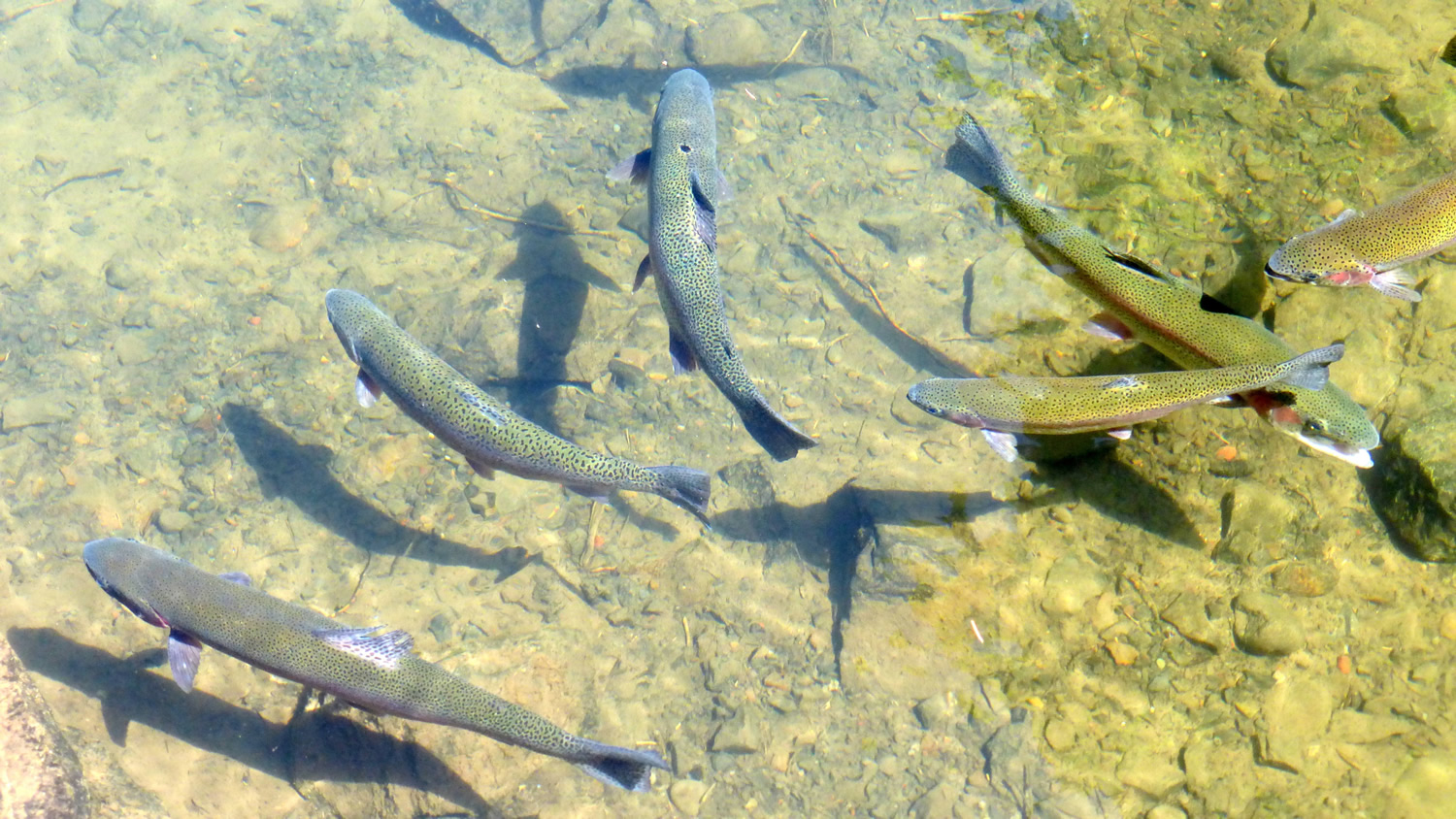
Rainbow trout are among the most commonly targeted fish in the upper Linville River. Some portions of the river receive hatchery-supported trout stockings, although stocking numbers and schedules can change from one year to the next.
Rainbows often occupy runs, riffles, current seams and pools where moving water brings aquatic insects past waiting fish. Stocked rainbows may initially be easier to catch, but they usually become more cautious after spending time in the river.
Brown Trout
Brown trout are also found in the Linville River and are especially appealing to anglers hoping to catch a larger or more challenging fish.
Brown trout frequently hold near:
- Undercut banks
- Large submerged rocks
- Deep pools
- Fallen trees
- Shaded banks
- Current breaks
- The tail ends of pools
Small nymphs can catch brown trout throughout the day, while streamers may be effective during low-light conditions, after rainfall or when the water is slightly stained.
Smallmouth Bass
As the Linville River moves to lower elevations and begins warming, smallmouth bass can become part of the fishery.
Smallmouth bass favor rocky rivers with current, deep pools and protected feeding areas. Small streamers, crayfish imitations, poppers and conventional lures can all produce fish under suitable conditions.
The trout-to-smallmouth transition is not marked by a single obvious boundary. It develops gradually as the river’s elevation, habitat and water temperature change.
Is the Linville River Good for Fly Fishing?
Yes, the Linville River can be very good for fly fishing, but the experience depends on where you fish.
The upper river is generally better suited to anglers who want manageable trout water and shorter approaches. The gorge is better suited to experienced anglers who are physically prepared for difficult terrain and backcountry conditions.
A versatile Linville River fly-fishing setup includes:
- 4-weight or 5-weight fly rod
- Floating fly line
- 7½-foot or 9-foot leader
- 4X, 5X and 6X tippet
- Small strike indicators
- Split shot or weighted flies
- Polarized sunglasses
- Rubber-soled or studded wading boots
- Compact landing net
- Forceps
- Nippers
A shorter rod can be useful in tight upper-river sections, while a 9-foot, 5-weight rod provides more versatility for larger pools, weighted nymph rigs and windy conditions.
Best Flies for the Linville River
Aquatic insects and conditions change throughout the year, but anglers do not need an enormous fly collection to fish the Linville successfully.
Nymphs
Nymph fishing is often the most dependable approach because trout feed beneath the surface during much of the day.
Useful patterns include:
- Pheasant Tail
- Hare’s Ear
- Prince Nymph
- Copper John
- Zebra Midge
- Walt’s Worm
- Perdigon
- Stonefly nymph
- Caddis larva
- Small egg pattern where legal and appropriate
Sizes 12 through 20 will cover many situations. Use heavier flies or additional weight in fast, deep water and smaller patterns when the river is low and clear.
Dry Flies
Dry-fly fishing can become productive when trout are feeding on the surface.
Patterns to carry include:
- Parachute Adams
- Elk Hair Caddis
- Blue-Winged Olive
- Light Cahill
- Stimulator
- Griffith’s Gnat
- Small terrestrial patterns
- Ants and beetles during warmer months
Watch the water before choosing a dry fly. Rising trout, drifting insects and birds feeding over the river can all indicate surface activity.
Streamers
Streamers are useful for covering deeper pools and attracting aggressive brown trout or smallmouth bass.
Good choices include:
- Woolly Bugger
- Sculpin imitation
- Muddler Minnow
- Small articulated streamer
- Crayfish imitation
- Clouser-style minnow for bass water
Dark streamers can work well in stained water, while natural olive, brown and tan patterns often imitate the river’s forage.
Checking Linville River Flow and Water Conditions
River flow should be checked before every trip, especially before entering Linville Gorge.
The U.S. Geological Survey operates a monitoring station named Linville River Near Nebo, North Carolina. It is identified as USGS monitoring location 02138500 and provides current streamflow and water-level information for the lower river.
The Nebo gauge should be treated as a planning tool rather than a perfect measurement of conditions everywhere on the Linville. It is located well downstream from the upper trout water, and local rainfall may affect individual sections differently.
Before fishing, consider:
- Current streamflow
- Whether the river is rising or falling
- Rainfall during the previous 24 to 48 hours
- Thunderstorms forecast upstream
- Water clarity
- Air and water temperature
- Trail and road conditions
A river that was manageable in the morning can become dangerous after a strong mountain thunderstorm.
Do You Need a Fishing License?
Most anglers age 16 or older need an appropriate North Carolina fishing license to fish the Linville River.
Anglers should make sure their license covers fishing in Public Mountain Trout Waters when fishing a designated trout section. Fishing within Blue Ridge Parkway boundaries is also subject to National Park Service regulations.
License types, fees and privileges can change, so confirm the current requirements with the North Carolina Wildlife Resources Commission before fishing. Carry proof of your license while on the water.
Public Access and Private Property
One of the most important things to understand about mountain fishing in North Carolina is that publicly managed trout water may flow through privately owned land.
The presence of trout-water signs does not necessarily give anglers permission to park anywhere, walk across private property or use unofficial paths.
Follow these basic access rules:
- Use established public access points.
- Obey posted parking restrictions.
- Do not block gates or driveways.
- Remain within areas where public access is permitted.
- Close gates when required.
- Pack out fishing line, bait containers and trash.
- Do not build fires on private property.
- Avoid damaging fences, crops or landscaping.
- Ask for permission when access is uncertain.
Respectful angler behavior helps preserve public fishing opportunities that depend on the cooperation of private landowners.
Wading and Backcountry Safety
Wading the Linville River requires caution. The river contains slick rocks, uneven ledges, fast current and holes that may be difficult to see.
A wading staff can be helpful, particularly in stained water. Felt soles may provide traction in some conditions but can also transfer aquatic organisms between waterways. Clean and dry all boots, waders and equipment before moving to another river.
Inside Linville Gorge, fishing should be approached as a backcountry trip rather than a casual roadside outing.
Tell someone where you are going, which trailhead you will use and when you expect to return. Download maps before losing cell service and carry enough supplies to remain out longer than expected.
Avoid entering the gorge when:
- Heavy rain is expected
- The river is rising quickly
- Thunderstorms are developing
- Trails are icy
- Daylight is limited
- You do not have reliable navigation
- Your physical conditioning is not adequate for the return climb
Turning around early is always better than becoming stranded near the river after dark.
Nearby Fishing Opportunities
A trip to the Linville area can also include other mountain fishing destinations.
Nearby or regional possibilities include:
- North Toe River
- Wilson Creek
- Watauga River
- Elk River
- South Toe River
- Wildcat Lake
- Lake James
- Smaller public trout streams in Avery, Burke and neighboring counties
Each water has its own regulations and access conditions, so research them individually before fishing.
The Different Sections of the Linville River
Understanding the river’s different personalities is one of the most important parts of planning a fishing trip.
Upper Linville River
The upper Linville River flows through the high country of Avery County. It is generally the most approachable portion for anglers looking for a traditional mountain trout stream.
Some sections are located near roads and developed areas, but that does not mean every bank is open to the public. Much of North Carolina’s mountain trout water passes through or beside privately owned property.
Anglers should use designated public access, observe posted signs and avoid entering private land without permission. Access to the water does not automatically grant permission to cross someone’s yard, driveway, field or other private property.
The upper river can offer:
- Stocked trout opportunities
- Roadside or near-road access in selected areas
- Smaller pools and runs
- Easier fishing than the gorge
- Opportunities for fly fishing, spinning gear or bait where regulations permit
Always identify the management classification of the exact section before choosing bait or tackle.
Linville Falls Area
Near Linville Falls, the river drops dramatically and begins entering much more difficult terrain. Linville Falls is best known as a scenic destination along the Blue Ridge Parkway, but anglers should not treat the waterfall-viewing trails as easy fishing-access trails.
The trails from the visitor area primarily lead to overlooks. They do not provide simple, maintained access to all the potentially fishable water below the falls.
Climbing around waterfalls, crossing wet rocks or leaving established routes can be extremely dangerous. Fishing immediately around steep drops and powerful currents should not be attempted casually.
Visitors should follow all National Park Service rules around the waterfall and trail system. Swimming and climbing on rocks around Linville Falls are prohibited.
Some trails, roads and facilities in the Linville Falls area may also be closed because of storm damage, maintenance or hazardous conditions. Check the National Park Service’s current Linville Falls and Blue Ridge Parkway status information before visiting.
Linville Gorge Wilderness
Below Linville Falls, the river passes through Linville Gorge Wilderness. This section offers a true backcountry experience, but it is not a beginner-friendly fishing destination.
The gorge is steep, rocky and physically demanding. Reaching the river may require a long descent, and the return trip can be significantly harder than the hike down. Trails may be rough, poorly marked, eroded or obstructed.
Once anglers reach the water, moving upstream or downstream can still be difficult. Large boulders, cliffs, deep pools and swift current may block progress.
Anyone considering fishing inside Linville Gorge should be prepared for:
- Steep elevation changes
- Rugged and uneven trails
- Limited or nonexistent cell service
- Slippery rocks
- Rapidly changing weather
- Difficult river crossings
- Few easy exit routes
- A strenuous climb back to the trailhead
- Limited access to drinking water and restrooms
The U.S. Forest Service lists several trails that provide access to different parts of the wilderness, including Conley Cove, Babel Tower, Devils Hole, Pinch-In and Spence Ridge. These trails vary greatly in condition and difficulty, and not every trail provides convenient access to productive fishing water.
A map, offline navigation, proper footwear, sufficient drinking water and a realistic turnaround time are essential.
Lower Linville River
Below the gorge, the Linville continues toward Lake James. Lower elevations and warmer water create different fishing opportunities from those found in the upper river.
Depending on the exact area and season, anglers may encounter smallmouth bass as well as trout. Water levels in the lower river can change after heavy rainfall, and conditions may differ considerably from those in the upper trout water.
Access can remain limited. Anglers should research designated public fishing areas rather than assuming that any road crossing or visible shoreline is open to the public.
Conventional Tackle for the Linville River
The Linville River is not limited to fly fishing. Where regulations permit, anglers can fish with light spinning equipment.
A practical setup includes:
- Ultralight or light spinning rod
- 4-pound or 6-pound line
- Small inline spinners
- Small spoons
- Trout-sized crankbaits
- Soft-plastic minnows
- Small jigs
Natural bait may be permitted in some sections and prohibited in others. Do not carry or use bait until you have confirmed the regulations for the exact stretch being fished.
Best Time to Fish the Linville River
The Linville River can provide fishing opportunities during much of the year, but conditions vary considerably by season.
Spring
Spring is one of the best times to fish the Linville. Water temperatures are favorable, trout are active and aquatic insects become increasingly abundant.
Rain can improve fishing by adding color and flow, but heavy storms can make the river high, muddy and dangerous. Check recent rainfall and stream conditions before entering the gorge.
Summer
Summer fishing is often best during the morning, particularly in the upper river where water remains colder.
Low, clear water can make trout cautious. Longer leaders, lighter tippet and careful approaches may be necessary.
Avoid fishing for trout when water temperatures become excessively warm, especially in lower-elevation sections. Fighting trout in warm water can cause severe stress and delayed mortality, even when a fish appears to swim away after release.
Fall
Fall brings cooler water, fewer insects and beautiful mountain scenery. Brown trout may become more active as their spawning season approaches.
Streamers, nymphs and terrestrial patterns can all work during early fall. Anglers should avoid walking through clean, shallow gravel areas where trout may be spawning.
Winter
Winter fishing can be productive during mild periods, especially during the warmest part of the afternoon.
Trout typically feed more slowly, making small nymphs and midges useful. Ice, snow and short daylight hours can make trails inside the gorge considerably more dangerous.
Fishing Regulations for the Linville River
Fishing regulations vary along the Linville River. Do not assume that rules applying to one section also apply upstream or downstream.
In Avery County, the section of the Linville River from S.R. 1504 to the Blue Ridge Parkway boundary is classified as Hatchery Supported Trout Water, except where areas are posted against trespassing.
Fishing within Blue Ridge Parkway boundaries is subject to National Park Service regulations. Anglers should follow posted rules and verify current requirements before fishing.
Public Mountain Trout Waters located on game lands are generally classified as Wild Trout Waters unless they are classified and posted otherwise. North Carolina regulations also state that there is no closed trout season within the Linville Gorge Wilderness Area.
Depending on the classification and location, regulations can affect:
- Open and closed seasons
- Daily creel limits
- Minimum fish size
- Whether natural bait is allowed
- The number and type of hooks permitted
- Whether trout must be released
- Which fishing license is required
Look for official signs posted along the river. North Carolina uses different sign colors to identify trout-water classifications.
Before fishing, consult the current North Carolina Wildlife Resources Commission Public Mountain Trout Waters map and the current Inland Fishing Regulations Digest. Regulations and classifications can change, so an older article, social-media post or fishing report should never be your only source.
Anglers should also be aware that North Carolina expects reduced trout stockings during 2026, 2027 and potentially 2028 while the Bobby N. Setzer State Fish Hatchery undergoes renovations. A water listed as Hatchery Supported may therefore receive fewer fish than anglers remember from previous years.
Fishing Near Linville Falls
Linville Falls is worth visiting, even when fishing is not the primary purpose of the trip. The waterfall and surrounding gorge provide some of the most dramatic scenery along the Blue Ridge Parkway.
However, anglers should separate sightseeing access from fishing access. The developed trails near the visitor area lead mainly to waterfall overlooks. They should not be viewed as easy routes to the bottom of the gorge.
Fishing near waterfalls also creates hazards that do not exist on gentler trout streams. Strong currents, wet ledges, steep cliffs and sudden drop-offs can make a minor mistake fatal.
Follow all posted National Park Service restrictions and remain on approved trails while visiting the falls. Check current trail, road and facility conditions before beginning your trip.
Is the Linville River Good for Beginners?
Selected portions of the upper Linville can be suitable for beginners, particularly where legal access is clear and the water is small enough to fish safely.
Linville Gorge is not an appropriate introduction to trout fishing or backcountry hiking. New anglers would be better served by learning basic casting, reading water, knot tying and wading on accessible trout water before attempting a gorge trip.
Beginners fishing the upper river should focus on:
- Clearly marked public access
- Moderate water levels
- Short fishing sessions
- Simple nymph or dry-dropper rigs
- Safe, shallow wading
- Current regulations
- Respect for private property
Hiring an experienced local fishing guide can also shorten the learning curve and help anglers understand access, seasonal hatches and fishing techniques.
Did You Fish? Fishing the Linville River
The Linville River is one of the most scenic and distinctive fishing destinations in western North Carolina. From its colder upper reaches near Linville and Grandfather Mountain to the steep, boulder-filled water of Linville Gorge, the river offers anglers a wide range of experiences within a relatively compact area.
For many visitors, fishing the Linville River begins with trout. Rainbow trout and brown trout can be found in the river’s colder sections, where riffles, pools, shaded banks and current seams create productive habitat. Fly anglers can fish nymphs, dry flies and small streamers, while conventional anglers may use light spinning tackle where current regulations allow it.
Farther downstream, as the river drops in elevation and moves toward Lake James, water temperatures and fish habitat begin to change. Smallmouth bass may become a more realistic target in lower sections, particularly around rocky banks, deeper pools and areas with steady current.
The variety of fishing opportunities is part of what makes the Linville River appealing, but it also makes careful trip planning essential. The upper Linville River and the water inside Linville Gorge should not be treated as the same fishing destination. Access, trail difficulty, fish species, water temperature, regulations and physical hazards can change significantly from one section to another.
Some upper sections may offer relatively convenient access near roads and developed areas. Fishing in Linville Gorge, however, can require steep hiking, backcountry navigation and a difficult climb back to the trailhead. Anglers entering the gorge should carry sufficient water, download maps in advance, wear suitable footwear and allow enough daylight to complete the return trip safely.
Before fishing the Linville River, identify the exact section you plan to visit. Confirm that public access is available, respect private property, review the current North Carolina fishing regulations and check for any National Park Service or U.S. Forest Service closures. Anglers should also check recent rainfall, the weather forecast and current Linville River streamflow before leaving home.
Water conditions can change quickly in the North Carolina mountains, especially after heavy rain or thunderstorms upstream. A section that looks manageable early in the day may become high, stained or dangerous later.
Fishing the Linville River rewards anglers who arrive prepared. Whether you are searching for trout in the high country, exploring the rugged water of Linville Gorge or targeting smallmouth bass closer to Lake James, the river provides beautiful scenery, challenging fishing and one of the most memorable outdoor experiences in North Carolina.
With responsible access, careful planning and respect for changing conditions, a Linville River fishing trip can be an unforgettable addition to any western North Carolina fly-fishing or mountain-fishing adventure.