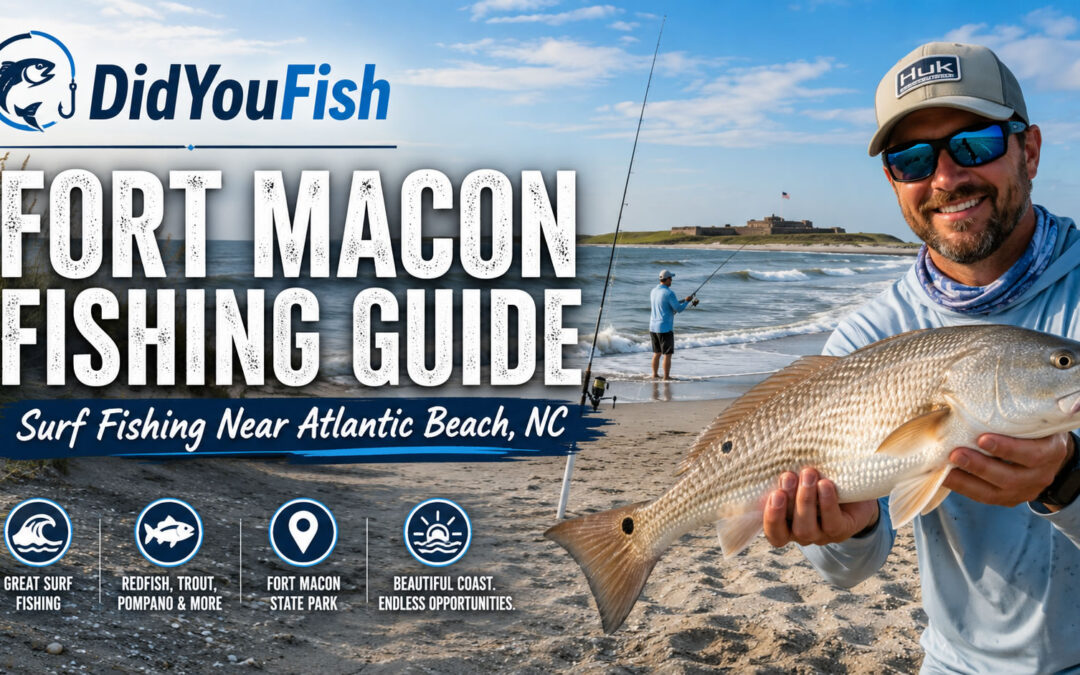
Fort Macon Fishing Guide: Surf Fishing Near Atlantic Beach, NC
Fort Macon is one of the best-known surf fishing spots on North Carolina’s Crystal Coast. Located at the eastern end of Atlantic Beach, the area gives anglers easy access to a wide stretch of beach, proximity to Beaufort Inlet and the chance to catch a variety of saltwater species throughout the year.
One of the biggest reasons anglers like Fort Macon is that it works for different skill levels. A beginner can show up with a basic surf setup, fresh bait and a simple bottom rig and have a real chance at catching fish. At the same time, experienced surf anglers can work the troughs, cuts and sloughs more strategically, adjust to changing water conditions and target species like red drum, pompano, bluefish or speckled trout when the timing is right.
As always, fishing conditions can change quickly. Tides, wind, water clarity, bait movement and recent storms all affect how Fort Macon fishes. Before heading out, check current North Carolina coastal regulations, weather and local beach conditions.
Quick Answer: Is Fort Macon Good for Fishing?
Yes, Fort Macon is a very good place to fish, especially for anglers looking for public surf access near Atlantic Beach. Depending on the season, anglers may catch red drum, black drum, bluefish, pompano, sea mullet, speckled trout, flounder and other common North Carolina coastal species.
The area is especially appealing because it combines a broad beach, current movement influenced by Beaufort Inlet and the kind of structure that often attracts feeding fish. Some days it is as simple as putting fresh shrimp or sand fleas in the right section of water. On other days, fish are scattered and success comes from moving, reading the beach and adjusting your presentation.
Where Is Fort Macon?
Fort Macon is located at the eastern end of Bogue Banks near Atlantic Beach, North Carolina. It sits close to Beaufort Inlet, which is one reason the area can be so productive. The meeting of ocean water, current and bait movement often creates a lot of fishing opportunity nearby.
For anglers, the biggest draw is the surf zone. You are not fishing a quiet little beach pond here. You are fishing moving saltwater influenced by wind, tide and the inlet system. Some days that makes the fishing excellent. Other days it means the water is rough, dirty or difficult to fish effectively.
Because Fort Macon is part of a state park setting, it is one of the better-known public coastal areas on this stretch of shoreline. Still, it is always smart to check any current beach access rules, park notices or temporary restrictions before your trip.
Best Time of Year to Fish Fort Macon
Fort Macon can produce fish in every season, but the experience changes throughout the year. Spring is a favorite for many anglers because water temperatures begin to rise, bait becomes more active and a mix of species starts showing along the beach. It is a good time to look for red drum, bluefish and other migratory activity.
Summer can be productive for pompano, sea mullet, black drum and smaller mixed surf species. Early morning and late evening are usually the most comfortable times to fish, both because of the heat and because beach traffic tends to be lighter. Fall is often one of the best times of all. Water temperatures are still favorable, bait is moving and species like red drum, bluefish and speckled trout can make for excellent surf action.
Winter is quieter, but not necessarily dead. You may still find drum, trout or other species under the right conditions, particularly during stable weather patterns.
How to Read the Beach
This is one of the biggest differences between simply casting into the ocean and actually surf fishing with purpose. At Fort Macon, do not just walk out, pick a random place and start casting. Spend a few minutes watching the water first.
Look for cuts in the sandbar, deeper troughs along the beach, irregular wave patterns, water color changes and places where current seems to sweep bait through a narrow area. Those spots often hold fish. Birds working the water can also be a clue, especially when bait is being pushed near shore.
If one section of beach looks flat and lifeless, keep moving. Good surf anglers often catch more because they are willing to relocate rather than wait all day in dead water.
What to Bring
You do not need a truckload of gear to fish Fort Macon effectively. A solid surf setup, a small selection of rigs, sinkers and hooks, fresh bait, pliers, a cooler, sunscreen, water and a towel will cover a lot of situations. Polarized sunglasses are useful for reading the water, and a cart can help if you carry more gear.
A measuring device is worth bringing as well, along with a phone or printed reference for current rules. That makes it easier to confirm whether a fish is legal before keeping it.
Check Current North Carolina Coastal Fishing Regulations
Before fishing Fort Macon, check the current North Carolina coastal size and bag limits, license rules and any seasonal closures that may affect the species you want to catch. This is especially important for fish like flounder, red drum and speckled trout, which may have rules that change over time.
Also take a quick look at the weather, tide chart and surf forecast before leaving home. Those few minutes of preparation can make a major difference in both success and safety.
What Fish Can You Catch at Fort Macon?
Fort Macon gives surf anglers a realistic shot at several species over the course of the year. Red drum are one of the headline fish and are a major reason many anglers make the trip. Speckled trout may show up during the right season and conditions, especially when water temperatures are favorable. Bluefish can be aggressive and fun to catch when they are moving through. Pompano and sea mullet are popular warm-season targets, especially for anglers fishing bottom rigs with natural bait.
Black drum, whiting, croaker and flounder may also be part of the mix depending on the season and exact conditions. No single species is guaranteed on any given day, which is part of the reality of surf fishing, but Fort Macon has enough variety to stay interesting year-round.
Best Time of Day
At Fort Macon, low-light periods are often the best starting point. Early morning is especially popular because the beach is quieter and fish often move shallow to feed. Late afternoon into sunset can also be productive, especially when bait is present and the tide is moving.
A lot depends on the tide. Moving water is usually better than slack water, and many anglers prefer to fish around a rising or falling tide rather than during a dead period. Wind direction and surf height can also matter as much as the clock.
Best Baits and Lures
Natural bait is often the simplest and most productive choice at Fort Macon. Fresh shrimp is a classic option and will catch a range of species. Sand fleas can be excellent when pompano, drum or other surf fish are feeding close. Cut mullet, menhaden and other legal cut bait can be good choices when targeting larger fish like red drum or bluefish.
Artificial lures also have a place, especially when fish are actively feeding. Metal spoons, soft plastics, paddletails and topwater plugs can work depending on the season and species. If bluefish or trout are in range, artificial presentations may outfish bait at times.r.
Surf Fishing Gear for Fort Macon
A medium or medium-heavy surf rod is enough for many Fort Macon situations, especially when targeting smaller to medium-sized fish close to the beach. Heavier setups can be helpful when current is stronger or when casting bigger baits. A simple two-hook bottom rig works well for pompano, sea mullet and other bottom-feeding surf fish. A fish-finder rig is a good option for drum and other larger species.
Bring enough weight to handle changing surf conditions. Some days light sinkers are enough. On rougher days, you may need heavier pyramid or storm sinkers to keep your bait in place.
Fort Macon Fishing Tips
A lot of success at Fort Macon comes from paying attention to small details. Fresh bait usually matters. So does keeping your bait in the water where fish are actually feeding instead of casting farther than necessary. Many surf fish feed surprisingly close to shore, especially in the first trough.
It also helps to match your expectations to the conditions. A beautiful sunny day is nice for people, but it is not always the best surf-fishing setup. Slightly overcast conditions, moving water and active bait can be much more important.
Fishing License and Regulations
Before fishing Fort Macon, make sure you have the appropriate North Carolina coastal fishing license if one is required for your situation. Also check the current recreational regulations for the species you plan to target. Size limits, bag limits and open seasons can change, especially for species like flounder, red drum and speckled trout.
If you are unsure about a fish, identify it carefully and release it rather than guessing.
Did You Fish? Fort Macon Fishing Guide: Plan a Better Surf Fishing Trip on the Crystal Coast