
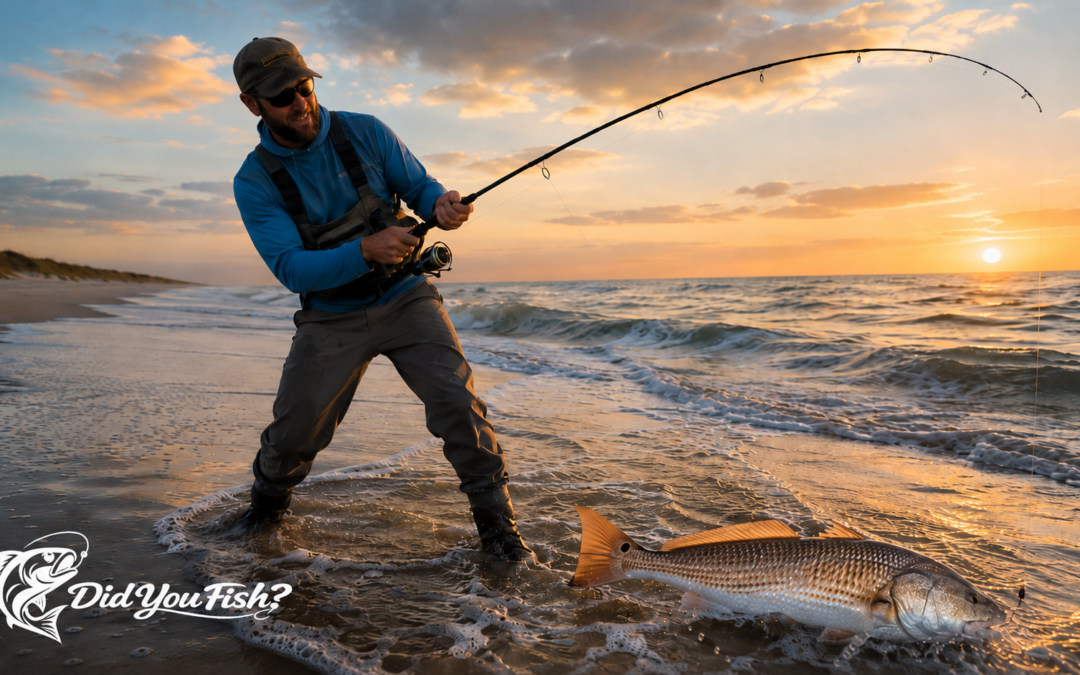
How to Catch Red Drum from the Surf in North Carolina
Red drum are one of the most popular saltwater fish to catch from the surf in North Carolina. Also called redfish, puppy drum, channel bass, or simply drum, these hard-fighting fish can be caught right from the beach with simple bait, basic surf gear, and a good understanding of tides, structure, and feeding zones.
Surf fishing for red drum in North Carolina is popular because anglers do not need a boat. From the Outer Banks to Topsail Beach, Wrightsville Beach, Carolina Beach, Oak Island, Ocean Isle Beach, and Sunset Beach, red drum can move within casting distance of the sand when conditions are right.
The key to catching red drum from the surf is finding moving water, natural bait, and beach structure. Red drum often feed around sloughs, troughs, sandbar cuts, inlets, and areas where waves stir up crabs, shrimp, mullet, and other baitfish.
What Are Red Drum?
Red drum are a coastal saltwater fish found along beaches, inlets, sounds, marshes, creeks, and inshore waters. They are known for their bronze color, strong runs, and the black spot often found near the tail.
Smaller red drum are often called puppy drum. Larger red drum may be called bull reds or big drum. In North Carolina, red drum are one of the most sought-after surf fishing species because they can be caught with bait from the beach, especially when they are feeding close to shore.
Before keeping any red drum, always check the latest North Carolina Recreational Size and Bag Limits from the North Carolina Division of Marine Fisheries. Regulations can change, and red drum often have specific slot limits and harvest rules.
Best Time to Catch Red Drum from the Surf in North Carolina
The best time to catch red drum from the surf in North Carolina is usually during spring, summer, and fall, with fall being one of the most popular seasons for bigger fish. Red drum may be caught throughout much of the warmer season, but the bite often improves when baitfish are moving along the beach.
Early morning and late afternoon are often good times to fish because red drum may move closer to shore during lower-light periods. Cloudy days, light surf, and moving tides can also improve your chances.
A moving tide is one of the most important factors. Incoming tide can push bait closer to the beach, while outgoing tide can create current around cuts, inlets, and sloughs. Red drum use this current to find food, so fishing during tide movement is usually better than fishing during slack water.
How to Read the Beach for Red Drum
Reading the beach is one of the most important skills for red drum surf fishing in North Carolina. Red drum often move through the surf looking for easy meals, and beach structure helps concentrate bait.
Look for the first trough close to shore. This is the deeper channel between the wet sand and the first sandbar. Many anglers cast too far and miss fish feeding close to the beach.
Also look for cuts in the sandbar. These are places where water flows in and out, carrying bait with it. Red drum often patrol these areas because food gets pushed through the current.
Sloughs are another good area. A slough is a deeper stretch of water running parallel to the beach. If a slough connects to a cut or inlet, it can be a strong place to fish.
Watch for baitfish flipping, birds diving, or small crabs and sand fleas in the wash. These signs can tell you where fish may be feeding.
Best Bait for Red Drum Surf Fishing
The best bait for red drum from the surf is usually natural bait. Red drum feed on shrimp, crabs, mullet, menhaden, and other small fish.
Good bait options include:
Cut mullet
Fresh shrimp
Menhaden
Finger mullet
Blue crab pieces
Sand fleas
Squid
Fishbites paired with natural bait
Cut mullet is one of the most reliable baits for red drum in the surf. It gives off scent, stays on the hook well, and attracts larger fish. Fresh shrimp is also a good choice, especially for smaller red drum, black drum, sea mullet, and other surf species.
If you are targeting bigger red drum, use larger pieces of cut bait. If you are fishing for puppy drum or mixed surf species, use smaller bait and lighter tackle
How to Fish for Red Drum from the Beach
Start by choosing a section of beach with visible structure. Look for troughs, cuts, deeper water, or bait activity. Bait your rig with cut mullet, shrimp, or another natural bait and cast into the likely feeding zone.
Do not always cast as far as possible. Red drum often feed close to the beach, especially in the first trough. Try one cast close and one farther out if you are fishing multiple rods.
Place your rod in a sand spike and keep the line tight enough to see bites. Red drum bites may start as small taps, a steady pull, or a hard run. With circle hooks, avoid a hard hookset. Instead, pick up the rod and reel steadily until the fish comes tight.
If you do not get bites after 20 to 30 minutes, move. Red drum surf fishing often rewards anglers who cover water and find active fish.
Common Mistakes to Avoid
One common mistake is using bait that is too old or too soft. Fresh bait usually catches more fish. If your bait looks washed out or keeps falling off the hook, replace it.
Another mistake is ignoring the first trough. Many red drum are caught close to shore, especially when bait is being washed around by the waves.
Using the wrong sinker is another issue. If your bait will not stay in place, use a heavier pyramid sinker. If the surf is calm, use less weight so your setup feels more natural.
Finally, do not stay in one unproductive spot too long. If you are not getting bites and do not see bait or structure, move down the beach.
Best Places to Catch Red Drum from the Surf
You can catch red drum from many North Carolina beaches, but the best areas usually have structure or moving water.
Good places to look include:
Outer Banks beaches
Hatteras Island
Ocracoke Island
Topsail Beach
Surf City
Wrightsville Beach
Carolina Beach
Oak Island
Ocean Isle Beach
Sunset Beach
Inlet areas
Beach sloughs and troughs
Sandbar cuts
Creek mouths near the surf
Areas with baitfish activity
When surf fishing, do not just pick a random flat stretch of beach. Look for water that is different. A deeper trough, a rip, a cut through the sandbar, or a spot where waves break unevenly can all be signs of a better fishing location.
Best Rig for Catching Red Drum from the Surf
A fish finder rig or Carolina-style surf rig is one of the best rigs for red drum. This setup allows the fish to pick up the bait and move without immediately feeling heavy resistance.
A basic red drum surf rig includes:
Circle hook
Leader material
Swivel
Sinker slide or fish finder clip
Pyramid sinker
Cut bait or shrimp
Circle hooks are a good choice because they usually hook fish in the corner of the mouth. This makes releasing fish easier and helps protect red drum that are outside the legal slot or that you do not plan to keep.
For most surf conditions, a pyramid sinker between 2 and 5 ounces can work. Use enough weight to hold bottom, but do not use more than necessary. If your bait keeps rolling down the beach, increase the sinker size.
Best Gear for Red Drum Surf Fishing
You do not need expensive gear to catch red drum from the beach, but your setup should be strong enough for current, waves, and hard-pulling fish.
A good beginner setup includes:
8- to 12-foot surf rod
4000 to 6000 size spinning reel
20- to 30-pound braided line
30- to 50-pound leader
Circle hooks
Pyramid sinkers
Sand spike or rod holder
A longer surf rod helps with casting distance and line control, especially when waves are breaking. Braided line gives you better sensitivity and casting distance, while a strong leader helps protect against rough mouths, shells, and structure.
If you are fishing for puppy drum close to shore, lighter gear can be more fun. If you are fishing rough surf, inlets, or areas where bull reds may show up, use heavier tackle.
Best Conditions for Red Drum Surf Fishing
The best surf conditions for red drum usually include moving water, moderate surf, clean or slightly stained water, and bait in the area.
Good conditions include:
Incoming or outgoing tide
Early morning or late afternoon
Mullet or baitfish in the surf
Light to moderate waves
Cuts or sloughs near the beach
Overcast skies
Water movement near inlets
Very rough surf can make fishing difficult, but slightly stirred-up water can help red drum feed with confidence. If the water is too clear and calm, fish may be more cautious. If it is too muddy and rough, they may be harder to locate.
Quick Tips for Catching Red Drum from the Surf
- Fish during a moving tide.
- Use fresh cut mullet or shrimp.
- Look for troughs, cuts, and sloughs.
- Do not overcast the first trough.
- Use circle hooks for better releases.
- Keep bait on bottom.
- Move if the bite is slow.
- Check regulations before keeping fish.
- Fish early morning or late afternoon.
- Watch for baitfish and birds.
Did You Fish? Red Drum Surf Fishing in North Carolina
Red drum surf fishing in North Carolina is one of the best ways to enjoy saltwater fishing from the beach. It is simple enough for beginners but still exciting for experienced anglers because red drum are strong, aggressive, and often unpredictable. One day they may be feeding close to shore in the first trough. Another day they may be cruising a sandbar cut, inlet edge, or deeper slough farther down the beach. That is why learning to read the surf is just as important as choosing the right bait.
If you are trying to catch red drum from the surf in North Carolina, start with the basics. Fish during a moving tide, use fresh bait, and look for beach structure. Cut mullet, shrimp, menhaden, finger mullet, and crab pieces are all good red drum baits. A simple fish finder rig or Carolina-style surf rig with a circle hook and pyramid sinker is usually all you need. The goal is to keep the bait near the bottom where red drum are naturally feeding.
Location matters, but you do not always need a famous fishing spot. Many North Carolina beaches can produce red drum when conditions are right. The Outer Banks, Hatteras, Ocracoke, Topsail Beach, Wrightsville Beach, Carolina Beach, Oak Island, Ocean Isle Beach, and Sunset Beach all offer opportunities for surf anglers. The key is to find moving water, bait, and structure. If one section of beach looks flat and lifeless, walk until you find cuts, troughs, birds, baitfish, or wave action that looks different.
For beginners, the biggest tip is to stay patient but not stationary. Give a spot enough time, but do not be afraid to move. Red drum are often traveling and feeding, so small changes in location can make a big difference. Also remember that many red drum caught from the surf may be outside the legal slot or may need to be released. Handle fish carefully, keep them out of the water only as long as needed, and check the latest North Carolina recreational size and bag limits before keeping anything.
Overall, red drum are one of the top surf fishing targets on the North Carolina coast. They are accessible, hard-fighting, and available to anglers fishing from the sand with basic gear. Whether you are fishing the Outer Banks, Topsail Island, Wrightsville Beach, or the southern beaches, a fresh bait on the bottom during a moving tide can give you a real chance at one of North Carolina’s favorite saltwater fish.
Did you fish today?