
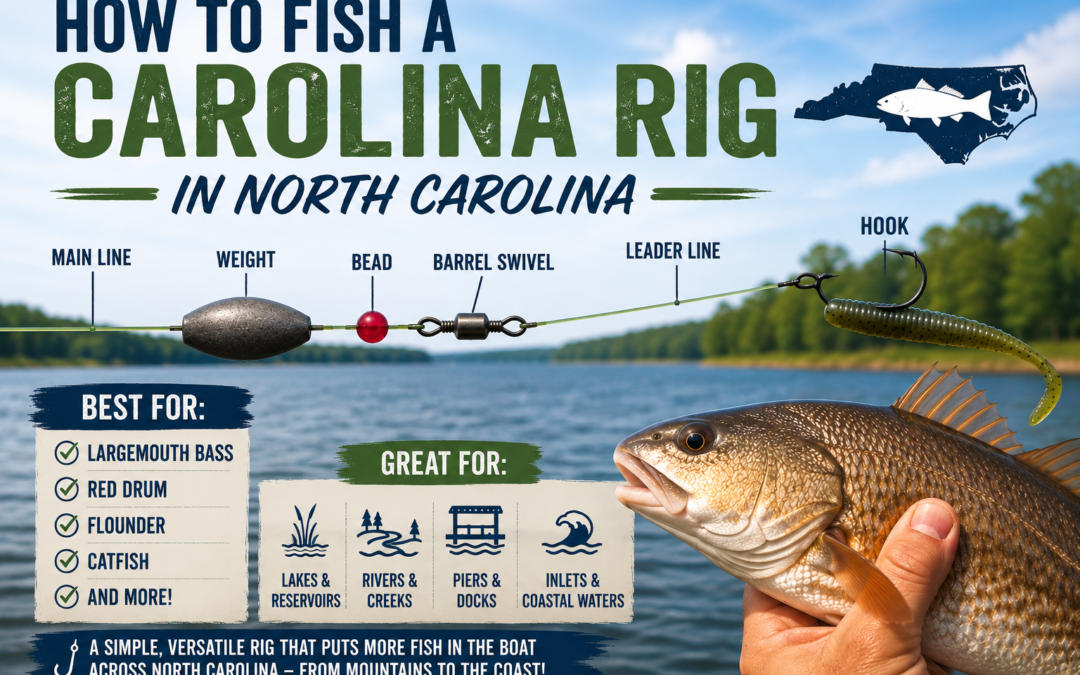
How to Fish a Carolina Rig in North Carolina
The Carolina rig is one of the most effective and versatile fishing rigs used by anglers throughout North Carolina. Whether you're targeting largemouth bass in Jordan Lake, catfish in the Piedmont, red drum along the coast, or flounder around fishing piers and inlets, the Carolina rig consistently catches fish. Its simple design allows anglers to present bait naturally near the bottom while maintaining excellent sensitivity and hook-setting power.
For many North Carolina anglers, learning how to fish a Carolina rig is a rite of passage. The rig works in freshwater lakes, rivers, ponds, coastal sounds, and saltwater fishing areas, making it one of the most valuable techniques any fisherman can master.
What is a Carolina Rig?
A Carolina rig consists of:
- Sliding egg sinker or bullet weight
- Bead
- Barrel swivel
- Leader line
- Hook
- Live bait or artificial lure
The sliding weight allows fish to pick up the bait without immediately feeling resistance, resulting in more natural presentations and better hook-up ratios.
Why the Carolina Rig Works So Well
One reason the Carolina rig remains so popular in North Carolina fishing is its versatility. The rig keeps bait near the bottom where many fish naturally feed while allowing the bait to move freely behind the weight.
Benefits include:
- Excellent bottom contact
- Long casting distance
- Natural bait presentation
- Effective in fresh and saltwater
- Works with live bait and artificial lures
Few rigs can match its effectiveness across such a wide variety of fishing situations.
Best Baits for a Carolina Rig
Freshwater Fishing
Popular Carolina rig baits include:
- Plastic worms
- Creature baits
- Lizards
- Crawfish imitations
- Live nightcrawlers
Saltwater Fishing
For North Carolina saltwater anglers:
- Live shrimp
- Finger mullet
- Mud minnows
- Cut bait
- Soft plastic paddle tails
Matching the bait to local forage often improves success.
Using a Carolina Rig for Flounder
Flounder are bottom-oriented ambush predators, making them ideal Carolina rig targets.
Slowly work live bait along:
- Pier pilings
- Channel edges
- Docks
- Inlets
- Current breaks
Many North Carolina anglers use mud minnows or finger mullet when targeting flounder.
Carolina Rig Setup
A basic Carolina rig setup includes:
Main Line
Most anglers use:
• 10-20 lb braided line
• 10-17 lb monofilament
Weight
Choose a sinker based on conditions:
• 1/2 oz for calm water
• 3/4 oz for moderate current
• 1 oz or heavier for surf fishing or strong current
Leader
A leader between 18 and 36 inches works well in most situations.
Hook
Popular hook sizes include:
• 1/0 to 3/0 circle hooks for live bait
• Offset worm hooks for soft plastics
Using a Carolina Rig for Bass Fishing
Many anglers consider the Carolina rig one of the best bass fishing rigs in North Carolina.
Target areas such as:
- Points
- Creek channels
- Drop-offs
- Submerged timber
- Rocky bottoms
A slow drag-and-pause retrieve often produces strikes from largemouth bass.
Using a Carolina Rig for Red Drum
The Carolina rig is extremely popular among coastal anglers targeting red drum.
Fish often hold near:
- Inlets
- Marsh edges
- Oyster beds
- Sandbars
- Surf fishing troughs
Live shrimp, finger mullet, and cut bait are excellent choices for red drum fishing.
Best Places to Fish a Carolina Rig in North Carolina
The Carolina rig works throughout the state.
Popular freshwater locations include:
- Jordan Lake
- Falls Lake
- Lake Norman
- Lake Gaston
- High Rock Lake
Popular saltwater destinations include:
- Ocean Isle Beach
- Emerald Isle
- Wrightsville Beach
- Cape Hatteras
- The Outer Banks
Common Carolina Rig Mistakes
Retrieving Too Fast
The Carolina rig is designed for slow presentations.
Using Too Short of a Leader
A longer leader often creates a more natural bait presentation.
Using Excessive Weight
Use only enough weight to maintain bottom contact.
Ignoring Structure
Fish frequently relate to structure, drop-offs, and current breaks.
Did You Fish? How to Fish a Carolina Rig in North Carolina
Learning how to fish a Carolina rig in North Carolina can dramatically improve your success in both freshwater and saltwater environments. Few fishing rigs are as versatile or effective when targeting species such as largemouth bass, catfish, red drum, flounder, and even speckled trout. Whether you're fishing from the bank, a boat, a fishing pier, or the surf, the Carolina rig remains one of the most dependable and productive fishing techniques available to anglers across the state.
One of the biggest advantages of learning how to fish a Carolina rig in North Carolina is its ability to present bait naturally near the bottom where many fish actively feed. From the deep structure of Jordan Lake and Falls Lake to the marshes, inlets, and coastal waters of Ocean Isle Beach and the Outer Banks, the Carolina rig allows anglers to cover water effectively while maintaining excellent bait presentation. It can be used with live bait, cut bait, soft plastics, and other popular fishing lures, making it suitable for a wide range of fishing situations.
The Carolina rig is especially effective because it allows anglers to adapt to changing conditions. By adjusting leader length, sinker weight, and bait selection, fishermen can target different species and fish successfully in varying depths, currents, and water clarity conditions. This flexibility is one reason why the Carolina rig has remained a favorite among North Carolina anglers for generations.
Whether you're a beginner learning basic fishing techniques or an experienced angler looking to improve your catch rate, understanding how to fish a Carolina rig in North Carolina is a skill worth mastering. At DidYouFish.com, we help anglers discover the best fishing spots, fishing rigs, bait guides, species information, and local fishing knowledge throughout North Carolina. Explore our growing collection of fishing guides and start planning your next fishing adventure today.
Did you fish today?