Outer Banks Fishing Report: What’s Biting Now
The Outer Banks fishing report is showing a strong early summer mix for anglers fishing the surf, piers, soundside waters, inshore areas, nearshore waters, and offshore grounds from Corolla, Duck, Kitty Hawk, Kill Devil Hills, Nags Head, Oregon Inlet, Rodanthe, Avon, Buxton, Hatteras, and Ocracoke.
This report is based on recent public fishing reports, seasonal Outer Banks patterns, and what anglers are seeing across the OBX. Conditions can change quickly along the Outer Banks because wind, tide, current, water clarity, water temperature, bait movement, and storms can all affect the bite.
Right now, anglers may find bluefish, Spanish mackerel, red drum, speckled trout, sea mullet, croaker, spot, pompano, sharks, cobia, black drum, sheepshead, king mackerel, mahi, wahoo, blackfin tuna, yellowfin tuna, grouper, and billfish depending on where they fish and how far they run.
Quick Answer: Outer Banks Fishing Report
The current Outer Banks fishing report points to good early summer action for bluefish, Spanish mackerel, red drum, sea mullet, croaker, spot, sharks, speckled trout, cobia, mahi, wahoo, blackfin tuna, yellowfin tuna, king mackerel, grouper, and billfish. Surf and pier anglers should watch for bluefish, Spanish mackerel, sea mullet, croaker, spot, pompano, sharks, and drum. Soundside anglers may find speckled trout, red drum, and bluefish. Offshore boats may find tuna, mahi, wahoo, billfish, grouper, and other bottom fish when conditions allow.
Current Outer Banks Fishing Report
Recent public Outer Banks fishing updates show a classic early summer pattern. Bluefish and Spanish mackerel have been active when winds are light and water conditions are good. Big bluefish and big drum have also appeared in recent Outer Banks reports, giving surf, pier, and boat anglers a reason to stay ready. Some reports also point to trout and drum activity on the soundside, especially where water, bait, and current line up.
The Outer Banks can fish very differently from one stretch of beach to another. Corolla and Duck may have different water conditions than Nags Head. Oregon Inlet may fish differently than Hatteras Inlet. Cape Point can change fast depending on wind and current. That is why anglers should use this report as a starting point, then check the latest local conditions before heading out.
Surf Fishing on the Outer Banks
Surf fishing is one of the biggest reasons anglers visit the Outer Banks. The OBX gives beach anglers miles of shoreline, deep sloughs, sandbar cuts, points, inlets, and moving water.
Common surf targets may include:
- Bluefish
- Spanish mackerel
- Red drum
- Sea mullet
- Croaker
- Spot
- Pompano
- Black drum
- Sharks
- Skates and rays
- Flounder, depending on season and regulations
For smaller bottom fish like sea mullet, croaker, spot, and pompano, use smaller hooks with shrimp, Fishbites, sand fleas, bloodworm-style baits, squid, or clam strips. For red drum, black drum, bluefish, and sharks, use cut mullet, menhaden, shrimp, crab, or other larger natural baits.
If bluefish or Spanish mackerel are feeding close to the beach, keep a casting spoon, metal jig, or Gotcha-style plug ready. Fast retrieves can be important when Spanish mackerel are chasing bait.
Fishing Around Oregon Inlet and Hatteras
Oregon Inlet and Hatteras are two of the biggest names in Outer Banks fishing. These areas give anglers access to inshore, nearshore, and offshore fishing, and both can be productive when weather and water conditions line up.
Around Oregon Inlet, anglers may find bluefish, Spanish mackerel, cobia, red drum, speckled trout, flounder, sharks, and nearshore species. Offshore boats running from Oregon Inlet may target tuna, mahi, wahoo, billfish, and bottom fish.
Hatteras is known for serious offshore fishing, but the surf and soundside fishing can also be excellent. Depending on season and conditions, anglers may find red drum, bluefish, Spanish mackerel, sea mullet, pompano, sharks, cobia, tuna, mahi, wahoo, grouper, and billfish.
Offshore Fishing Report
Offshore fishing is one of the biggest draws of the Outer Banks. Public North Carolina fishing updates show June can bring action for tuna, mackerel, wahoo, grouper, and billfish, with Hatteras especially known for blue marlin opportunities during this time of year.
Offshore boats may find yellowfin tuna, blackfin tuna, mahi, wahoo, blue marlin, white marlin, sailfish, king mackerel, grouper, and other bottom fish depending on weather, water temperature, current, bait, and how far boats can run.
Offshore fishing is highly weather-dependent. Some days the bite may be excellent, while other days wind and seas can keep boats closer to shore or at the dock. Anglers planning an offshore trip should watch the marine forecast carefully and check with local captains or marinas.
Best Baits and Lures Right Now
For surf fishing, bring shrimp, Fishbites, sand fleas, squid, clam strips, cut mullet, menhaden, and crab. Smaller baits are better for sea mullet, spot, croaker, and pompano. Larger cut bait is better for drum, bluefish, and sharks.
For pier fishing, bring both bottom rigs and lures. Shrimp, squid, Fishbites, sand fleas, and cut bait are good for bottom fishing. Gotcha-style plugs, casting spoons, and metal jigs are better when bluefish and Spanish mackerel are feeding.
For soundside fishing, bring soft plastics, paddle tails, shrimp imitations, gold spoons, topwater plugs, popping corks, live shrimp, finger mullet, and cut bait.
For nearshore fishing, bring trolling spoons, planers, metal jigs, bucktails, live bait, cut bait, and heavier spinning gear.
For offshore fishing, the right bait and tackle depend heavily on the target species and charter plan.
Pier Fishing in Nags Head, Kitty Hawk, Rodanthe, Avon, and Hatteras
Outer Banks piers can be productive because they give anglers access to deeper water from shore. Pier fishing also lets you adjust quickly by watching what other anglers are catching.
Depending on conditions, pier anglers may find bluefish, Spanish mackerel, sea mullet, croaker, spot, pompano, black drum, red drum, sheepshead, sharks, and other species.
When fish are feeding near the surface, try Gotcha-style plugs, spoons, metal jigs, and other fast-moving lures. When the surface bite is slow, switch to bottom rigs with shrimp, squid, Fishbites, sand fleas, or cut bait.
Pier fishing can change fast. A slow morning can turn into a strong bite when bait moves through, wind shifts, or the tide starts moving.
Soundside Fishing on the Outer Banks
The soundside fishery is one of the most important parts of Outer Banks fishing. Anglers fishing behind the barrier islands may find speckled trout, red drum, bluefish, flounder, puppy drum, black drum, sheepshead, and other inshore species depending on location and conditions.
Recent public reports have pointed to trout, drum, and bluefish activity from soundside anglers. Soundside fishing is often better around moving water, grass edges, docks, marsh points, creek mouths, channels, and baitfish.
Good soundside baits and lures include:
- Soft plastic paddle tails
- Shrimp imitations
- Jig heads
- Topwater plugs
- Gold spoons
- Live shrimp
- Cut bait
- Finger mullet
- Popping cork rigs
Early morning and evening can be strong times, especially when the water is calmer and fish move shallower to feed.
Nearshore Fishing Report
Nearshore fishing along the Outer Banks can be strong during early summer when bait is present and the weather cooperates. Spanish mackerel and bluefish are common targets along the beaches and near inlets. Cobia may also be around, and sharks can be active.
Nearshore anglers should watch for birds, bait schools, surface activity, clean water, tide lines, and temperature breaks. Trolling spoons, casting metal jigs, live bait, bucktails, and cut bait can all work depending on the target species.
Good nearshore targets may include:
- Spanish mackerel
- Bluefish
- Cobia
- Sharks
- King mackerel
- Red drum
- False albacore, depending on season
- Amberjack around structure
- Nearshore bottom fish
Best Time to Fish the Outer Banks
The best time to fish the Outer Banks is usually early morning, late afternoon, evening, and during a moving tide. First light can be especially good for Spanish mackerel, bluefish, surf fish, and soundside trout or drum. Evening can be productive for red drum, sharks, bottom fish, and soundside action.
Tide matters, but wind matters too. A clean, fishable surf can make a huge difference. Strong wind can dirty the water or make surf fishing difficult. Light winds and cleaner water often help Spanish mackerel, bluefish, pompano, and sight-feeding fish.
For offshore fishing, weather, sea conditions, current, water temperature, and bait are often more important than tide alone.
Check North Carolina Fishing Regulations
Before keeping fish, check the latest North Carolina recreational fishing regulations. Rules can change by species, season, size, possession limit, and location.
This is especially important for red drum, flounder, speckled trout, black drum, sheepshead, Spanish mackerel, bluefish, cobia, sharks, king mackerel, tuna, mahi, wahoo, grouper, snapper, and billfish.
Anglers should also make sure they have the correct North Carolina fishing license for where and how they are fishing.
Did You Fish? Outer Banks Fishing Report: Final Tips for a Better Trip
A good Outer Banks fishing trip starts with flexibility. The Outer Banks is not one single fishing spot. It is a long chain of beaches, piers, sounds, inlets, points, shoals, marinas, and offshore waters that can fish very differently from one area to another. Corolla, Duck, Kitty Hawk, Kill Devil Hills, Nags Head, Oregon Inlet, Rodanthe, Avon, Buxton, Hatteras, and Ocracoke can all have different conditions on the same day. That is why the best Outer Banks fishing report is not just a list of fish. It is a starting point for making better decisions once you see the water.
For surf anglers, the first step is reading the beach. Look for troughs, sloughs, sandbar cuts, current seams, foam lines, baitfish, birds, and places where waves break differently. Sea mullet, croaker, spot, pompano, black drum, puppy drum, bluefish, Spanish mackerel, sharks, and red drum may all be within casting range when conditions are right. Do not always cast as far as possible. Many fish feed close to shore in the first trough, especially when bait and current are present. Use shrimp, Fishbites, sand fleas, squid, and bloodworm-style baits for smaller bottom fish. Switch to cut mullet, menhaden, crab, or larger bait when targeting drum, sharks, and bluefish.
For pier anglers, stay observant. Outer Banks piers can go from slow to busy quickly when Spanish mackerel, bluefish, or schools of bait move through. If anglers are casting plugs and hooking up, try spoons, Gotcha-style plugs, or metal jigs with a fast retrieve. If the bite is on the bottom, use shrimp, squid, Fishbites, sand fleas, or cut bait on a bottom rig. Pier fishing is one of the easiest ways to learn because you can watch what works in real time.
For soundside anglers, moving water and structure are key. Speckled trout, red drum, puppy drum, bluefish, flounder, black drum, and sheepshead may be found around grass edges, docks, creek mouths, marsh points, channels, and current seams. Soft plastics, shrimp imitations, gold spoons, popping corks, live shrimp, finger mullet, and cut bait can all work depending on conditions.
For nearshore and offshore anglers, safety and weather come first. The Outer Banks can offer Spanish mackerel, bluefish, cobia, sharks, king mackerel, tuna, mahi, wahoo, grouper, and billfish, but those trips depend on wind, seas, current, and water temperature. When the weather lines up, Oregon Inlet and Hatteras can produce some of the best fishing on the North Carolina coast.
Overall, this Outer Banks fishing report points to a strong early summer pattern with plenty of options. Bluefish and Spanish mackerel are good targets when water conditions are clean. Drum, sea mullet, croaker, spot, pompano, and sharks are worth watching from the surf. Trout, drum, and bluefish may be active on the soundside. Offshore boats may find tuna, mahi, wahoo, grouper, mackerel, and billfish when conditions allow. At Did You Fish, we recommend checking the latest local reports, tides, weather, marine forecast, water clarity, and North Carolina fishing regulations before heading out. The Outer Banks rewards anglers who pay attention, move when needed, and match their bait, lures, and location to what the water is showing them.
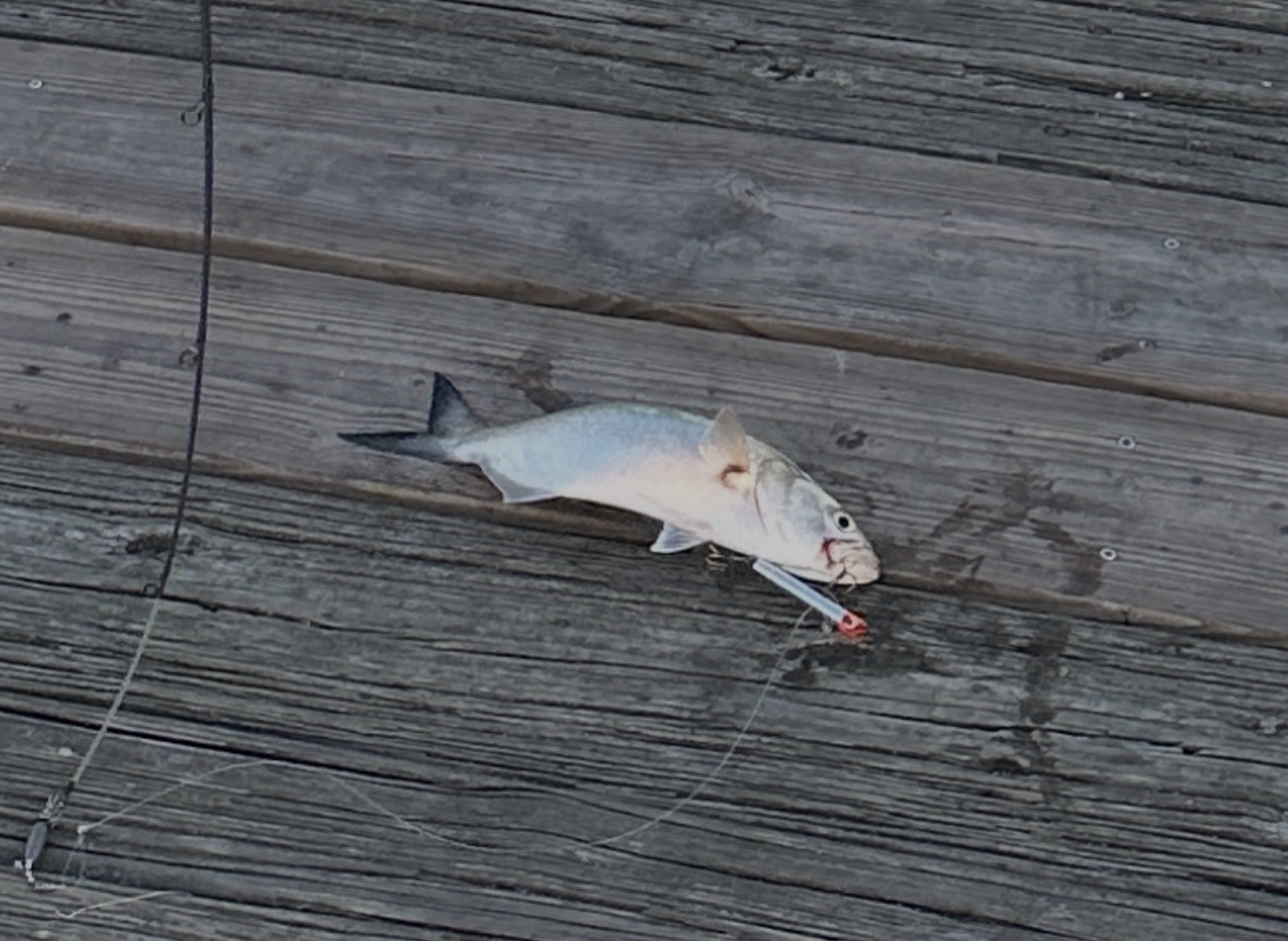
A bluefish caught on a Gotcha plug