Is Jordan Lake Drying Up? What Low Water Means for Fishing
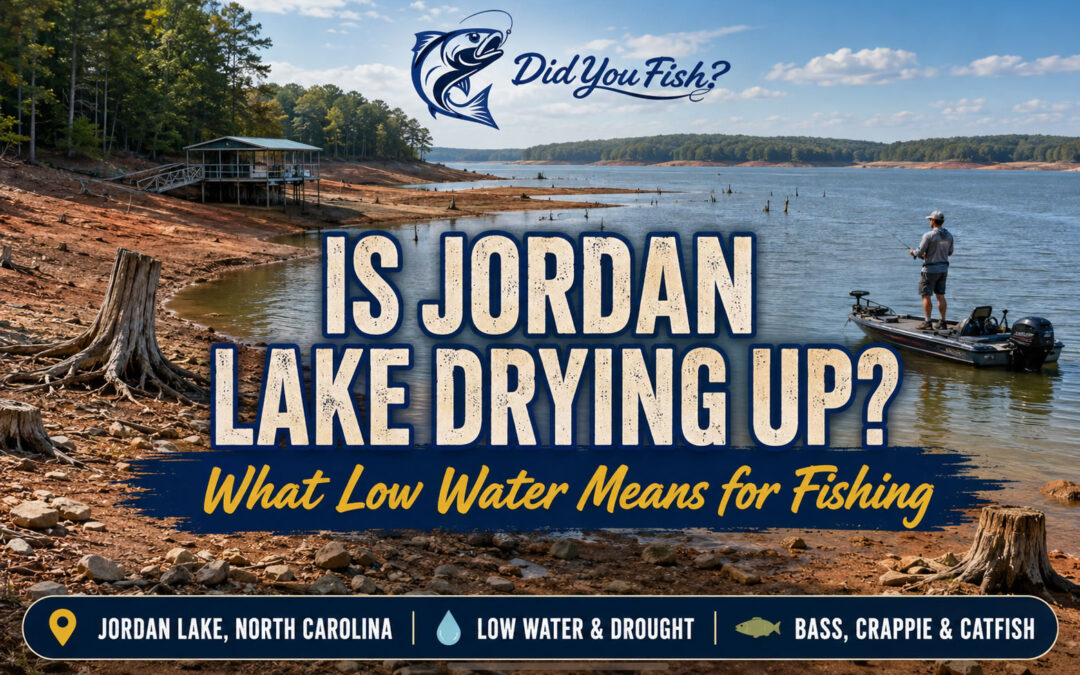
Jordan Lake has looked unusually low lately, and many anglers are noticing exposed shoreline, muddy banks, shallow coves, and areas that look very different from a normal summer fishing trip.
So, is Jordan Lake drying up? Not in the permanent sense. Jordan Lake is not disappearing, but drought, below-normal rainfall, heat, evaporation, and water management can pull the lake below its normal level. When that happens, familiar fishing spots can change quickly. Some shallow banks may become too skinny to fish well, some coves may lose water, and boaters may need to be more careful around ramps, stumps, old roads, and shallow flats.
For anglers, low water is not always bad news. It can make Jordan Lake harder to fish in some areas, but it can also concentrate baitfish and game fish around deeper water, points, channels, bridges, and remaining cover.
Quick Answer: Is Jordan Lake Drying Up?
Jordan Lake is not drying up permanently, but it can drop below normal pool during drought and long dry stretches. When the water is low, anglers may see exposed shoreline, shallow boat ramps, muddy banks, old structure, stumps, rocks, and flats that are usually underwater.
For fishing, low water can push bass, crappie, catfish, white perch, bluegill, and other fish away from shallow back coves and toward deeper banks, creek channels, bridge areas, main-lake points, riprap, and remaining cover.
Why Jordan Lake Looks So Low
Jordan Lake depends on rainfall and inflow from surrounding creeks and rivers. When the area goes through a dry pattern, less water flows into the lake. Hot weather can also increase evaporation, especially during summer.
Because Jordan Lake is a managed reservoir, the water level does not stay exactly the same all year. The lake can rise after heavy rain and fall during drought. When it drops several feet below normal, the change is obvious from the bank, boat ramps, bridges, and shoreline access areas.
Low water can make Jordan Lake look more dramatic than the numbers suggest. A drop of two or three feet may not sound huge, but on shallow flats, in the backs of coves, and along gradual banks, that can expose a lot of shoreline.
What Low Water Means for Jordan Lake Fishing
Low water changes where fish feel comfortable. Shallow areas that held fish earlier in the season may become too warm, too clear, too shallow, or too far from cover. Fish often adjust by moving closer to deeper water.
That does not mean the fishing is bad. It means anglers need to adjust.
During low water, look for:
- Main-lake points
- Creek channel edges
- Bridge pilings
- Riprap banks
- Deeper banks near shallow flats
- The mouths of coves instead of the backs
- Remaining brush, timber, rocks, and stumps
- Windblown banks with baitfish
- Shaded areas early and late in the day
Low water can also reveal structure that is normally hidden. Anglers should pay attention to exposed stumps, rocks, roadbeds, ditches, and old shoreline features. Those same places may hold fish when the water comes back up.
Bank Fishing Jordan Lake When the Water Is Low
Low water can help and hurt bank anglers. Some areas become muddy, shallow, or difficult to fish. Other areas become easier to walk and reveal new access to points, rocks, and deeper edges.
For bank fishing during low water, focus on places where deep water is close to shore. Long, flat, shallow banks may not hold as many fish during the heat of the day. Bridges, riprap, public fishing areas, points, and banks near creek channels can be better choices.
Bring shoes or boots that can handle mud. Exposed shoreline can be soft, slippery, and uneven. Bells Lake PFA
Boating and Ramp Safety
Low water can create boating hazards on Jordan Lake. Areas that are usually safe may become shallow. Stumps, rocks, old roadbeds, and other structure may be closer to the surface than expected.
Before launching, check current ramp conditions when possible. Idle in unfamiliar areas, stay alert near coves and flats, and do not assume an old boat path is safe just because it worked when the lake was higher.
Low water can also make some ramps harder to use, especially for larger boats. If you are towing a boat to Jordan Lake, it is worth checking conditions before you go.
What to Check Before Fishing Jordan Lake
Before heading out, check:
- Current Jordan Lake water level
- Recent rainfall
- Weather forecast
- Wind direction
- Water clarity
- Boat ramp conditions
- Current drought status
- North Carolina fishing regulations
- Time of day and expected heat
Jordan Lake can change quickly after rain, storms, or extended dry weather. A spot that looks poor one week may improve after water levels rise, bait moves in, or fish reposition.
Best Fish to Target During Low Water
Jordan Lake still offers plenty of fishing opportunities when water levels are low. The key is matching the species to the right depth, cover, and time of day.
Bass
Largemouth bass may pull out of extremely shallow water and set up around points, rocks, wood, bridge areas, and deeper edges. Early morning and evening can still produce shallow action, but midday fish may hold closer to drop-offs, shade, or deeper cover.
Try soft plastics, crankbaits, spinnerbaits, jigs, topwater lures early, and slower presentations when the sun gets high.
Crappie
Crappie can be more structure-oriented during low water. Look around bridge pilings, brush piles, deeper docks, standing timber, and channel edges. If shallow cover dries out or becomes too warm, crappie often slide deeper.
Small jigs, minnows, and vertical presentations can work well when fish are holding tight to cover.
Catfish
Catfish can still be a strong option during low water, especially near deeper holes, creek channels, points, and areas with current or food movement. Evening, night, and early morning can be better during hot weather.
Cut bait, chicken liver, shrimp, nightcrawlers, and prepared catfish bait can all produce depending on the size and species you are targeting.
White Perch and White Bass
White perch and white bass often follow bait. During low water, watch for surface activity, birds, windblown points, and schools of baitfish. Small spoons, jigs, inline spinners, and live bait can work when fish are grouped up.
Bluegill and Sunfish
Bluegill and sunfish may remain active around remaining shallow cover, docks, shade, and protected banks. Worms, crickets, small jigs, and tiny spinners are good choices.
Is Low Water Good or Bad for Fishing?
Low water can be both good and bad for fishing.
It can make some shallow spots less productive, limit boat access, expose cover, and make fish more sensitive to heat. But it can also concentrate fish, make structure easier to read, and help anglers understand the lake better.
The biggest mistake is fishing Jordan Lake the exact same way you would at normal water level. Low water rewards anglers who adjust. If the backs of coves are too shallow, move toward the mouth. If shallow flats are empty, look for the closest channel edge. If the sun is high, fish deeper, slower, or closer to shade and structure.
Best Low Water Fishing Tips for Jordan Lake
Low water fishing at Jordan Lake starts with observation. When you arrive, look at the shoreline, exposed structure, water color, wind, bait activity, and depth changes.
If you are bass fishing, spend more time around points, rocks, wood, shaded banks, and deeper transitions. If you are crappie fishing, look for bridge pilings, brush, timber, and deeper structure. If you are catfishing, target channel edges, deeper holes, and evening or nighttime feeding windows. If you are bank fishing, avoid wasting too much time on long shallow banks that no longer have enough water.
Low water can also be a scouting opportunity. Take photos of exposed stumps, rocks, roadbeds, ditches, and shoreline cover. When Jordan Lake rises again, those areas may become productive fishing spots.
Best Time to Fish the Outer Banks
The best time to fish the Outer Banks is usually early morning, late afternoon, evening, and during a moving tide. First light can be especially good for Spanish mackerel, bluefish, surf fish, and soundside trout or drum. Evening can be productive for red drum, sharks, bottom fish, and soundside action.
Tide matters, but wind matters too. A clean, fishable surf can make a huge difference. Strong wind can dirty the water or make surf fishing difficult. Light winds and cleaner water often help Spanish mackerel, bluefish, pompano, and sight-feeding fish.
For offshore fishing, weather, sea conditions, current, water temperature, and bait are often more important than tide alone.
Check North Carolina Fishing Regulations
Before keeping fish, check the latest North Carolina fishing regulations. Rules can change by species, size limit, creel limit, season, and waterbody.
This is especially important for bass, crappie, catfish, white bass, white perch, sunfish, and any species you plan to harvest. Anglers should also make sure they have the correct North Carolina fishing license before fishing Jordan Lake.
Did You Fish? Jordan Lake Low Water Fishing: Final Tips for a Better Trip
Jordan Lake low water can look alarming, especially when familiar coves, banks, ramps, and shallow flats suddenly look dry or muddy. But low water does not mean Jordan Lake is finished, and it does not mean the fishing is over. It means the lake is changing, and anglers need to change with it. When drought lowers Jordan Lake below normal pool, fish often adjust by moving toward better depth, cooler water, remaining cover, creek channels, bridge areas, riprap, and main-lake structure. The anglers who pay attention to those changes usually have a better chance of finding fish than the anglers who keep casting to the same shallow spots out of habit.
For bass fishing at Jordan Lake, low water often makes points, rocks, wood, channel swings, and shaded banks more important. Early morning and evening can still produce shallow bites, but during the heat of the day, largemouth bass may hold closer to deeper water or tighter to cover. For crappie fishing, low water can make brush piles, bridge pilings, standing timber, deeper docks, and creek channel edges more reliable than shallow shoreline cover. For catfish, the best low water areas are often deeper holes, channel edges, points, and places where food naturally collects. Bank anglers should look for public access areas where deeper water is still within casting range, rather than wasting time on long shallow flats that have lost too much water.
Low water can also make Jordan Lake safer to understand but more dangerous to run. Exposed shoreline can show anglers where stumps, rocks, roadbeds, ditches, and old cover are located. Those are valuable clues for future fishing trips when the water comes back up. At the same time, boaters should be careful because hazards that are normally deeper may now sit close to the surface. Idle in unfamiliar areas, watch your depth, avoid cutting across shallow flats, and check boat ramp conditions before towing to the lake.
The best approach is to treat low water as both a challenge and a learning opportunity. Check the current Jordan Lake water level, recent rainfall, drought status, weather forecast, wind, water clarity, and fishing regulations before you go. Once you are there, let the lake tell you where to fish. Look for bait, birds, shade, depth, current, structure, and clean water. Jordan Lake can still produce bass, crappie, catfish, white perch, white bass, bluegill, and other freshwater fish during drought conditions, but success depends on adjusting to the water that is actually in front of you. Low water changes the lake, but for observant anglers, it can also reveal exactly where the fish may be when conditions improve.